

























































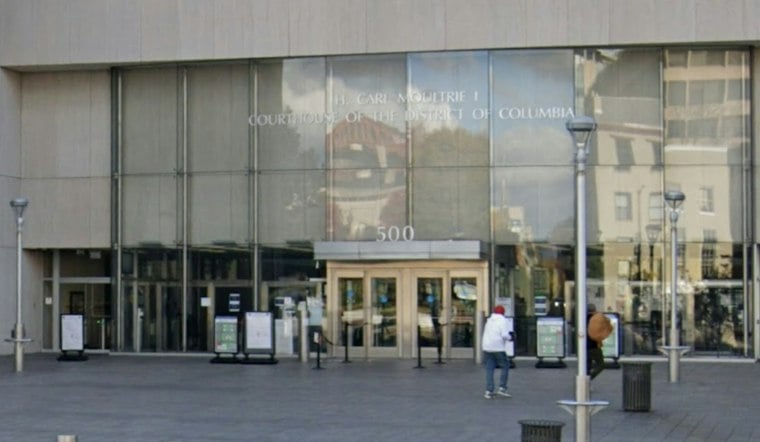
An attorney handling her first appellate brief turned to Google's generative AI tool for legal research, and it invented four court cases that simply do not exist. The D.C. Court of Appeals caught the fabrications, struck the entire brief filed on behalf of Deutsche Bank, and left the bank without a formal written argument in an active mortgage foreclosure appeal.
The case, Douglas v. Deutsche Bank National Trust Co., stems from a D.C. Superior Court judicial foreclosure action under D.C. Code § 42-816, in which self-represented homeowner Barry Douglas appealed a judgment on the pleadings that had been granted to Deutsche Bank as trustee for Soundview Home Loan Trust 2006-OPT3, according to the court's September 3 order. The foreclosure appeal had proceeded without oral argument after both sides submitted briefs, per the same filing. As WJLA reports, the court identified the four nonexistent cases as Osborne v. District of Columbia, Woods v. United States, Abadie v. District of Columbia, and Cason v. National Consumer Cooperative Bank.
A Junior Attorney's First Appellate Brief
Attorney Loishirl W. Hall disclosed in a personal filing that the brief was the first appellate brief she had ever authored, while co-counsel attorneys Jianna Jaques Santos and Michael T. Cantrell were also listed as counsel on the submission, according to ComplexDiscovery. The court emphasized that every attorney who signs a brief shares legal responsibility for its contents, the outlet notes.
The unanimous per curiam decision came from a three-judge panel comprising Associate Judges Catharine Easterly and Vijay Shanker along with Senior Judge Stephen Glickman, who discovered the fake cases while reviewing the filed briefs, as reported by Reason Magazine. According to WJLA, the firm representing Deutsche Bank, McCabe, Weisberg & Conway, LLC, said it was genuinely remorseful for the failure and planned measures to prevent the situation from recurring.
Court Rejects Simple Redaction
McCabe, Weisberg & Conway asked the panel to accept the brief with the four hallucinated citations simply redacted, but the judges rejected the proposal, stating that allowing simple redaction would constitute effectively no sanction at all, per Reason Magazine's account. The firm told the court it was unaware the AI search tool had been used when the brief was originally submitted, the same report states.
The firm also told the court that its internal policies explicitly forbid employees from using artificial intelligence to draft legal correspondence or filings, yet the court still faulted the firm for failing to adequately supervise the brief's preparation, according to the ABA Journal. The firm's policy mandates independent verification of all citations regardless of how they are retrieved, the ABA Journal notes — a gap between corporate AI compliance rules and actual workplace execution that the court called out directly.
How the Fabrications Came to Light
The D.C. Court of Appeals had initiated formal disciplinary inquiries on June 22 by issuing an Order to Show Cause after failing to locate the cited cases, prompting Hall to admit the next day, in a personal response filed with the court, that she had used Google's generative AI tool. ComplexDiscovery's report on the timeline adds that Hall later informed the court she had departed the law firm. WJLA reports that the attorney failed to verify the existence or accuracy of the citations before filing the brief, and apologized for the error and burden placed on the court and parties.
D.C. Court of Appeals Chief Judge Anna Blackburne-Rigsby warned about AI hallucinations and reliance on technology without checking its work, per WJLA, saying AI can make work easier and faster but can also make people careless. She added that hallucinations are more likely when people do not check AI's work, and said people have a responsibility to understand how AI reaches courts and could affect fairness.
Rules Gap on Monetary Sanctions
In a concurring opinion, Senior Judge Stephen Glickman detailed an institutional rules gap: while D.C. appellate rules permit striking defective briefs and referring lawyers to disciplinary counsel, it remains unclear whether appellate judges possess direct statutory authority to fine attorneys, according to ComplexDiscovery. Federal trial courts, by contrast, routinely rely on Rule 11 or inherent powers to impose monetary sanctions, the outlet notes. Glickman also called the fabricated AI citations the tip of a perilous iceberg, per WJLA, warning that AI may inaccurately describe real cases, misrepresent facts, or produce unpersuasive legal reasoning.
The D.C. Court of Appeals ultimately struck Deutsche Bank's entire brief and referred the matter to the D.C. Office of Disciplinary Counsel, which can decide whether to investigate further, WJLA reports. The underlying foreclosure appeal still has no decision. Because the brief was struck entirely, Deutsche Bank is left without formal written argument in an active mortgage foreclosure appeal, the ABA Journal notes, illustrating how unverified AI research can directly jeopardize a client's legal posture.
Part of a Broader National Pattern
Westlaw Today describes the September 3 ruling as the first recorded instance in which the D.C. Court of Appeals — Washington's local court of last resort — has encountered and sanctioned fabricated legal citations produced by generative AI, adding that the court noted attorneys can no longer plausibly claim ignorance of AI hallucination risks. The D.C. Bar had already issued Ethics Opinion 388 in April 2024, establishing that attorneys using generative AI tools must maintain professional competence under Rule 1.1 by independently verifying every AI-generated citation against official reporters or traditional legal databases, according to the D.C. Bar.
WJLA notes that courtrooms across the country are grappling with the growing use of artificial intelligence in the legal system, including a separate instance in which an AI-generated video was submitted to a court as authentic evidence. Artificial intelligence can produce authoritative-looking information that is not real, the station reports. Hoodline has previously covered similar episodes, including a State Farm AI citation case and a dismissed San Antonio lawsuit tied to fabricated legal citations.
Lawmakers are also beginning to respond. In August, California lawmakers passed Senate Bill 574, enacting statutory requirements for attorneys to disclose generative AI use in court filings and personally verify all cited legal sources under penalty of civil sanctions, according to Hoodline's earlier coverage. That law amends the state's Business and Professions Code to protect court integrity, the same report notes.



