

























































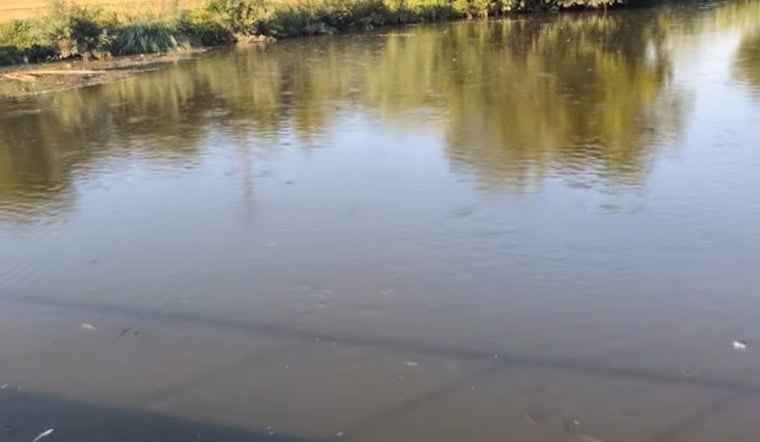
Dozens of dead fish have been spotted floating in Brays Bayou near the University of Houston medical branch this week, and state wildlife officials say the culprit is recent rainfall, not pollution or disease. Social media videos captured the die-off along the bayou, which cuts through southeast Texas and feeds into one of Houston's most scrutinized waterways.
According to ABC13 Houston, the Texas Parks and Wildlife Department said there is no reason to believe pathogens or pollution caused the fish kills in Houston-area bayous at this moment. TPWD is investigating the fish kill reported near the University of Houston medical branch, and per the agency, the event appears to be a natural one caused by stormwater rather than any industrial or chemical source.
How Rain Turns Into a Fish Kill
Recent rainfall across southeast Texas brought a surge of stormwater into local bayous, and that influx can disrupt dissolved oxygen levels fish need to survive, per the outlet's report on TPWD's findings. Stormwater increases nutrients in bayou water, and those added nutrients can trigger algal blooms. A TPWD official explained that fish kills typically occur early in the morning because algae use dissolved oxygen overnight for respiration, a pattern the same account notes is common in Houston's shallow, urban waterways.
The mechanics behind that overnight oxygen crash are well documented elsewhere: aquatic plants and algae produce oxygen during the day through photosynthesis, but at night, without sunlight, they consume it instead, according to the Texas Parks and Wildlife Department. That overnight drain on oxygen explains why fish kills are typically seen early in the morning, before daytime sunlight allows photosynthesis to rebuild oxygen levels later in the day. TPWD said dissolved oxygen readings rebound and climb throughout the day as that process kicks back in.
Stormwater runoff compounds the problem in several ways at once. Organic debris washed into the channel consumes oxygen as it decays, sediment stirred up by runoff blocks sunlight that algae need for photosynthesis, and nutrient loads feed heavy nighttime algal respiration, according to Drainage Matters. Urban runoff can also clog fish gills with sediment and add oxygen-demanding organic material directly into the water, the same research notes.
A Familiar Pattern in Harris County
This isn't the first time a Harris County waterway has seen this exact scenario play out. Hoodline previously reported on a heat-driven kill at Pasadena's Vince Bayou, where low dissolved oxygen was similarly blamed. Farther south, low dissolved oxygen levels caused a mass fish kill that deposited thousands of dead Gulf menhaden along Brazoria County beaches in June 2023 following heavy freshwater runoff into lower coastal rivers, according to Texas Public Radio. TPWD confirmed at the time that the coastal kill was a natural occurrence unrelated to nearby industrial facilities. Historical investigation data published by TPWD shows natural low dissolved oxygen events are the single most common cause of mass fish kills in Texas fresh and coastal waters, with shallow urban streams especially vulnerable during hot summer months.
Brays Bayou itself flows roughly 30 miles eastward through southwest Harris County before merging into the Buffalo Bayou Tidal watershed, which the Texas Commission on Environmental Quality designates as Segment 1007B. That connection matters because Buffalo Bayou is monitored by the Texas Commission on Environmental Quality's surface water quality program, and it is listed as impaired due to dioxins, PCBs and bacteria. Brays Bayou has its own water quality concerns, including elevated levels of fecal bacteria and nutrients, per the same reporting.
Rain-Driven Kill Versus Long-Term Contamination Risk
Texas Parks and Wildlife Department officials were clear that this week's fish kill is a normal incident and not a cause for concern to the general public, describing it as a natural occurrence that typically resolves quickly. But that assessment addresses the acute die-off, not the bayou's separate, long-running contamination issues. Under state fish consumption advisory ADV-55, the Texas Department of State Health Services recommends the public limit or avoid eating fish and blue crabs caught in the Houston Ship Channel and contiguous tidal waters, including Buffalo Bayou, due to legacy dioxin and PCB contamination, according to the Texas Commission on Environmental Quality. TCEQ also operates long-term Total Maximum Daily Load projects for the Buffalo Bayou and Houston Ship Channel watersheds aimed at addressing chronic bacterial impairment and elevated contaminant levels.
TPWD advised erring on the side of caution in any waterway, and officials say the public should check fish consumption advisories before fishing in waterways such as Brays Bayou. The advice underscores a distinction worth keeping straight: this week's floating fish are tied to a temporary oxygen crash from rain, while the advisory against eating what's caught there reflects decades-old chemical contamination that predates any recent storm.
Where to Report a Fish Kill
Residents who spot dead or distressed fish in any Texas waterway can report it to the Texas Parks and Wildlife Department's 24-hour Kills and Spills Team hotline at 512-389-4848, which fields reports of fish kills, wildlife die-offs, and suspected aquatic pollution statewide. TPWD field biologists investigate thousands of natural and human-caused aquatic mortality events across the state each year. It's the same kind of oversight that came into play earlier this year, when Hoodline reported that state and city officials investigated a warehouse along Brays Bayou following a tip alleging illicit sewage dumping, a reminder that not every pollution concern in the watershed turns out to be natural.





