

























































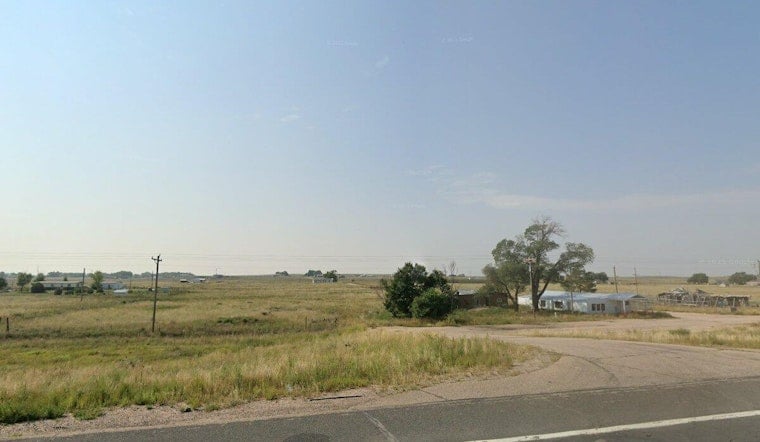
A century after Black homesteaders carved farms out of Colorado's dry plains, the ghost town of Dearfield is preparing to welcome the public again. On October 3, the Dearfield Preservation Committee will host Dearfield Day, opening the site's original filling station to educate visitors and offering entertainment celebrating the sounds and flavors of the settlement's heyday.
The event, first reported by CBS Colorado, marks a new chapter for a site that once anchored one of the most successful Black agricultural communities in the American West. Dearfield was founded in Weld County after O.T. Jackson invited African American families to homestead the land, and the filling station being reopened for the occasion still carries Jackson's name stamped into its original pinewood. Bob Brunswig, who chairs the Dearfield Preservation Committee, told the outlet that visitors can expect exhibits and interpretation of the site rather than a bare, empty townsite.
From Tents and Dugouts to a Thriving Farm Colony
Dearfield's founding traces back to 1910, when Jackson, inspired by Booker T. Washington's 1901 autobiography Up From Slavery and its call for Black land ownership and self-reliance, acquired land in Weld County, according to the Colorado Encyclopedia. Jackson had served as a messenger for three Colorado governors before making that move. Nineteen settlers arrived in 1911 and endured brutal early conditions, living in tents and earthen dugouts and burning cow chips for winter fuel while adapting to unfamiliar dryland farming above the South Platte River, according to the Rotary Club of Fort Collins.
The settlement took its name in 1909 after Dr. Joseph H.P. Westbrook, a Denver physician and early Black settler, told an organizational meeting the colony's fields “will be very dear to us,” per the Weld County Government History Department. Westbrook later became a notable figure in Colorado history for infiltrating Denver's Ku Klux Klan to protect the Black community. As CBS Colorado notes, Dearfield thrived even as Denver's Klan chapter grew into one of the largest in the country.
A Colony Built on Cooperation and Land Ownership
Dearfield's community relied on shared social events, equipment lending, and mutual assistance among residents, the outlet's report notes. Land ownership itself was central to the colony's model, enabling settlers to grow crops, rent land, obtain loans, and pass property down to descendants. George Junne, a University of Northern Colorado professor of Africana studies, said Dearfield was a highly successful agricultural community, and higher-than-normal rainfall in the early 1900s helped fuel that early agricultural success.
World War I further boosted demand and prices for farm goods, and at its peak between 1917 and 1921, Dearfield covered nearly 19,000 acres of homesteaded farms and ranches, housing up to 300 residents and generating more than $50,000 in marketable crops in 1918 alone, according to the National Park Service. Farmers used dryland techniques to grow corn, oats, wheat, and sugar beets for sale in Denver. Colorado was home to about a dozen Black communities that got their start in the state, per CBS Colorado's reporting, though few reached Dearfield's scale.
Drought, Decline, and a Fading Town
The prosperity did not last. Drought turned Dearfield's soil to dust, and the settlement collapsed by the early 1930s alongside roughly 40 other small towns across the region, as the station reports. Collapsing crop prices during the Dust Bowl era drove the population down to just 12 residents by 1940, and by 1946 O.T. Jackson and his niece were the last inhabitants, according to the Weld County Government History Department. During World War II, Jackson unsuccessfully offered to sell Dearfield to the federal government for use as a Japanese American internment camp; he died in 1948.
Only a couple of original structures remain at the site today, alongside foundations and historic tree lines, per the report. Many of the original wooden homes were dismantled during the 1930s and 1940s so the lumber could be reused during hard times, according to The Cultural Landscape Foundation. The Dearfield townsite was listed on the National Register of Historic Places in 1995, formally recognizing its significance 85 years after its founding.
A Federal Study and a Push for National Recognition
The site's future now hinges partly on a federal review. The National Park Service has a Special Resource Study project evaluating Dearfield for potential inclusion in the National Park System, according to the National Park Service. The study weighs the site against congressional criteria including national significance, suitability, feasibility, and the need for federal management. The National Park Service is currently evaluating Dearfield for potential inclusion, CBS Colorado reports.
Advocates say the stakes go beyond one town's history. The National Park Service managed 423 units, and only about 14% were devoted to Black stories, according to Boulder Weekly. Junne and Brunswig have spent years working to preserve Dearfield, and the Dearfield Preservation Committee now plans to provide exhibits and site interpretation for visitors, with authentic objects included in the experience travelers can expect when they walk through the settlement's history.
Dearfield Day Arrives as Colorado Marks 150 Years
The reopening comes as Colorado celebrates 150 years of statehood, adding extra resonance to a homecoming event for a town nearly erased from the landscape. Dearfield Day is set for October 3 in Dearfield, Colorado, and volunteers will continue work to improve the site around the event. The Dearfield site is owned by the Black American West Museum, which has a Denver location.
CBS Colorado is working with Colorado Preservation, Inc. to raise awareness and funds for preserving the state's historic treasures, and organizers say donations can help support that broader effort to preserve historic structures across Colorado. For now, the focus is on October 3, when entertainers will celebrate the sounds and flavors of Dearfield's heyday and visitors will be able to step back into the story of a settlement built on the promise of land, self-reliance, and community.





