

























































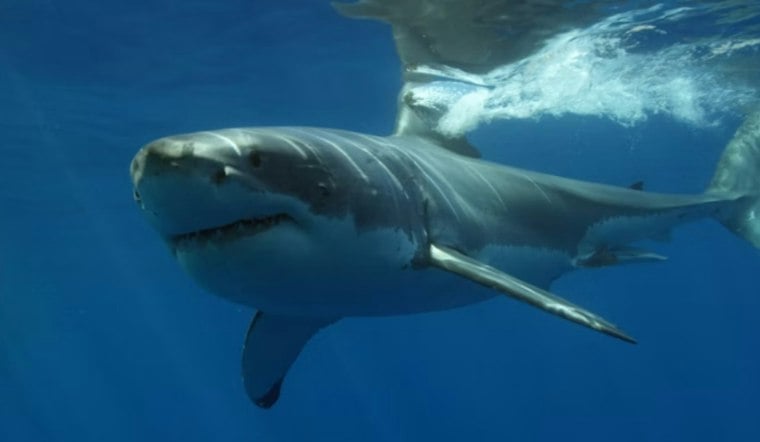
A thresher shark washed ashore near Ocean Shores, Washington, earlier this month, and by later that same day, witnesses reported that its head was gone. State wildlife officers have now opened an active criminal investigation and are publicly asking for tips to identify whoever cut the animal apart on the beach.
According to Oregon Coast Beach Connection, officers with the Washington Department of Fish and Wildlife Police launched the investigation after witnesses initially shared photos of the intact carcass on social media, only for later images to reveal the head had been severed. As reported by localmemphis.com, the carcass near Ocean Shores was tampered with in a way that wildlife officials say cost researchers crucial scientific data.
Why an Intact Carcass Matters So Much
Lisa Hillier, a Washington Department of Fish and Wildlife official, told localmemphis.com that cutting off a thresher shark's head changes all of the measurements biologists rely on to study the animal. She said an intact specimen helps officials identify the cause of death, whether that turns out to be commercial or recreational fishing bycatch, or toxic algae or other material found in the shark's stomach.
That anatomical detail carries extra weight given the species' unusual build. Common thresher sharks can grow to lengths of up to 18 feet, according to NOAA Fisheries, and use their elongated upper tail fin, which accounts for nearly half their body length, to whip and stun schooling prey such as mackerel and anchovies.
Not the First Time This Has Happened
Washington has seen this kind of mutilation before. In August 2022, beachgoers severed the dorsal fin and removed the jaws of a nearly 12-foot female thresher shark that stranded at Long Beach, Washington, before Seaside Aquarium staff could examine it, according to the Tillamook County Pioneer. Because the roughly 200-pound animal was too large to transport, staff ended up conducting the necropsy publicly on the sand just to salvage what scientific data they could.
A 300- to 365-pound thresher shark washed ashore alive near Ocean Park before dying, per the same Beach Connection reporting, which allowed marine staff to perform a public necropsy observed by 50 to 75 spectators. Live strandings of large open-water sharks are rare in the Pacific Northwest, making that kind of prompt, undisturbed access unusual.
How Often Do These Strandings Happen?
Thresher shark strandings have been reported along the Oregon and Washington coastlines. Per localmemphis.com's own count, stranded threshers were reported twice in 2022, twice in 2024, and twice so far in 2026, suggesting the recent case fits within the region's typical annual pattern rather than representing a surge.
Thresher sharks remain understudied open-water predators, and each live sighting or stranding draws close attention from biologists.
Warming Waters and a Widening Range
Washington Department of Fish and Wildlife marine biologists note several shark species in state waters, including common thresher sharks and broadnose sevengill sharks. Pacific common thresher sharks are highly migratory, ranging from British Columbia down to Baja California and shifting seasonally between northern feeding grounds off Washington and Oregon and southern waters off California, according to NOAA Fisheries.
Hillier told localmemphis.com that El Niño is warming Pacific waters and could attract more thresher sharks to Washington in the coming months, since warmer currents allow fish with warmer-temperature thresholds to move into different waters than usual. Water temperatures directly impact the range of thresher shark populations, and ocean temperatures tend to run warmer off Washington's coast during El Niño years, which could mean an increased presence of thresher sharks along the coast in the year ahead.
The Legal Stakes for Whoever Took the Head
Common thresher sharks are currently subject to a recreational fishing closure across all Washington waters, and the International Union for Conservation of Nature lists all three thresher shark species as vulnerable to extinction. Beyond the state closure, federal law adds another layer: under the Shark Fin Sales Elimination Act enacted in December 2022, it is illegal nationwide to possess, transport, buy, or sell detached shark fins, according to NOAA Fisheries.
Washington law adds its own penalties on top of that federal ban. Under Revised Code of Washington Chapter 77.15, unlawful taking of protected fish or wildlife is a misdemeanor, per the Association of Fish & Wildlife Agencies. Officials have warned that severing parts from a protected species on a public beach constitutes unlawful possession under that statute.
The concern extends well beyond a single Washington beach. Hoodline previously reported that federal inspectors seized roughly 50,000 shark fins across 20 shipments, including Louisville, highlighting enforcement efforts related to shark-fin trafficking.
How to Report a Stranding
The Washington Department of Fish and Wildlife is asking anyone who encounters a stranded or entangled shark or marine mammal to report it as quickly as possible, and to avoid touching or moving the animal. Reports can be made through the Marine Mammal Stranding Reporting System or by calling the Marine Mammal Stranding Hotline at 1-866-767-6114.




