

























































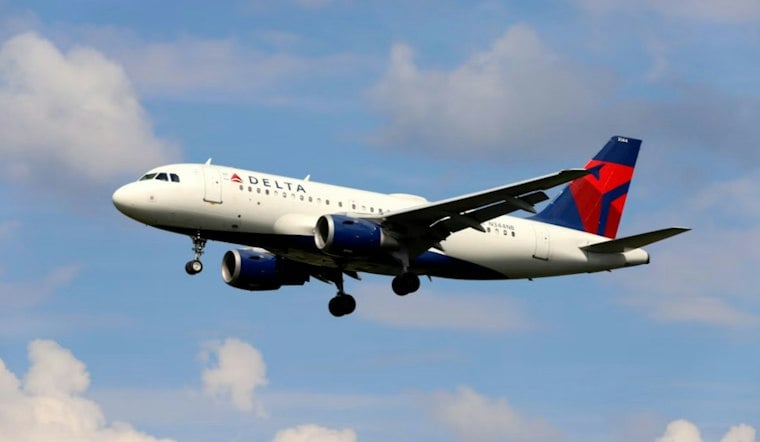
A Delta Air Lines flight carrying 174 passengers and six crew members plunged roughly 27,000 feet in about 10 minutes after a pressurization issue triggered oxygen masks in the cabin, forcing the Boeing 737-900ER to divert to Las Vegas on September 6, 2026. The jet, Delta Flight 2311, had been traveling from Los Angeles to Salt Lake City when the crew brought the plane down and rerouted it, according to a Delta spokesperson.
According to the New York Post, flight attendants made announcements while wearing oxygen masks, and one passenger said the announcements were almost impossible to hear. Another passenger described the scariest part as not knowing what was going on, in a post cited by the same outlet. A pilot later confirmed that oxygen had deployed, and air traffic control recordings show the crew requesting an immediate descent to 9,000 feet while proceeding direct to Las Vegas.
The flight crew's full-face oxygen masks came equipped with built-in microphones, which they used to relay the request to Las Vegas air traffic control without issuing a formal Mayday call, as detailed by PYOK. Standard emergency descent protocols call for pilots to don oxygen masks immediately, before initiating radio contact, to guard against hypoxia at altitude.
Why the Plane Fell So Fast, So Precisely
The rapid drop was not improvised. Federal Aviation Administration regulations under 14 CFR § 121.333 require pressurized commercial airliners to carry enough emergency oxygen to support a constant-rate descent from maximum operating altitude down to 10,000 feet within 10 minutes, according to the Legal Information Institute. Separate airworthiness standards under 14 CFR § 25.841 require pressurization systems to automatically trigger passenger oxygen masks once cabin altitude exceeds 10,000 to 14,000 feet of equivalent pressure.
Those masks run on chemical oxygen generators containing sodium perchlorate and iron oxide, which produce breathable oxygen through a reaction lasting roughly 12 to 15 minutes once a passenger pulls the lanyard, per research from DK Turbines. That window lines up closely with the 10-minute descent mandate, giving crews just enough time to get everyone down to breathable altitude before the generators run out.
Matthew “Whiz” Buckley, a retired U.S. Navy F/A-18 fighter pilot with nearly 40 years of flying experience, said pilots in this kind of scenario would need to land as soon as practical, per the Post's report. He added that a pressurization occurrence like this is extremely rare in the United States.
Aircraft Had a History Before Joining Delta's Fleet
The aircraft involved, registration N934DZ, was manufactured in 2012 and originally delivered to Indonesian carrier Lion Air before Delta acquired it in February 2023, according to PYOK. The 14-year-old jet was powered by two CFM International CFM56 engines. Under federal aviation rules, the pilot-in-command holds ultimate authority over the aircraft's operation, a framework that has been cited in other recent Delta emergencies allowing pilots to deviate from standard clearances when safety demands it.
The plane landed safely at Harry Reid International Airport in Las Vegas, and passengers exited normally, according to Delta. Las Vegas has increasingly served as a go-to diversion point for flights in trouble over the Southwest, thanks to its dedicated Aircraft Rescue and Firefighting teams, round-the-clock operations, and location along heavily trafficked routes over the Mojave Desert, as Hoodline has reported. Delta apologized to customers for their experience and arranged another aircraft to get passengers to their final destination.
Same Plane Was Flying Again Within Hours
Flight tracking data reviewed by Simple Flying shows the aircraft landed in Las Vegas at 6:16 p.m., was inspected by Delta technicians, and returned to commercial service that same night, departing for Salt Lake City and arriving at 12:24 a.m. The quick turnaround suggests a transient valve or software glitch in the environmental control system rather than structural damage, the outlet's reporting indicates.
Not every passenger waited quietly through the ordeal. One traveler attempted to access onboard WiFi to determine whether to send messages to loved ones, while another said they had been asleep when a fiancé alerted them to what was happening, according to the Post. Both accounts underscore how disorienting the descent felt from inside the cabin, even as the crew followed practiced emergency procedures throughout.
Echoes of a 2024 Incident on the Same Aircraft Type
This is not the first time a Delta 737-900ER has run into pressurization trouble. In September 2024, Delta Flight 1203, also a 737-900ER operating out of Salt Lake City, suffered a pressurization failure above 10,000 feet that left 10 passengers needing medical treatment for bloody noses and ruptured eardrums, according to CBS News. On that flight, oxygen masks failed to deploy, forcing pilots to descend immediately and return to Salt Lake City rather than divert elsewhere, unlike the mask deployment seen on Flight 2311.
The incident also follows a string of other Delta emergency mask deployments this year. On August 8, Delta Flight 2204 from Atlanta to Orlando required a taxiway evacuation via inflatable slides after cockpit fumes forced pilots to don emergency oxygen masks shortly after takeoff, as Hoodline previously reported. That Boeing 757-200, carrying 205 people, landed safely without reported injuries but prompted a technical inspection by airline maintenance.





