

























































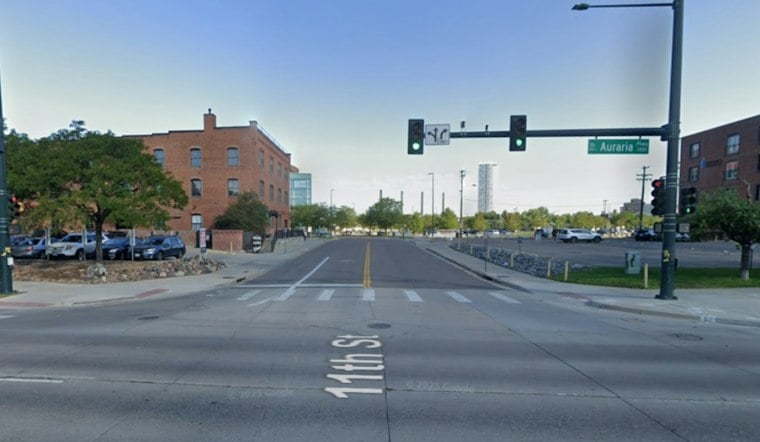
A volunteer-led effort in Denver is seeking private funding for a museum devoted to Colorado's Hispanic and Latino heritage. Organizers are proposing to build it on a narrow tract of the Auraria Campus, near 11th Street and Auraria Parkway close to Speer Boulevard, where the campus replaced a neighborhood with deep ties to the city's Latino community.
The proposal, first detailed by CBS Colorado, concerns land on a campus now shared by three colleges. Ramona Martinez, a seventh-generation Coloradan and former Denver City Council president who chairs the building committee for the Colorado Hispanic and Latino Heritage Fund, said the project is intended to preserve stories for future generations, according to the station. Architect Curtis Fentress, whose work includes Denver International Airport and the Denver Art Museum expansion, is designing the proposed museum, per the same account.
A Site Chosen With History in Mind
The choice of location is not incidental. In the early 1970s, the urban renewal development that created the Auraria Higher Education Center displaced an estimated 235 families and households, representing nearly 900 residents, most of whom were Latino, along with more than 100 local businesses from what was one of Denver's oldest neighborhoods, according to the Auraria Library. Denver voters originally approved the urban renewal bond issue that set that displacement in motion back in 1969.
A 2022 archaeological excavation at Ninth Street Historic Park on the Auraria Campus later uncovered 44 artifacts, according to research published by MSU Denver RED, showing that the 1960s Latino neighborhood had been a thriving, intact community rather than the “poor and deteriorating” blighted area city planners cited to justify its demolition. Those findings have become part of the backdrop against which the museum project is now being pursued.
What the Historical Record Shows
According to Auraria Library, Denver voters approved a 1969 bond referendum tied to creating the Auraria Higher Education Campus despite opposition from Aurarians. The process displaced an estimated 900 people, including 235 families and households, along with more than 100 businesses, most of them from a predominantly Latino neighborhood. Denver Public Library records say relocations were complete by 1972 and the campus was completed in 1976.
The public record cited here establishes the scale and timing of the displacement, while the details of individual compensation are not specified in those summaries. Auraria Library says one institutional response, the Displaced Aurarian Scholarship, expanded in spring 2022 to cover all direct descendants of displaced Aurarians in perpetuity. Ninth Street Historic Park and the 2022 archaeological excavation are additional efforts to preserve evidence of the former neighborhood.
State Recognition, Private Fundraising
In June 2025, the Auraria Higher Education Center Board of Directors voted to set aside 15 acres of land on campus and open negotiations for a two-year lease for the proposed museum, as reported by Denver Westword. The vote took place on June 25, 2025. The project had already been designated in 2023 as an official flagship initiative by the state's America 250 - Colorado 150 Commission, a body established by lawmakers to prepare for Colorado's 150th anniversary of statehood and the U.S. semiquincentennial in 2026, according to Diario Libre.
Despite that official recognition, project organizers disclosed that state officials instructed Latino community leaders to establish an independent nonprofit entity, the Colorado Hispanic and Latino Heritage Fund, and raise private construction capital themselves rather than relying on state capital funding, Diario Libre reported. Former Denver Councilwoman Ramona Martinez described that funding requirement in interviews with EFE, according to the outlet.
Veteran Leaders Behind the Push
Patricia Barela Rivera chairs the fund financing the project and wants Denver International Airport visitors to eventually make the museum a key stop for understanding Colorado's history, according to CBS Colorado. She said the museum can add value by teaching visitors about people's origins, and that organizers want it to serve all Coloradans, not just Latino residents, the station reported.
Both Barela Rivera and Martinez were inducted into the Colorado Women's Hall of Fame after becoming two of the first Latinas to hold prominent federal and municipal leadership roles in Colorado, according to Westword, with Barela Rivera having federal-government leadership experience. Martinez's involvement is not new territory: she previously led a campaign in the 1990s while serving on the Denver City Council to establish a Hispanic heritage center near West Colfax Avenue and Speer Boulevard, Westword also noted.
What the Museum Could Look Like
Organizers have described a multistory building with a theater and interactive exhibits, according to CBS Colorado. The Auraria Campus is also planned as the setting for an educational lab, and organizers say the museum would present stories many Coloradans have never heard.
A Statewide Story With Deep Local Roots
The stakes extend well beyond one building. Hispanic or Latino residents make up approximately 24.1% of Colorado's population, or more than 1.26 million people, remaining the state's largest racial or ethnic minority group, according to U.S. Census Bureau estimates. Within Denver itself, Hispanic or Latino residents make up part of the population.
The museum effort also follows public efforts to address the legacy of Auraria's displacement, including the Displaced Aurarian Scholarship program.
What remains unresolved is how much the museum will ultimately cost to build, how long it will take organizers to secure a formal long-term lease once the two-year negotiation window with Auraria's board runs out, and how the fund will continue its fundraising efforts, according to Westword. For now, the fundraising effort continues, driven by volunteers who see the project as both a cultural correction and a chance to reclaim space on land with a painful history for Denver's Hispanic community.





