

























































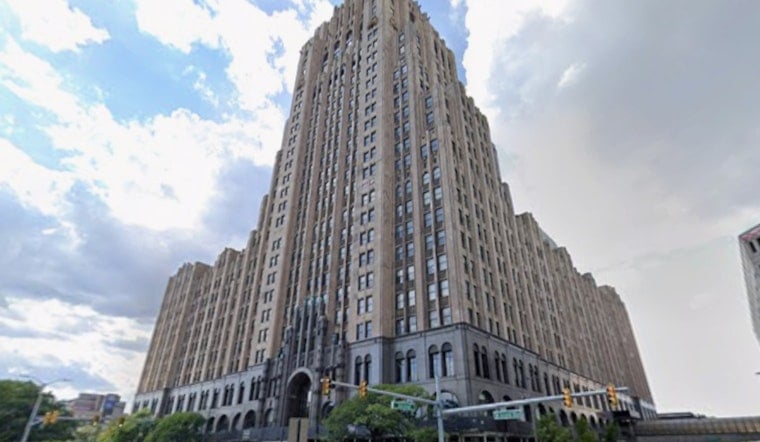
Detroit students headed home early again this week as temperatures climbed and dozens of Detroit Public Schools Community District buildings still lack working air conditioning. The district released students early after the heat index was forecast to exceed 85 degrees on both Tuesday and Wednesday, leaving parents once again scrambling for last-minute childcare in the final days of summer.
Shana Barber said she anticipated another hot day and was available to pick up her niece when the dismissal came, according to WXYZ Channel 7. Barber told the station it is difficult to learn in a school without air conditioning, a frustration echoed by other parents who say they are left wondering how many more heat-related early dismissals will pile up before the school year settles into fall. Cortez Grant, who said many DPSCD buildings are old, told the station the district released students for half a day specifically to prevent anyone from passing out. Grant added that the heat problem existed when he attended DPSCD schools himself, a sign of how long the issue has lingered.
A District Still Midway Through a Massive Retrofit
DPSCD Superintendent Nikolai Vitti said the district's buildings are on average 80 years old, an age that has left much of the infrastructure poorly suited to modern heat waves. Roughly 80% of DPSCD schools are cooled in some way, per the station's reporting, but that figure includes buildings with only partial air conditioning at nearly a third of schools, while full air conditioning exists at around half. The district's broader modernization investment includes air conditioning projects for all but nine buildings, and that work is expected to continue through this year and the next two school years.
The current push traces back to a $700 million post-pandemic fund DPSCD received to modernize its schools. Under the district's Facility Master Plan approved in May 2022, $296 million of that pot was designated specifically for renovations focused on HVAC systems, roofing, and masonry, according to Chalkbeat, with another $281 million set aside to construct five new school buildings. More recently, the district's Board of Education approved a separate $79 million allocation from a $212.8 million fiscal year 2025 general fund surplus toward its Capital Projects Fund, aimed at speeding up facility improvements and demolition projects, as reported by ClickOnDetroit.
Why the District Can't Simply Bond Its Way Out
Vitti has said capital debt from the late 1990s and early 2000s makes it difficult to invest tax dollars in facilities today, a structural problem rooted in how Michigan restructured Detroit's schools a decade ago. Under Michigan Public Acts 192 and 193 of 2016, lawmakers created DPSCD as a debt-free operating entity while leaving the original Detroit Public Schools district responsible for collecting property millages to pay off $1.4 billion in capital debt, according to Chalkbeat. That arrangement limits the new district's ability to issue local capital bonds for infrastructure, leaving DPSCD without a continuing or recurring revenue source to close its larger facilities gap. A 2018 study found the district would need $2.1 billion to bring all of its buildings up to speed, a figure that dwarfs even the $700 million post-pandemic infusion.
The scale of the challenge is also tied to how much smaller the district has become. DPSCD now serves roughly 48,800 to 49,100 students across about 104 active buildings, down from more than 160,000 students and 200 buildings in 2000, according to BridgeDetroit. That leaves the district paying to heat and cool tens of thousands of empty seats inside aging, historic structures even as it tries to modernize the ones still in use. Detroit has occasionally opted for full replacement over retrofit: after determining in 2022 that fixing Cody High School's 1952 building, including its crumbling ceilings and lack of central air, would cost $40 million, the board approved a complete rebuild set to open in 2027, per Hoodline.
The Cost of Uncooled Classrooms
Research helps explain why administrators are quick to send kids home rather than push through a hot afternoon. A study by Harvard University and National Bureau of Economic Research economists found that without classroom air conditioning, each 1°F increase in average school-year temperature reduces student learning by 1%, with the harm falling disproportionately on low-income and minority students, according to the American Economic Association. Charles Williams, another parent quoted in the original report, said simply that school was getting out early that day — a reflection of how routine these dismissals have become for Detroit families even as the underlying infrastructure work drags on for years.
Michigan law adds its own pressure to the calculus. Public school districts must provide at least 180 days and 1,098 hours of instruction each year, and only six emergency calamity days are automatically forgiven before missed time must be made up. That cap means DPSCD administrators are weighing student safety against a hard limit on how many heat days they can absorb without altering the school calendar later in the year.
Detroit is far from alone in this bind. A U.S. Government Accountability Office report found 54% of public school districts nationwide need to update or replace multiple building systems, with 41% needing HVAC repairs or replacements in at least half their buildings. This week alone, the School District of Philadelphia dismissed 52 schools early over the same heat, while Pittsburgh Public Schools shifted 35 non-air-conditioned buildings to remote instruction after forecasts crossed its 85°F threshold, Hoodline reported. For Detroit parents like Barber and Grant, the pattern is familiar: another hot stretch, another early dismissal, and a multiyear repair effort still working its way through a district built for a city three times its current size.





