

























































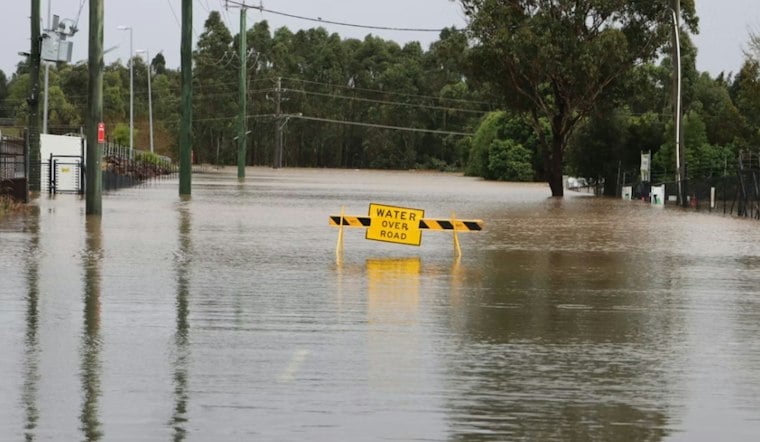
A resident in Dewey found themselves trapped on a flooded ranch late Friday night after heavy monsoon rain swept through Dewey-Humboldt, cutting off rural access roads across the small Yavapai County town.
The flooding was reported by Andrew Christiansen and detailed in a video segment from FOX 10 Phoenix, which noted the resident became stranded as monsoon season continued to dump rain on the region. The incident unfolded just before midnight, part of a pattern of flash flooding that has plagued Dewey-Humboldt and the surrounding countryside throughout the summer.
Dewey-Humboldt's vulnerability to sudden flooding is largely a matter of geography. The town sits along the narrow floodplain of the Agua Fria River, according to federal flood data compiled by FludZone, which shows Yavapai County has recorded 469 National Flood Insurance Program claims totaling $6.2 million in payouts since 1978, with 1,516 active policies now in force across the county. Runoff from the Bradshaw Mountains funnels through the Agua Fria River along with Lynx Creek, Big Bug Creek, and Yarber Wash, according to the National Weather Service, and those dry creek beds can turn into raging torrents within minutes.
Rural Ranches Face Isolation Risk in Sudden Storms
Many properties in the area are working ranches or rural residences with long access roads that cross dry washes, meaning brief but intense downpours can strand residents even when rain barely touches the property itself, per the same drainage analysis. That dynamic appears to explain how Friday night's storm isolated the trapped Dewey resident despite the rain falling well after dark.
Central Arizona Fire and Medical Authority Station 54 in Dewey covers a 41.64-square-mile response zone encompassing the Town of Dewey-Humboldt and surrounding rural ranches, deploying fire engines, brush trucks, and water tenders for exactly this kind of emergency, according to Central Arizona Fire and Medical Authority. CAFMA operates 10 full-time stations serving 100,000 residents across 369 square miles of Yavapai County. When technical swift-water rescues in remote terrain demand it, tactical incident command is directed by CAFMA Battalion 3, headquartered at Station 53 in nearby Prescott Valley, which also oversees public sandbag distribution for the Dewey-Humboldt area.
A Pattern of Flash Flooding Across the Region
Friday's incident is not an isolated case. During a prior thunderstorm in Dewey-Humboldt, CAFMA swift-water rescue personnel were deployed to Lynx Creek after rapid floodwaters trapped a vehicle up to its doors and stranded two bystanders who had tried to help — a reminder from emergency responders that unequipped bystanders frequently become secondary rescue targets themselves.
Severe monsoon storms across Prescott Valley and rural Yavapai County in July dislodged 10-ton shipping containers, inundated homes with mud, and triggered multiple swift-water rescues, as FOX 10 Phoenix reported at the time, prompting local fire crews and the Red Cross to open emergency aid stations. The danger has proven fatal elsewhere in the county: in August, a 7-year-old child died in Prescott's Granite Creek after monsoon rain caused local stream levels to surge up to 6.7 feet in under an hour.
Why the Region Stays Vulnerable Through September
Arizona's monsoon season officially runs from June 15 through September 30, a fixed calendar window that Arizona weather agencies standardized in 2008 for public safety tracking, according to the Arizona Department of Water Resources. The seasonal wind shift that drives the pattern continues drawing tropical moisture northward to produce intense afternoon thunderstorms well into mid-September, meaning more flooding risk remains before the season closes.
Official risk evaluations rank Dewey-Humboldt's wildfire hazard potential higher than 96.6% of communities nationwide, a factor that intensifies flood danger because burn-scarred, stripped mountain slopes cannot absorb rainwater and instead funnel stormwater directly into low-lying washes, per Central Arizona Fire and Medical Authority. That combination of steep terrain, thin soil, and long rural access roads leaves places like Dewey especially exposed each time a storm rolls through.
Arizona law also carries financial consequences for drivers who ignore flood warnings. Under Arizona Revised Statutes § 28-910, known as the Stupid Motorist Law, drivers who bypass posted barricades into flooded roadways can be fined up to $2,000 and billed for the full cost of emergency rescue operations, according to Luke Air Force Base. The statute was enacted in 1995 in response to desert wash dynamics and limited storm drain infrastructure statewide.





