

























































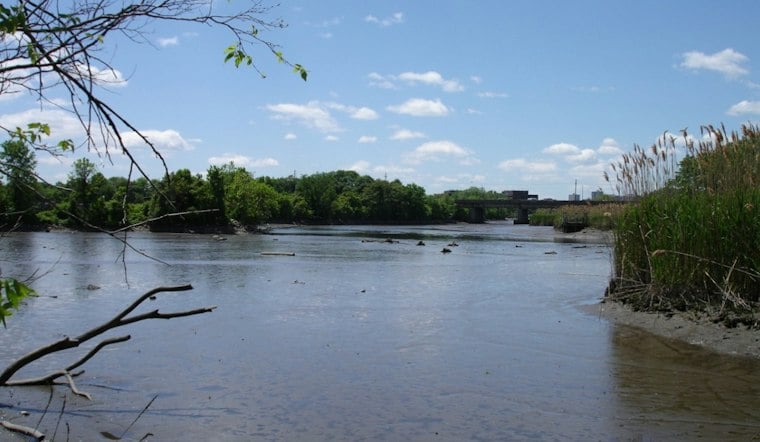
A fuel tank at an Equinix data center in Secaucus spilled diesel fuel into a tributary of the Hackensack River, and state environmental officials say cleanup of several thousand gallons of the fuel will continue into this week. The spill was reported Saturday, and contractors have been working since to remove oil and water from Anderson Creek, the small waterway that received the No. 2 diesel fuel typically used for heating and powering vehicles.
The leak was first reported by NorthJersey.com, according to nj.com, whose reporting identifies Larry Hajna, a spokesperson for the New Jersey Department of Environmental Protection, as confirming that contractors will continue removing oil and water from the creek into the week. Hackensack Riverkeeper Bill Sheehan estimated that 5,500 gallons had spilled, according to a report cited by nj.com from northjersey.com, which first reported the spill. It remains unclear whether wildlife was impacted by the spill, per the same account.
A Marsh Decades in the Making, Now at Risk
Anderson Creek Marsh is no ordinary drainage ditch. The 52-acre tidal wetland along the eastern bank of the Hackensack River is classified as a candidate restoration and preservation site, according to the Meadowlands Research & Restoration Institute. Phragmites treatment left the site dominated by mudflats and open water, with only about 5% naturally recolonized by Spartina alterniflora; the site awaits full restoration. The institute has also maintained continuous seasonal water quality monitoring and sediment sampling across the Hackensack River basin, including sediment traps in Anderson Creek Marsh, since 1993, giving regulators decades of baseline data against which to measure any hydrocarbon impact.
The stakes for contamination in tidal waters are not abstract. In a separate vessel-spill incident, Hoodline outlined a federal response framework under the Oil Pollution Act of 1990 that includes strict liability and the use of federal trust funds, as its coverage of a separate diesel spill earlier this year. Thin petroleum sheens pose severe risks to coastal bird insulation and aquatic life, though the seed reporting does not indicate whether wildlife has actually been harmed in this case.
Why So Much Fuel Sits Beside a Wetland
Equinix's NY4 facility in the same corridor relies on 18 diesel generators capable of producing 2.5 megawatts each, according to Data Center Knowledge. Those generators provide backup power for the facility. During Superstorm Sandy in 2012, the facility ran on emergency diesel generators for over a week while utility power across the New York metro region was severed, Data Center Knowledge has reported.
Those generators are subject to environmental regulation. Separately, the incident raises questions about state rules governing petroleum discharges and cleanup.
A Widening Fight Over Data Centers in New Jersey
The spill lands amid a broader statewide reckoning with data center growth. Equinix operates 10 data centers across the New York/New Jersey region, and New Jersey now hosts more than 70 data centers overall, many of which have operated for decades even as the artificial intelligence boom drives demand for larger facilities, nj.com reports. Gov. Mikie Sherrill signed a data-center reporting law on August 27, requiring owners and operators to report their water and energy use to the state Board of Public Utilities twice a year for three years, since larger facilities can require enormous amounts of electricity and millions of gallons of water.
Opposition has grown alongside that footprint. More than 50 New Jersey municipalities have adopted bans or moratoriums on data centers. In Vineland, residents have sued developers of a 2.6 million-square-foot data center campus under construction, alleging a constant hum from the site has disrupted their lives. A proposed $1.8 billion facility in Kenilworth, planned for the former Merck pharmaceutical campus, has drawn strong opposition and packed local government meetings, while developers there and elsewhere allege local officials caved to public pressure and illegally changed zoning rules, prompting some developers to sue towns that blocked their projects, according to nj.com's reporting.
As data centers supporting telecommunications and financial markets continue to expand across the state, the Secaucus spill offers a concrete example of the physical risks tied to the industry's reliance on bulk diesel storage. The cited material does not establish that Equinix has begun hydrogen-fuel-cell trials at European facilities, and it provides no timeline for hydrogen backup technology at Equinix's New Jersey campuses.





