

























































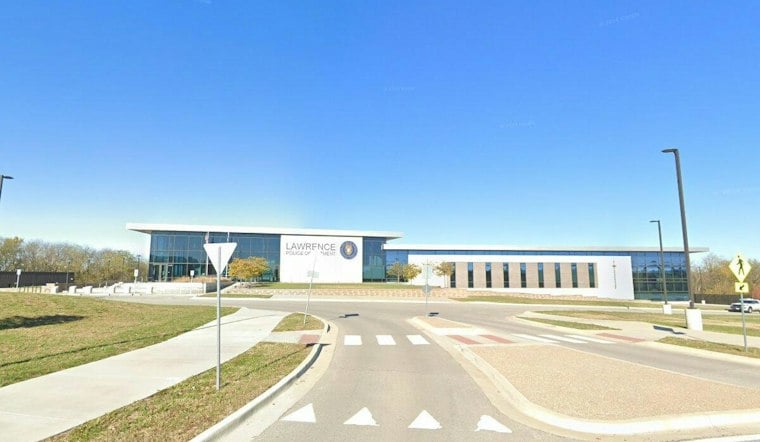
A DNA match with odds of 1 in 848 trillion has led Lawrence, Kansas police to an arrest in a 17-year-old rape case, closing out a cold case that had sat unsolved since 2009. Matthew James Galveston Lawrence, 37, was charged with one count of rape in Douglas County District Court on Thursday after investigators say the Kansas Bureau of Investigation linked his DNA to a 2009 assault on a 20-year-old woman.
According to The Kansas City Star, the victim reported at the time that she was attacked from behind and brutally assaulted while walking home at night in 2009, but police identified no suspects in the case for years afterward. Lawrence police reopened the cold case in July, submitting the old DNA evidence for testing with the Kansas Bureau of Investigation. That re-test, according to an arrest affidavit reviewed by the Lawrence Times, produced a DNA match with a statistical probability of 1 in 848 trillion consistent with Lawrence.
Lawrence was arrested on September 9 and made his initial court appearance the following day, where Douglas County District Court Judge Amy Hanley set his bond at $250,000. Prosecutors had requested $500,000 given the severity of the allegations, while defense counsel asked for $5,000 or house arrest, the Lawrence Times reports. His public defender argued for the lower amount by pointing out that 17 years had passed since the alleged assault, that Lawrence had accumulated only one misdemeanor conviction in that time, and that he remains an established local resident.
Why the Case Could Still Be Prosecuted After 17 Years
The long gap between the alleged 2009 attack and this week's charge is not a legal obstacle in Kansas. Under Kansas Statutes Annotated § 21-5107, prosecution for rape may be commenced at any time, since the state imposes no statute of limitations on felony rape offenses, according to the Kansas Office of Revisor of Statutes. Kansas permanently eliminated the statute of limitations for rape and aggravated criminal sodomy in 2013, meaning the passage of time alone does not shield a suspect from charges once evidence surfaces.
The Kansas City Star's reporting includes comment from Joshua Leitner, who said police are thankful for technological advances and for survivors who come forward, adding that technological advances have made these crimes more prosecutable with clear evidence. The case underscores how DNA testing eventually identified a suspect in a case dating to 2009.
DNA Databases Behind the Cold-Case Breakthrough
The match traces back to how Kansas law handles DNA collection statewide. Under K.S.A. 21-2511, the Kansas Bureau of Investigation DNA Databank automatically collects and uploads DNA profiles upon arrest or conviction for all felonies into the national Combined DNA Index System, or CODIS, according to the Kansas Bureau of Investigation. That system continuously searches millions of local and national profiles against unsolved crime scene evidence, which is how a profile entered into the database years after a crime can eventually generate a hit.
The KBI, established in 1939 and headquartered in Topeka, maintains four forensic laboratories statewide — in Topeka, Great Bend, Kansas City, and Pittsburg — that perform the specialized DNA analysis municipal departments like Lawrence police rely on. Douglas County has seen this kind of forensic breakthrough before: a CODIS match resolved a major cold case in 2006, when a database hit identified a suspect in two 1990s Lawrence rapes and led to a 48-year prison sentence, according to the Lawrence Journal-World.
State law has also pushed departments to process evidence faster in more recent cases. Kansas House Bill 2228 was enacted in 2022, after a statewide inventory discovered 2,200 unsubmitted sexual assault kits sitting in police storage, per Forensic Magazine.
A Separate Arrest Announced the Same Day
Lawrence police also announced Thursday the arrest of a 36-year-old Lawrence man in a separate, unrelated alleged child-rape case. Police withheld details of that case to protect witnesses and victims, and the Kansas City Star reported that the man had not been charged with a crime as of Thursday evening, court records showed; the outlet is not naming him. Police were explicit that the two cases are completely unrelated, and the Lawrence Times separately reported the man's name as Steven Snow.
The Lawrence Police Department's Special Victims Unit reviewed and resubmitted evidence in this case, per the Lawrence Times. The case also reflects the role of technological developments in forensic investigations.



