

























































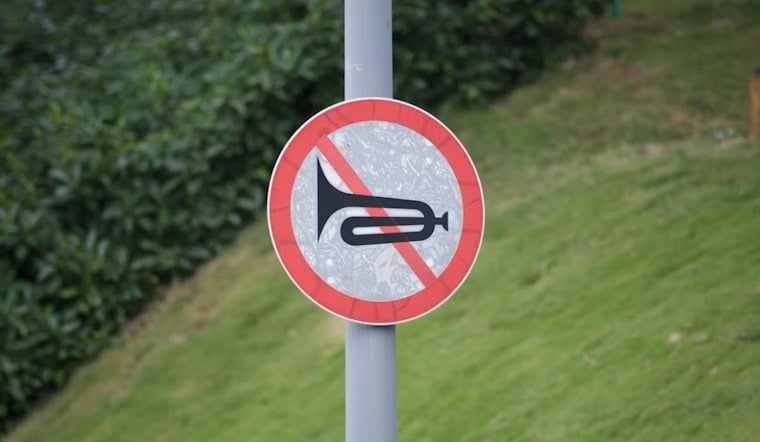
Train horns are once again splitting the night along US-85 in Douglas County, Colorado, after federal regulators suspended a quiet zone that had kept seven railroad crossings silent for more than a decade. Residents near Sedalia, Castle Pines and Castle Rock say the horns now sound during the day and blast as often as eight times overnight, jolting them awake and reviving a noise problem many thought was settled for good.
The Federal Railroad Administration temporarily suspended the Douglas County quiet zone, which had stretched across seven crossings between Atrium Drive and Promenade Parkway in Castle Rock and Manhart Street in Sedalia, according to CBS Colorado. The outlet reports that the agency identified several conditions requiring correction before the zone can be reinstated, though county officials say they currently have no timeline for the area to return to quiet-zone status or for resolving the underlying railway issues.
For residents like Ranee Wilson, the change arrived without any warning. Wilson told the station the suspension happened without notice and called the disruption extreme, saying she experienced a train horn blast from inside her own home. She argued that residents should have been informed before the quiet zone was lifted, and noted that horns have sounded at 1:30 a.m., among other times overnight.
A Decade-Long Fight for Quiet
The US-85 quiet zone was not easy to win the first time. Castle Pines resident Don Somsky, now 86, headed the effort starting in 2009, working to bring together residents, the county and the village board to push for silent crossings, per the same CBS Colorado account. In 2010, that organizing effort delivered petitions signed by roughly 1,300 residents to Douglas County Commissioners and then-U.S. Senators Michael Bennet and Mark Udall, according to The Castle Pines Connection.
That campaign eventually paid off, though it took years. As reported by KUNC, the Douglas County quiet zone covering two public and five private crossings between Castle Rock and Sedalia took roughly five years to establish before it was finalized in late 2014, and a community newsletter published a story on the newly silent zones that same year. Somsky described the train-horn noise as something that drove everyone crazy, and he told CBS Colorado he hopes the quiet zone will be restored soon.
Why the Horns Are Legally Required to Return
Quiet zones don't mean trains stay silent under all circumstances. Even within an approved quiet zone, federal safety rules require engineers to sound locomotive horns during emergencies, when trespassers, pedestrians or animals are near the tracks, or when signal systems malfunction, according to the City of Arvada. Once the FRA suspends a zone entirely, however, Union Pacific and BNSF must sound horns at all seven crossings, a requirement train crews are legally bound to follow.
Federal rules also spell out just how loud and long those blasts must be. Under Federal Railroad Administration regulations, locomotive horns must sound between 96 and 110 decibels in a standardized pattern of two long blasts, one short blast, and one long blast, continuing for 15 to 20 seconds before a train reaches a public grade crossing, per the Federal Railroad Administration. Regulators frame that intensity as necessary for motorist safety, and rail-safety group Operation Lifesaver has cited federal data showing 2,200 to 2,300 highway-rail grade crossing collisions occur nationally each year, underscoring the stakes behind strict crossing oversight.
Getting Quiet Back Requires More Than Patience
Restoring a suspended quiet zone isn't just a matter of waiting it out. Under federal regulations, maintaining or reestablishing a quiet zone requires approved Supplemental Safety Measures such as four-quadrant gate systems, raised medians, or street closures, engineered to keep crossing safety at the same level horns would otherwise provide, per the eCFR. Other cities have faced the same climb back: San Antonio's April 2026 quiet zone suspension required a multi-agency diagnostic review involving city transportation officials, the railroad and the FRA before quiet status could even be considered for reinstatement, according to the City of San Antonio.
Nearby Castle Rock has already gone through that process for its own corridor. In September 2024, the town established a separate Downtown Train Horn Quiet Zone covering three crossings after completing $1.8 million in safety upgrades, funded in part through a developer agreement, according to the Town of Castle Rock. That project remains distinct from the county's suspended US-85 zone, which covers different crossings between Sedalia and Castle Rock.
Part of a Wider Front Range Pattern
Douglas County's horn troubles echo a broader push and pull happening across Colorado's Front Range. Greeley recently announced plans to eliminate train horn noise along its eastern rail corridor, though the city estimates safety infrastructure improvements could cost up to $2 million per crossing, as per Hoodline. Nationally, quiet zones have become far more common, with the FRA counting 1,016 active quiet zones covering more than 5,500 grade crossings as of April 2025, up from roughly 700 five years earlier, according to the National League of Cities.
For now, Douglas County residents are left listening to horns they hadn't heard in years, with no word on when — or whether — the silence will return. County officials have offered no timeline, leaving Wilson, Somsky, and their neighbors to wait out a bureaucratic process that once took half a decade to resolve the first time around.





