

























































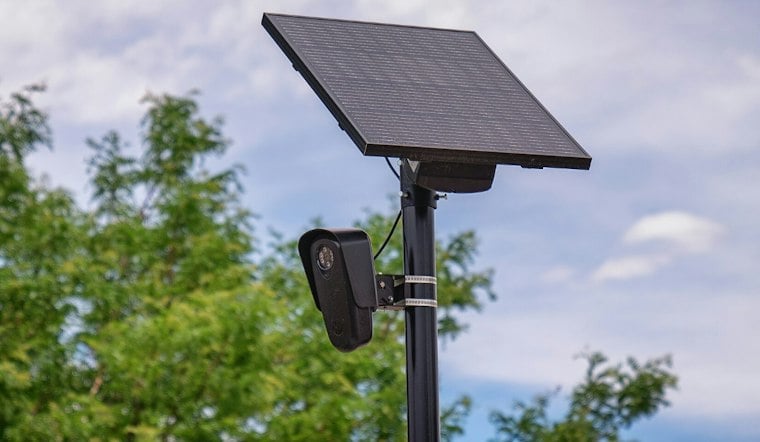
Dracut Police Chief Peter Bartlett says automated license plate reader technology has real evidentiary value in police work, and he watched it pay off firsthand this summer when a trial tie-in with Lowell's Flock Safety camera network helped lead to an arrest in a road-rage shooting on New Boston Road. But with that access now cut off and Massachusetts towns fleeing Flock contracts by the dozen, Bartlett isn't rushing to buy his own equipment.
Bartlett laid out the department's position during a September 22 appearance before the Dracut Board of Selectmen, according to the Boston Herald. He told selectmen that Dracut police, who have only two detectives and describe themselves as understaffed and underfunded, benefited directly from the Flock tie-in when it helped identify a suspect in the July shooting. Limited personnel, he said, makes comprehensive follow-up on some cases difficult without tools like plate-reader hits.
That trial access disappeared after the Lowell City Council voted 6-5 on September 22 to suspend its Flock program indefinitely while it completes a policy review, including how the company handles data, according to Boston 25 News. With Lowell's network offline, Dracut police no longer have Flock equipment in any form. Bartlett said purchasing Flock equipment outright would be an open conversation if Dracut ever decided to move forward on its own.
A Statewide Retreat From Flock
Dracut's caution lines up with a much broader regional pattern. More than 25 Massachusetts municipalities have ended, suspended, or declined to renew Flock contracts over civil liberties, data-sharing, and officer misuse concerns, per tracking data from the ACLU of Massachusetts reported by the same Boston 25 News account. Boston shut down its own Flock pilot after learning the data it collected was not shared exclusively with Boston police but was instead accessible to outside law enforcement agencies nationwide without local approval, the station reported.
The reasons other towns have walked away vary. In Littleton, the town initiated formal contract cancellation and had municipal electric crews shut off power to all six local cameras after discovering Flock had reactivated five of them without authorization following a town-ordered pause, according to the Shrewsbury Post. In Ayer, the Select Board unanimously canceled its contract after resident opposition. Groton terminated its contract on August 31 amid community concerns about privacy and oversight, and Wilmington Police Department announced this month it was ending its own contract ahead of its scheduled February 2027 expiration, expecting a $2,500 refund.
Procurement Problems and Officer Misuse
Some towns have found legal off-ramps rather than simply changing their minds about the technology. Boylston's police department announced it would suspend its system and move toward terminating the contract after working with the Select Board and a legal review found the original procurement violated Chapter 30B, the state's Uniform Procurement Act, according to The 016. Hopkinton similarly instructed Flock Safety to deactivate and remove its cameras after town counsel determined the vendor agreement was noncompliant with state municipal contracting law.
Layered on top of the contract and procurement disputes is a national concern over how officers themselves have used the technology. A national investigation reported in August found that at least 50 law enforcement personnel across the country have faced internal allegations or criminal charges for misusing Flock systems, primarily to track former romantic partners or personal acquaintances. In New Bedford, an officer was placed on leave over alleged misuse of Flock plate searches.
What Neighboring Towns Are Doing
Not every Merrimack Valley community has to decide whether to walk anything back. Tyngsboro Town Manager Colin Loiselle said the town does not have Flock cameras or comparable equipment and will stay that way. Dracut, by contrast, sits in the position of having tasted the technology's benefits through Lowell's now-suspended network and having to decide, with no cameras currently in operation, whether a future purchase is worth the same privacy and data-sharing risks that have driven so many of its neighbors to walk away.





