

























































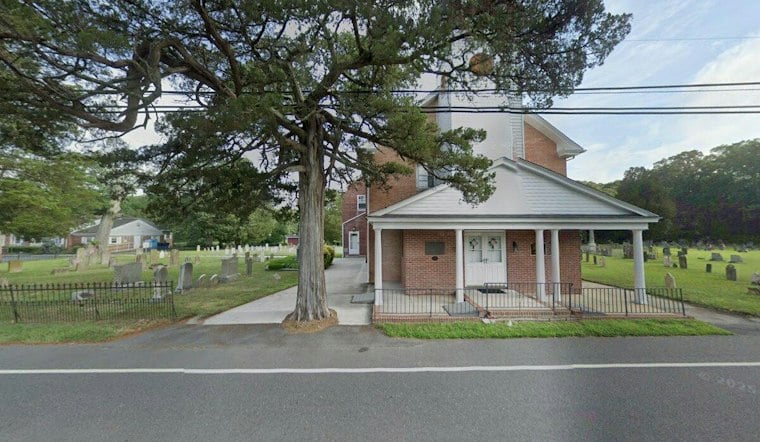
Egg Harbor Township's unanimous decision to freeze new battery energy storage installations through the end of 2026 has halted a proposed project at Zion United Methodist Church before the church could seek formal township approval. The congregation, which has served the Linwood-Egg Harbor Township border area for more than 200 years through weekly worship, a food pantry and blood drives, had been working for months on a potential agreement with a developer.
The church's board of trustees had negotiated a tentative land-lease agreement with Solway Development, a company that builds energy storage systems on underutilized land owned by churches and nonprofits, according to NJ.com. Pastor Keith Roller said the church viewed the arrangement as an additional community service, while the proposed structure would provide steady rental income without upfront costs.
The church's proposal was the only battery-storage project put forward in Egg Harbor Township, according to the report, and it had not yet entered the formal approval process when the moratorium took effect. The measure bars new battery-storage installations through Dec. 31, 2026, while the township drafts local regulations.
Neighbors Raised Fire and Environmental Fears
Vicki Kroger, a township resident who regularly worships at Zion United Methodist Church, said she was concerned about environmental effects, the project's appearance and emergency response in the event of a fire. She also said most of the residents she contacted in the nearby Meadows Run community opposed the proposal. Similar concerns have surfaced elsewhere in the region: in Beach Haven, residents urged borough officials to challenge Atlantic City Electric's battery facility, and the borough retained an attorney to explore legal options, according to The SandPaper. The facility activated its summer schedule on July 1, 2026, and discharged power one day later, when the Ship Bottom substation recorded its highest peak demand in 10 years.
What Battery Fires Show About Emergency Planning
The U.S. Environmental Protection Agency says clear, comprehensive incident-response plans are critical at battery-storage sites because a fire can create challenges involving suppression, emissions and cleanup, according to the agency. A separate example illustrates why officials focus on those plans: The EPA reported that a battery-storage fire at Moss Landing in Monterey County, California, on Jan. 16, 2025, led to a 24-hour evacuation of about 1,200 residents. The incident occurred in California, not at the proposed Egg Harbor Township site, but it is a documented example of the potential response challenges associated with large battery-storage facilities.
Egg Harbor Township officials had already begun drafting local regulations before the moratorium vote, including a proposed ordinance that would require storage equipment to sit at least 100 feet from homes, marshlands and flood-prone areas. That draft ordinance was tabled until a later date, but the township committee called a special meeting this month to hash out the rules after the public pushback over projects proposed on non-municipal land.
Mayor Says Township Needed Rules for New Technology
Mayor Laura Pfrommer said the township needed control over the issue because it had no existing rules governing the new technology. Egg Harbor Township's caution fits into a much larger pattern: industry tracking databases have identified 174 jurisdictions with enacted, considered or expired restrictions, including 112 currently active restrictions, according to Carina Energy.
Fire-safety scrutiny of clean-energy infrastructure is not new to the township. In March, a heavy fire broke out behind an Egg Harbor Township ShopRite at the English Creek Shopping Center, and investigators examined whether rooftop solar electrical components contributed to the blaze, as Hoodline reported at the time. The National Fire Protection Association's NFPA 855 standard is due for an update in 2026, according to Energyscape Renewables.
State Push for Storage Collides With Local Caution
Even as Egg Harbor Township hits pause, New Jersey is pushing hard in the opposite direction. The state is taking preliminary steps to offer incentives for battery storage on private property, including a proposed program that would pay homeowners to share power from their home batteries and help build a network for supplying energy during peak demand, as reported by New Jersey Board of Public Utilities. The New Jersey Board of Public Utilities has said more deployed storage could reduce strain on the state's grid and lower electricity costs overall.
Those efforts trace back to clean energy initiatives passed in 2018 under then-Gov. Phil Murphy, which target 2,000 megawatts of power storage statewide by 2030. New Jersey has already awarded funding for three battery storage projects in Sayreville, Ridgefield and Bordentown expected to add 355 megawatts of capacity, a $413.6 million, 15-year incentive package approved by the state in March under the first competitive tranche of the Garden State Energy Storage Program. New Jersey electricity rates rose 17% to 20% in 2025.
Energy advocates have urged state lawmakers and Gov. Mikie Sherrill to enact policies expanding storage further. The New Jersey Association for Clean and Renewable Energy issued a report calling for faster expansion of battery storage statewide, urging lawmakers to adopt a universal approval process that would require units to be fully approved within 180 days and let developers avoid conflicts with local ordinances like the one Egg Harbor Township is now finalizing. The group also wants the state to offer a 10% to 15% tax credit to major storage system developers.
For now, Zion United Methodist Church's tentative lease with Solway Development remains in limbo, caught between a congregation looking for new revenue to sustain two centuries of community service and a township committee that says it simply needs time to write the rules before any battery ends up in the ground.





