

























































Alfonzo Lopez, the final living member of Bowie High School's groundbreaking 1949 state championship baseball team, has died at 94 in El Paso. Lopez's death was confirmed to ABC-7 by his nephew, closing the book on one of Texas high school sports' most historically significant rosters.
Lopez was part of the first team ever declared Texas state baseball champions, according to KVIA. The 1949 Bowie Bears were a team made up entirely of Mexican American players who accomplished what the station describes as a historic achievement, winning the trophy at a time when the University Interscholastic League had only just begun organizing a state-sanctioned baseball tournament in Texas, per the UIL.
The team clinched the title with a 3-2 victory that delivered Bowie its first state championship trophy, the station's report notes. To get there, Bowie had already survived a marathon 12-inning, 4-3 semifinal win over Waco High School, decided by a game-winning single from shortstop Ruben Rodriguez, according to the UIL's tournament records. In the title game itself, pitchers Javier “Lefty” Holguin and Trini Guillen combined to hold Stephen F. Austin High School hitless through six of the seven innings, a detail preserved in a Facebook post from the team's alumni community, which recalled the win coming in front of 2,705 spectators in Austin.
A Championship Forged Against Segregation
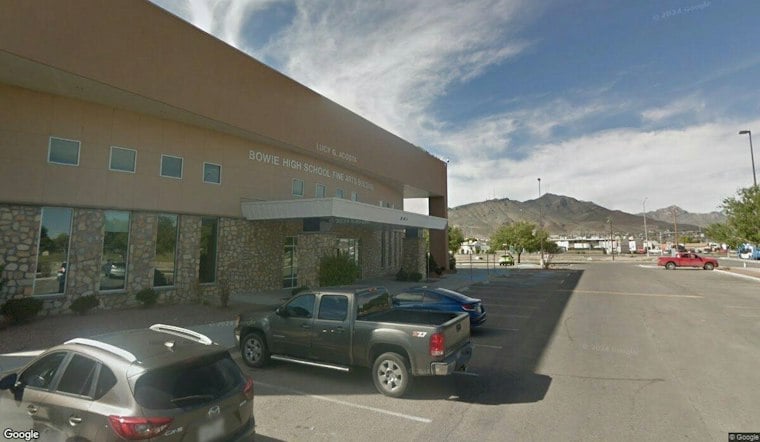
Bowie High School was established in 1922 in El Paso's El Segundo Barrio, a segregated Mexican American neighborhood where players developed their skills using sawed-off broomsticks for bats and hand-stitched remnants for gloves because of minimal school athletic funding, according to a statement entered into the Congressional Record. On the road to the title, the team encountered signs reading “No Mexicans Allowed,” according to Roberto Franco, who interviewed Lopez about the team's journey. The players also slept under the bleachers of a football stadium and ate outside during that postseason run, per the same account.
Franco, who spoke with Lopez in 2024 about the team's story, said the championship meant a lot to the community at the time. He described the win as a story every El Pasoan should know, and said the team's memories were kept alive and would not fade with time. Franco went further, describing the team's story as material for movies.
A Coach Who Broke His Own Barriers
Bowie's head coach, William Carson “Nemo” Herrera, brought his own championship pedigree to the barrio program. Herrera had previously led San Antonio's Sidney Lanier High School to state basketball championships in 1943 and 1945, making him one of only a few Texas high school coaches to win state titles in two different sports, according to the Texas State Historical Association. He was later inducted into the Texas High School Coaches Association Hall of Honor in 1967 as its first Hispanic member, the same organization notes.
Bowie had only formed its official baseball program three years before the 1949 title run, in 1946. Seven Bowie players were named to the All-State team following that championship season, and the school later renamed its baseball facility the Nemo Herrera Memorial Baseball Field in his honor, the historical association's records show. The team reportedly kept the championship trophy throughout the Korean War era, holding onto the symbol of their achievement even as the world around them changed.
A Legacy Preserved in Congress and in the Community
The Bowie Bears' story reached national prominence in June 2011 when Sports Illustrated published an extensive feature by Alexander Wolff titled “The Barrio Boys,” which was later read into the U.S. Congressional Record. The championship also stands as the first state sports title ever won by an El Paso high school, according to the El Paso Baseball Hall of Fame.
Bowie teammates continued meeting to talk whenever they were back home, keeping their bond intact for decades after the final out in Austin. In February 2021, the El Paso Independent School District and community members organized a drive-by parade in West El Paso to celebrate Lopez's 89th birthday, according to KVIA, with Lopez formally recognized that day as the final living member of the championship roster. With his death, El Paso loses its last direct link to a team that, as Franco put it, gave the city something to be proud of: a group of local boys who made history.



