

























































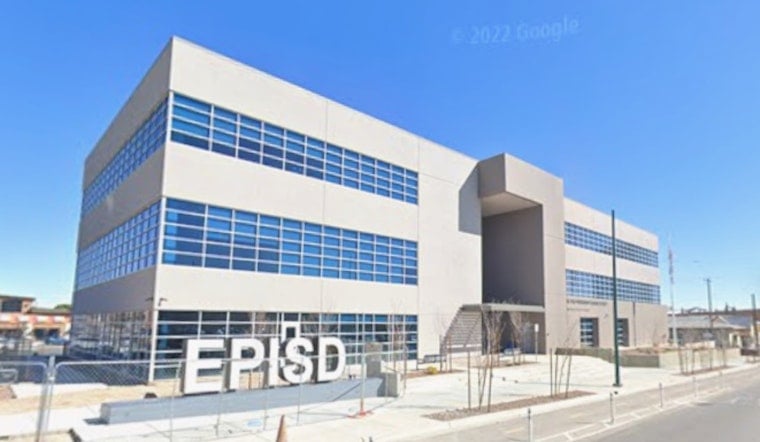
Long before he dreamed up starships and distant galaxies, Gene Roddenberry was just a baby born in El Paso, Texas. Decades later, the city honored its native son by naming its public planetarium after him, a facility that still runs free public shows beneath a 360-degree dome in a renovated gymnasium in Northeast El Paso.
The Gene Roddenberry Planetarium first opened its doors in 1969, built as a joint effort between El Paso Public Schools, the National Science Foundation, and the Woman's League of El Paso, according to El Paso ISD. The original facility featured a 40-foot dome and an analog Spitz star projector, a mechanical marvel for its era. It would take more than three decades before the venue carried the name of the Star Trek creator, with EPISD officially dedicating it as the Gene Roddenberry Planetarium in 2001 after district employees petitioned the school board once they discovered that Roddenberry had been born in the city.
A Star Trek Creator Born Near Fort Bliss
Roddenberry was born on August 19, 1921, on East Yandell Drive in El Paso's Five Points area while his father was stationed at Fort Bliss as a U.S. Army private, according to the Texas State Historical Association. The brick home where he spent his infancy at 1907 E. Yandell Drive was demolished in 1969 — the same year the original Star Trek series was canceled and, coincidentally, the same year the planetarium was built, as detailed by a historical account on Medium.
El Paso's relationship with honoring its Star Trek connection hasn't always been simple. A commemorative plaque was dedicated at a local shopping center in 2002 during an El Paso Star Trek convention, but a separate legislative push around the same time to designate a Gene Roddenberry Memorial Highway failed after constituents objected over his secular philosophy, per the same Medium account. The planetarium has effectively become the city's most enduring tribute to Roddenberry, sidestepping the controversy that sank the highway proposal.
From Boeing Drive To A Converted Elementary School Gym
The planetarium hasn't always sat where it does now. As reported by 93.1 KISS FM, EPISD partnered with the City of El Paso in 2019 to relocate the facility from its original Boeing Drive location to a converted gymnasium at the former Crosby Elementary School campus in Northeast El Paso, a move supported by $1.2 million in federal Community Development Block Grant funding. The renovated theater departs from the standard planetarium layout: instead of fixed rows of chairs, the space features unbolted, movable seating beneath its dome, which lets the venue double as a host site for community events like space camps and evening yoga classes, according to a report from CBS4 Local.
The upgrades didn't stop at the seating. Following a local audit, EPISD officials confirmed in August 2024 that more than $450,000 in federal ESSER relief funds had gone toward modern technology, curriculum materials, and display upgrades for the planetarium, according to KFOX14. Today the venue runs on a DigiStar digital projection system, a significant leap from its analog beginnings — EPISD notes the facility first retired its original 1969 Spitz star projector back in 2009 when it installed its first-generation DigiStar system.
Free Shows Still Open To The Public
Since it first opened in 1969, the planetarium has educated and entertained more than 2 million visitors from across the El Paso borderland region, per EPISD figures. The facility remains open to the public today, offering multiple showtimes and monthly programming, with reservations available for tickets. Admission carries no charge, keeping the space education technology accessible to families across the city long after the original Boeing Drive building closed its doors.
The planetarium's story sits alongside a broader wave of nationwide attention on Roddenberry's legacy this year, as communities elsewhere have marked the 60th anniversary of Star Trek with their own tributes, including a Texas celebration featuring Oscar winner Barney Burman that Hoodline covered in Garland. But in El Paso, the tribute isn't tied to an anniversary. It's a fixture of the city's own skyline lore — the same city known as the Sun City, home to a glowing star carved into its mountainside — and a planetarium that, more than half a century after its founding, still bears the name of the boy from East Yandell Drive who imagined a future among the stars.





