

























































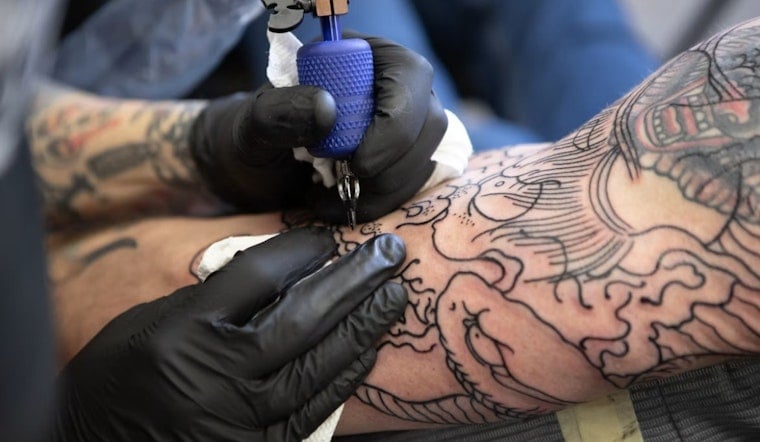
El Paso city officials want tattoo and body art studios to pass an inspection before they can get or renew their city registration, a proposal that follows code enforcement findings of unlicensed shops and what officials describe as inadequate hygiene and cleanliness at some locations. Under the plan, shops would need to provide proof of an approved inspection, which the city would conduct within 10 business days of a request.
Steve Alvarado, El Paso's code enforcement director, presented the proposed ordinance changes at a city council meeting, according to KFOX. Alvarado said the city is working to support tattoo businesses while also ensuring public safety, and told the station that a shop must take its passing inspection score to the one-stop shop before its permit can be issued. City records reviewed on El Paso's Legistar system show the ordinance, filed as File #26-0913, amends Sections 5.10.030, 5.10.040, 5.10.080, 5.10.120 and 5.10.140 of the municipal code to require pre-inspections before registration, clarify reasonable entry times for code officers, and make refusing entry explicit grounds for denial or revocation of a shop's registration.
What Inspectors Say They've Found
Code enforcement has found not just unlicensed tattoo shops but also shops operating with expired licenses, the department told KFOX. Omar Esparza, the department's field operations supervisor, is also involved in the initiative. Officials say poor practices at tattoo shops can lead to the spread of HIV, AIDS or hepatitis, underscoring the stakes behind the proposed inspection requirement.
The health risk isn't abstract. Hepatitis B can survive on unsterilized surfaces outside the body for up to seven days and is 50 to 100 times more infectious than HIV, according to health education documentation cited by OSHA training providers. Industry safety studies from the Association of Professional Piercers, cited in the same reporting, indicate that strict compliance with universal precautions and sterilization procedures can cut bloodborne pathogen transmission risk in body art settings by up to 95%.
New Disclosure Rules For Individual Artists
The proposed ordinance changes wouldn't just affect studios — they'd also reach individual artist licensing. Artists applying for a city license would be required to disclose the name and address of the studio where they work, a disclosure that is currently optional. Sergio “Sketch” Alarcon, a tattoo artist, told KFOX that obtaining a tattoo license is really easy under the current system, a comment that speaks to why officials are pushing tighter requirements.
Code enforcement says it aims to educate shop owners and bring them into compliance with both city and state requirements, rather than simply punishing violators. That local push sits atop an already layered regulatory system: tattoo and body art establishments in El Paso must also secure an Environmental Health Department pre-opening inspection and fire clearance from the El Paso Fire Marshal before they can open, according to StartPermit. Statewide, every studio must additionally hold a Texas Department of State Health Services license under Chapter 146 of the Texas Health and Safety Code, which costs $927 for a two-year period.
State Law Already Allows Surprise Inspections
Texas law already gives state health inspectors broad authority to show up unannounced. Under Texas Health and Safety Code Section 146.016, DSHS inspectors can inspect tattoo or body piercing studios at any time during operating hours, and owners are required to grant access, with reasonable timeframes given to fix any violations cited. Individual practitioners also face their own compliance load: under OSHA Standard 29 CFR 1910.1030 and Texas administrative rule 25 TAC § 229.405, artists must maintain annual Bloodborne Pathogens Training certification and documentation of their Hepatitis B vaccination status, or a signed declination form, to legally work in any shop.
Recent state legislation has added even more to that list. Texas House Bill 1778, passed during the 89th Legislative Session, added new statewide requirements under Chapter 146 requiring employee human trafficking prevention training and expanded awareness signage in studios, according to the Texas Department of State Health Services.
Shop Owners Want a Seat at the Table
Not everyone in the industry is simply nodding along. Orlando Rodriguez, owner of Renegade Tattoo, said tattoo artists want a voice in how the industry is regulated. Rodriguez also said he believes the tattoo industry in El Paso is oversaturated, a concern that colors how some shop owners view yet another layer of city oversight on top of existing state and municipal fees.
Those existing fees are already substantial. Individual body art licenses in El Paso cost $67 annually, while studio owners pay a $62 application fee plus $12.50 per month, and individual artist licenses can't be transferred between studios. In response to industry concerns, Alvarado announced that the city will hold quarterly meetings with tattoo artists going forward. El Paso City Council is scheduled to hold a public hearing on the proposed ordinance changes on September 15.
Not the City's First Overhaul
This wouldn't be the first time El Paso has rewritten its tattoo rules. The city's ordinance under Title 5, Chapter 5.10 was previously overhauled in July 2012 after a year of stakeholder meetings, a process that established a unified artist license across multiple local studios and aligned city rules with state health standards, according to city records. Whether the current round of proposed changes follows a similarly collaborative path may depend on how the quarterly meetings and the September hearing play out.



