

























































A recreational-vehicle plant in Bristol, Indiana is set to permanently shut its doors on September 17, eliminating 105 jobs, as the industry that dominates Elkhart County's economy keeps shrinking under the weight of tariffs, high interest rates, and cooling consumer demand. The closure lands in a county that makes more than 80% of the world's RVs, a concentration so extreme that economists and reporters alike treat Elkhart County as a real-time gauge of the broader American economy.
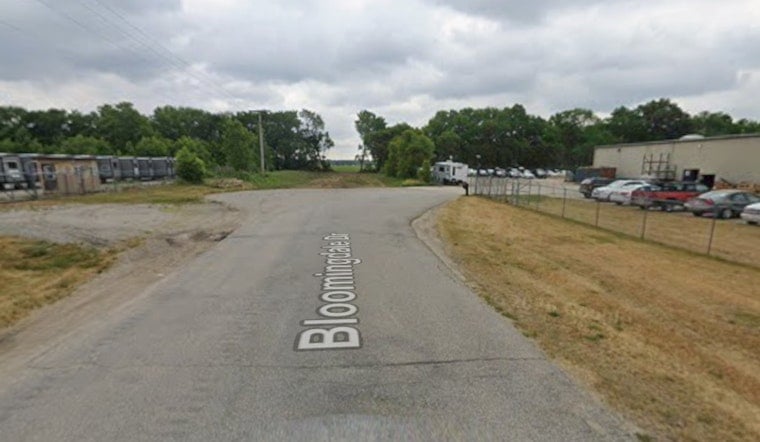
Forest River Inc. filed a WARN Act notice confirming it will close its Plant 63 facility at 2275 Bloomingdale Drive, according to Inside INdiana Business. The Plant 63 facility was not part of Forest River's previous round of 160 layoffs in late 2024, meaning this is a fresh cut rather than an extension of earlier trouble. As IndyStar reports, RV industry workers are being laid off across the county as the downturn deepens, and RV facilities more broadly are experiencing closures.
Chris Stager, CEO of the Economic Development Corporation of Elkhart County, told IndyStar that the RV industry has softened considerably, echoing a similar assessment from Steve Clark, who said tariffs have hurt the RV industry directly. Two Elkhart County companies had already closed earlier in 2026, per the same report, and RV companies are increasingly being acquired by other companies as the sector consolidates. Higher consumer costs tied to tariffs have softened demand for RVs, while elevated gas prices have further reduced consumer inclination to purchase RVs and travel, IndyStar notes.
Tariffs Squeeze a County Built on Wood, Plastic and Aluminum
Elkhart County processes wood, plastic and aluminum into RVs and other goods, and a quarter of its jobs sit in industries targeted by early retaliatory tariffs, according to the same IndyStar reporting. Goods from more than 80 countries are now subject to tariffs of around 10%, and Canada instituted a similar tax on U.S. exporters after President Trump raised the tariff on Canadian goods to 50%. Stager said the tariffs have also pushed some Elkhart manufacturers to bring supply-chain parts back into the county, even as the broader trade fight raises consumer costs.
The national numbers back up what workers are seeing on the floor. Total U.S. wholesale RV shipments fell 13.1% year-over-year in June to 25,484 units, pushing first-half 2026 shipments down 14.2% to 163,644 units, the lowest first-half output since before 2016, according to RVtravel. Towable RVs, the segment most associated with Elkhart's factories, saw the steepest decline, with first-half shipments down 16.8% compared to 2025.
The RV Industry Association responded in August by lowering its full-year 2026 wholesale shipment forecast to roughly 314,000 units, an 8.2% drop from 2025 and well below its earlier estimate of 349,000 units, citing elevated interest rates, high fuel prices, and geopolitical uncertainty. Major manufacturers like Alliance RV have already cut assembly line schedules from five days a week to four, a sign that the slowdown is reshaping how factories operate even before more layoffs are announced. That kind of production pullback also depresses earnings for production-paid RV workers whose pay depends on how many units roll off the line, IndyStar reports.
Unemployment Climbs From a Historic Low
The Elkhart-Goshen metro area had, at one point, the country's lowest unemployment rate, but federal labor statistics tell a starkly different story for this summer. The unadjusted unemployment rate for the metro area rose to 3.8% in June, up from 2.7% in April, according to the U.S. Bureau of Labor Statistics. Total nonfarm employment in the region fell from 133,600 jobs in May to 130,300 in July, a drop of more than 2,000 jobs entering mid-summer.
The region's labor force has also struggled to fully recover from the pandemic. The Elkhart-Goshen area's average labor force remained nearly 5,000 workers below its 2019 level even as of 2026, per the Indiana Business Research Center, with the combined labor force averaging around 98,800 workers in 2025 compared to more than 103,800 in 2019. IndyStar notes the region also lost thousands of manufacturing employees from its 2022 peak, and that the area saw a significant employment dip in July 2025 as well.
Echoes of 2009, When Obama Came to Town
None of this is new to Elkhart. During the Great Recession, the Elkhart-Goshen region experienced the sharpest unemployment increase of any U.S. metropolitan area at the time, with the local jobless rate rising from 12.5% to 18%, per IndyStar. President Barack Obama visited Elkhart in February 2009 to highlight the crisis and returned in 2016; Obama told residents that people in Elkhart were good workers and neighbors who helped each other during hard times. President Trump also visited Elkhart in 2018. More than half of the Elkhart metro workforce works in manufacturing jobs, according to the same report, making the county unusually exposed to swings in a single industry.
More than half the manufacturing workforce here means the county's fortunes rise and fall almost entirely with RV demand, and that demand surged during the pandemic before softening sharply, IndyStar reports. Elkhart County voters supported Donald Trump by around 30 percentage points in 2024, even as the tariffs tied to his administration are now squeezing the very manufacturers that employ many of those voters.
Local Politics Turns to Data Centers and Layoffs
The economic strain has become a live political issue. John Brewer, an RV-industry factory worker running as a Democratic candidate for Elkhart County Council, has built his campaign around opposition to data centers, which IndyStar describes as deeply unpopular in the county. Brewer said many of his coworkers are first-generation Americans from El Salvador and Mexico, a reflection of a county where nearly one-fifth of the population is Hispanic or Latino and a little over 5% is Black, and where good-paying manufacturing jobs have long attracted immigrants to Elkhart and the surrounding counties.
That political tension over data centers culminated in the Elkhart Common Council voting 9-0 on August 27 to enact a moratorium halting new applications for data centers and battery energy storage facilities through December 2027, according to Inside INdiana Business. Concerns over excessive municipal water and power consumption tied to data centers have prompted similar moratoria across several Indiana counties this year. Gabrianna Gratzol, a Democratic candidate for Senate District 11 who works in plastic manufacturing, is running for the seat previously held by Sen. Linda Rogers, who was ousted in the 2026 GOP primary.
Brent Curry, a 71-year-old Elkhart city councilor and NAACP president who retired from Indiana Michigan Power, worked seven days a week for a mobile-home and RV furnishings company earlier in his career, IndyStar reports. Curry's story reflects a broader pattern in local politics: Elkhart Republican leaders work with Democratic mayors in Elkhart and Goshen even amid partisan disagreements. Aaron Mishler, a Democrat on the Elkhart City Council and a nurse, founded Dem Guns in 2025, a group that now has 500 members nationwide and aims to provide a space for gun-loving Democrats; Mishler has said the party can address root causes of gun violence while still supporting Second Amendment rights. IndyStar also notes the county's Democratic Party had 21 more state-convention delegate candidates than available seats this cycle, and that the county continues to struggle to retain college graduates.
Betting on the River as RVs Wobble
Amid the manufacturing turbulence, local leaders have leaned on state grant money to diversify downtown Elkhart's economy. The Indiana Economic Development Corporation awarded $45 million in READI 2.0 funding to the South Bend–Elkhart region in April 2024, according to the South Bend–Elkhart Regional Partnership, capital that helped fund the Elkhart River District 2.0 development. That project aims to build 284 residential units along with retail space and public art along the riverfront. The READI program was created by former Indiana Gov. Eric Holcomb and has been championed by current Gov. Mike Braun, and Elkhart County used those dollars to revamp its river area even as the RV market softened after its pandemic-era sales surge.
Even that diversification effort runs against a tightening budget picture. Senate Enrolled Act 1, signed into law in April 2025 as Public Law 68-2025, reduced local government budgets in order to deliver an estimated $1.3 billion in statewide property tax relief over three years, including a 10% credit worth up to $300 on homestead tax bills. The law phases in homestead deduction changes through 2031 while also capping local income tax collections and restricting local government borrowing, according to the Indiana General Assembly, squeezing the same local governments trying to cushion the RV downturn.
Stager, for his part, argued the country should reevaluate its reliance on the service economy and return to building things, a sentiment that resonates in a county that still produces most of the world's RVs and bottles the bulk of North America's Febreze. Elkhart and its neighboring counties are also home to one of the nation's largest Amish settlements, another thread in a local economy built on manufacturing and craftsmanship. Whether that identity can weather another round of tariffs, consolidation, and plant closures remains the open question hanging over the county as Forest River's Bristol workers prepare to lose their jobs this month.





