

























































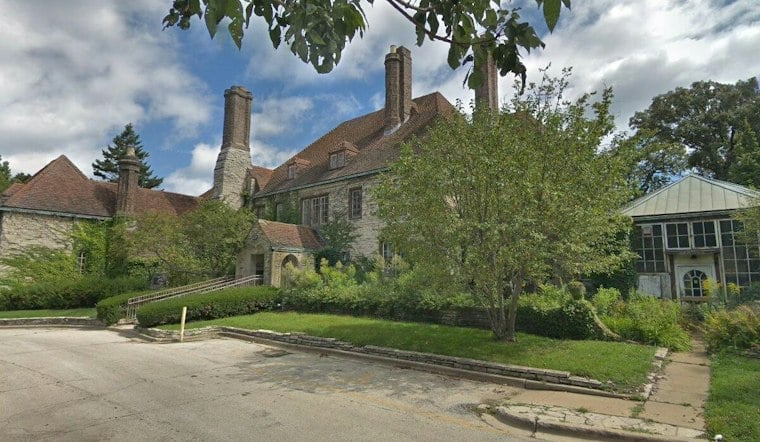
The Harley Clarke Mansion, a publicly owned lakefront landmark at 2603 Sheridan Road that has sat empty for more than a decade, has cleared a major hurdle toward new life. The Evanston Preservation Commission has unanimously endorsed a $30 million restoration plan from Celadon Construction and the Harley Clarke Development Company, setting the stage for work that could begin soon.
The commission's approval, reported by The Real Deal, marks a procedural milestone for a property that has lacked a use for over a decade, according to the outlet. Celadon still needs approval from the Evanston Land Use Commission before construction can start, per the same account. The developers plan to transform the mansion into a public meeting space, wedding venue, restaurant, and ice cream parlor, and the exterior renovations will be handled by Revive Architecture, an Evanston-based firm, the report notes.
Painstaking Work on a 1920s Landmark
The restoration plan calls for meticulous attention to period detail. Developers intend to restore the mansion's roof, steel-framed windows, and tiled bathroom to 1920s conditions, and crews plan to bring in stone carvers to shore up ornamental details, according to the report. Thousands of rooftop clay tiles will reportedly be removed and cleaned individually as part of the exterior work.
Inside, Scott Henry, a principal of Celadon, said the interior work will rebuild the building's second floor, since the first and third floors hold the lion's share of the mansion's interior historic material, per the same account. Only minor polish is planned for those two floors, the outlet reports.
A Decade of Failed Plans Before This One
The mansion, designed by Chicago architect Richard Powers and commissioned in 1927 by utility magnate Harley L. Clarke, was completed as an English Tudor estate featuring a rough-faced limestone exterior, a Ludowici clay tile roof, and six chimneys, according to Landmarks Illinois. Its 4.7-acre grounds were laid out in 1928 by Prairie School landscape architect Jens Jensen and his protégé Alfred Caldwell, incorporating stone terraces, hemlocks, and a signature Indian Council Ring, as detailed by The Cultural Landscape Foundation. The foundation also discusses Jensen's role in the landscape's design.
The Clarke family sold the estate in 1950 to the Sigma Chi fraternity, which later used it as its national headquarters before selling it to the City of Evanston in 1965 for $750,000 to expand the municipal beach, according to city records. The mansion later housed the Evanston Art Center until the organization vacated the property in 2015, leaving it vacant ever since.
Public Pressure Has Shaped Every Attempt
The site has drawn intense political sensitivity for years. In 2013, Evanston rejected a proposal from billionaire investor Jennifer Pritzker to open a boutique hotel, amid public opposition to privatizing public lakefront land, as reported by The Real Deal. A subsequent demolition push was spurned in 2018 after roughly 82% of Evanston voters supported a non-binding referendum to preserve the mansion and grounds for public access, according to The Daily Northwestern. City Council abandoned the demolition plan that December.
The next attempt also fell short. Author Audrey Niffenegger tried to turn the property into a literature center, but the effort ended because of a lack of funding. The mansion carries formal historic protections, too: it was designated an Evanston Landmark in 1982 and listed as a contributing structure in the National Register's Northeast Evanston Historic District in 1999, per Landmarks Illinois, which also placed it on its Most Endangered Historic Places list in 2016.
Celadon's Path to the Current Deal
Celadon's current plan traces back to October 2024, when the Evanston City Council voted to authorize staff to negotiate a 99-year lease with the firm for its adaptive reuse proposal, then estimated at $29 million, as Evanston Patch reported at the time. That proposal ranked highest among four proposals and was deemed most financially viable, according to the outlet. Other proposals were also under consideration.
The project is planned to proceed to construction and a public opening. The project is projected to return the long-vacant property to commercial use and generate approximately $1 million in annual local tax revenue for Evanston, per The Real Deal's reporting.





