

























































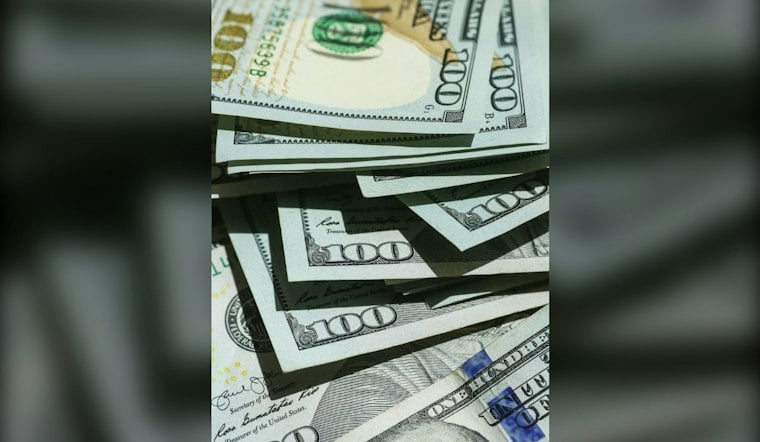
For Oak Street businesses, a counterfeit $100 bill can turn an ordinary sale into a direct loss: one transaction at Paulie's Italian Deli on Oak left the shop out $40 in change and the cost of a free meal. The incident has prompted merchants to weigh detection equipment and customer-ID checks against the demands of serving customers.
A Bill That Looked Real Until It Didn't
Paul Tufaro, who owns Paulie's Italian Deli on Oak, discovered the counterfeit $100 bill after a customer paid with it, according to WDSU. Tufaro said the bill initially appeared legitimate, but on closer inspection it had ridges and was missing the blue security stripe that marks genuine currency. By the time he caught it, the deli had already handed back $40 in change and thrown in a free meal as part of the transaction.
After the incident, Tufaro posted a video online announcing a possible policy change, WDSU reported. If the problem continues, he said, the deli may begin checking IDs for every $100-bill payment.
Kava Bar Stopped Taking Hundreds, Then Bought a Detector
Euphorbia Kava and Coffee Bar had also faced counterfeit losses, WDSU reported: roughly $300 from multiple incidents last year. Michael Donahoe, the shop's manager and part-time owner, said some of the fake bills were difficult to identify.
The shop responded by temporarily refusing $100 bills and later installing a counterfeit-bill detector, according to WDSU. Donahoe said the coffee bar has not had a counterfeit-bill issue since.
Why Bleached Bills Slip Past Basic Checks
Part of the challenge is that counterfeiters have gotten more sophisticated than the fake-looking bills of the past. WTOL 11 reported that more than $30 million in counterfeit cash had been successfully used in the United States, and described criminals using chemical solvents to bleach genuine $1 bills and reprint $100 note designs on the real currency paper underneath. Because the paper itself is authentic, these bleached bills can pass basic texture checks with ease.
That technique can make basic detection more difficult. Security experts instead recommend combining ultraviolet light with magnetic ink detectors for higher-denomination bills, the same analysis notes.
Genuine $100 bills carry specific security features designed to resist this kind of replication. Authentic notes include a 3D security ribbon and color-shifting ink.
Why $100 Bills Are the Costliest Target
While $20 bills are passed more often nationwide, $100 bills tend to cause the largest financial hit per fake note, according to Nadex Coins' cash processing analysis. Lower cashier scrutiny on smaller bills combined with the bigger single-transaction payout of a $100 note makes it the more damaging denomination for a business like Paulie's Italian Deli to absorb in one sitting.
What the National Ranking Shows
The U.S. Secret Service identifies the $20 as the most counterfeited banknote denomination. That ranking does not provide an estimate of how many counterfeit notes are in circulation nationally, or establish which bills are most costly to Oak Street businesses.
What Business Owners Are Being Told to Do
Michael Drummond, president of the Better Business Bureau of the Greater New Orleans Area, said counterfeit bills can effectively steal directly from a company's bottom line. He said a few seconds of careful inspection at the register can save a business hundreds of dollars. The Better Business Bureau has advised businesses to remain vigilant and inspect bills carefully even without a detector on hand.
People who discover a suspect bill can contact a local Secret Service office or police department, or surrender it to a bank or local law enforcement. The stakes for getting caught passing fake cash are steep: Federal law, 18 U.S.C. § 472, carries penalties of up to 20 years in federal prison for passing or possessing counterfeit federal currency with intent to defraud, per Cornell Law School's Legal Information Institute.
Oak Street's business owners are now left weighing detectors, ID checks, and a little extra caution at the register against a fraud trend that shows no sign of slowing.





