

























































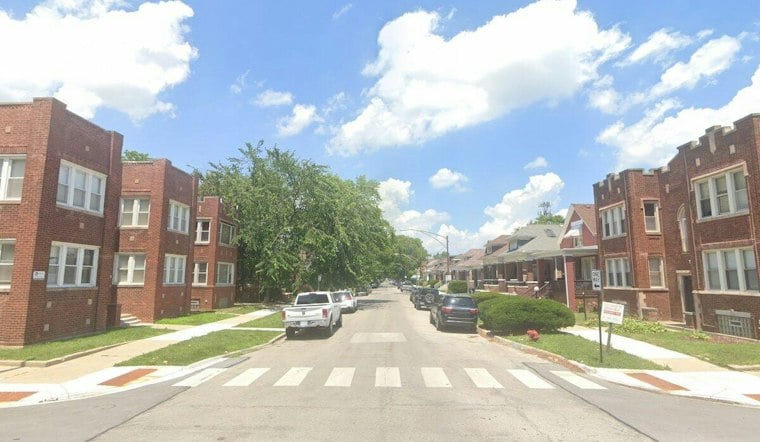
A family argument over an elderly woman's care ended with her son fatally shooting her daughter's boyfriend on a Greater Grand Crossing block Sunday night, according to police. Mark Hurn, 54, was shot in the chest, abdomen and legs around 10:40 p.m. in the 500 block of East 76th Street and died roughly 40 minutes later at the hospital.
According to the Chicago Sun-Times, police responded to a call of a person shot at that address and found Hurn suffering gunshot wounds. He was rushed to the University of Chicago Medical Center, where he was pronounced dead at 11:22 p.m., per police and the medical examiner. Investigators say the shooting followed a family argument that turned violent when a man fatally shot his sister's boyfriend, with the alleged shooter identified as the brother of Hurn's girlfriend.
Dispute Over a Mother's Care Turns Hostile
Per the police report cited by the Sun-Times, the family argument involved the alleged shooter's mother and her care, and a witness said the alleged shooter became hostile toward Hurn during the dispute. The alleged shooter reportedly asked Hurn to step outside, and relatives told police they heard three gunshots shortly after. The alleged shooter then ran away from the scene, according to the police report, and Area 2 detectives are investigating the shooting.
Hurn was taken to UChicago Medicine, whose Level 1 adult trauma center opened in May 2018 and ended a 30-year absence of adult Level 1 trauma care on Chicago's South Side, according to UChicago Medicine. A 2026 study published in JAMA Surgery and detailed by South Side Weekly found that the trauma center's opening was associated with a nearly 4% reduction in shooting deaths within its service area, tied to shorter emergency transport times.
A Neighborhood Still Grappling With Violence
The shooting happened within Chicago Police Department's 3rd District, known as Grand Crossing and headquartered at 7040 South Cottage Grove Avenue, which patrols Woodlawn, South Shore and Greater Grand Crossing. Greater Grand Crossing continues to grapple with violence, and the neighborhood still carries one of the highest per-capita homicide rates among the city's 77 community areas, per Wikipedia.
It is the latest in a string of fatal disputes along the same corridor. In August, police investigated a separate case on West 76th Street in which a 59-year-old man was beaten and slashed to death. Police had released no motive in that killing, and a personal dispute was one possible explanation.
Citywide Trends and Prosecution
Chicago's overall homicide count fell 29% in 2025 to historic lows, but domestic-violence homicides rose 15% that same year, prompting Cook County State's Attorney Eileen O'Neill Burke to establish a specialized Domestic Violence Homicide Unit in March 2026 focused on those cases, according to CBS News. Citywide, homicides ticked up 3% in the first half of 2026 compared to the same period a year earlier even as robbery and carjacking both fell sharply, per a Council on Criminal Justice report covering police data through June 2026.
Under Illinois law, a first-degree murder conviction carries a mandatory prison term of 20 to 60 years that must be served in full, with no eligibility for good-conduct credit, according to the Illinois General Assembly's criminal code. State sentencing law also adds a mandatory enhancement of 25 years to life if a defendant personally discharges a firearm causing death during a felony, a provision that could apply if charges are filed in Hurn's killing. No arrest has been announced, and it remains unclear whether the firearm used was lawfully owned as Area 2 detectives continue their investigation.





