

























































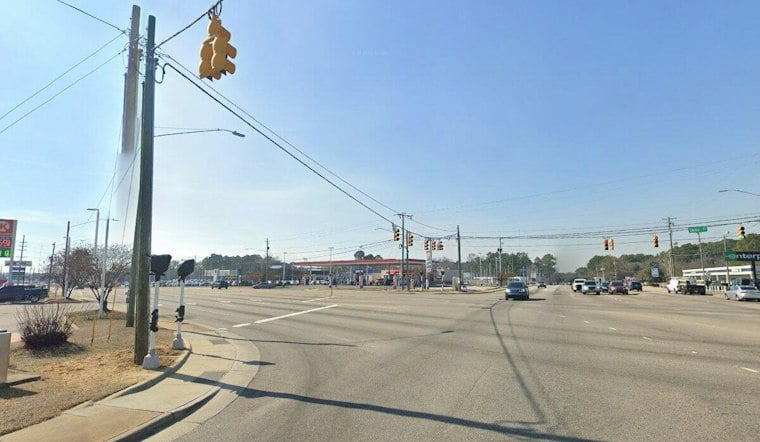
Fayetteville drivers who've grown used to gliding through intersections without an automated ticket watching their bumper may want to slow back down. City officials are negotiating with a vendor to bring red-light cameras back to some of the city's busiest roads, with the system potentially flipping on as soon as July 2027.
According to ABC11, Fayetteville is in talks with RedSpeed North Carolina LLC, which the outlet reports was the top-ranked vendor selected by a five-member committee. The proposed system would place 10 cameras at major intersections around the city, including Skibo Road, Morganton Road, Bragg Boulevard, Cliffdale Road and Owen Drive, per the station's report.
City leaders framed the effort as a safety measure rather than a moneymaker. The station quotes city officials saying the city's primary goal is safety, not revenue, and notes that citation money would first pay the vendor, with the remaining funds going directly to Cumberland County Schools — meaning Fayetteville itself would receive no funds from the program. Officials also said all 10 proposed camera intersections will be advertised before the program goes live, an apparent nod to transparency concerns raised the last time cameras lined city streets.
A Program With a Complicated History
This wouldn't be Fayetteville's first run with automated enforcement. The original program launched in August 2015 and was operated by American Traffic Solutions, placing 13 cameras at 12 intersections across the city, the same report states. In just the first 16 months, the city issued more than 24,000 citations, and the program went on to collect $13.5 million in penalties, with $8.9 million eventually distributed to Cumberland County Schools after expenses.
That program shut down in November 2022. The ABC11 report attributes the ending to a statewide legal dispute about revenue distribution, though the case for reviving the program in 2025 followed a more measured path: as CBS17 reported, city council members were set to review a feasibility report at a work session before making any final call on relaunching the cameras.
Mixed Signals on Whether Cameras Actually Cut Crashes
Whether cameras make intersections safer remains genuinely contested. City data cited by the station showed that 96% of drivers who received a red-light ticket in 2018 did not receive another one — evidence the cameras changed behavior for most offenders. But a separate city report examined by the same station found 30 more crashes at camera intersections during a two-year period, a 5.8% increase, along with a 15.5% jump in the average severity index for serious crashes. Rear-end crashes rose 4.5% and angled crashes rose 5.7% over that same span, according to that report.
That mixed record isn't unique to Fayetteville. A 2019 paper from the University of North Carolina Highway Safety Research Center, cited by the News & Observer, found that red-light cameras typically increased rear-end crashes while reducing side-impact crashes — a tradeoff regulators and residents have wrestled with nationally as the number of U.S. cities running the cameras peaked at 533 in 2012 before falling below 350. Meanwhile, in Charlotte, where officials have separately debated reviving their own camera program, the Charlotte Observer reported that angle crashes fell 37% across 24 camera-equipped intersections between 1998 and 2006, dropping 60% in monitored lanes specifically, and cited a 2025 Insurance Institute for Highway Safety study finding a 29% reduction in angle-injury collisions at camera intersections nationally. Charlotte estimated equipping 10 intersections would run about $600,000 annually.
What Comes Next for Fayetteville
Fayetteville's proposed program specifically aims to reduce angle and left-turn crashes at some of the city's highest-crash intersections, according to the CBS17 report. Fines in North Carolina cities that already run cameras — including Raleigh, Wilmington and Greenville — have ranged from $50 to $100 per citation, per WRAL. Raleigh's own SafeLight system, launched in 2003, issued nearly 30,000 citations in a single recent year, the News & Observer noted.
Under state law, any traffic-control photographic system installed on a state highway must meet requirements set by the North Carolina Department of Transportation, according to state statute. The City of Fayetteville has also solicited proposals from qualified firms for what it describes as a comprehensive, turnkey Photo Citation Program for automated red-light enforcement in accordance with state law, per the city's own bid documents. For now, Fayetteville has not made a final decision on relaunching the cameras, leaving drivers on Skibo, Bragg and the rest of those five corridors to wonder whether the cameras will actually be watching by next summer.


