

























































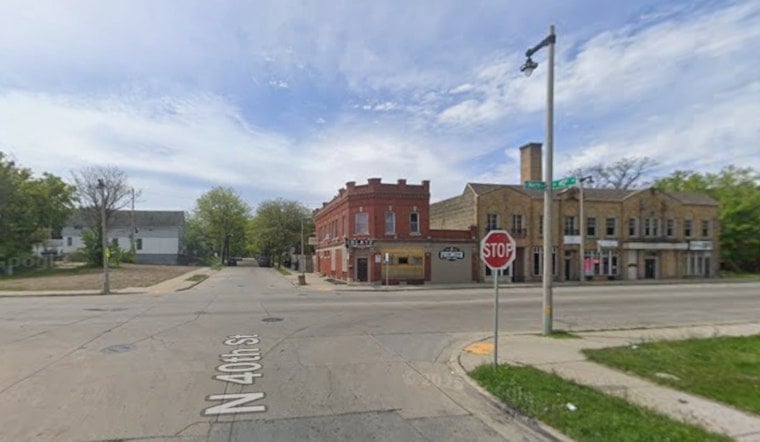
A two-story building on Milwaukee's North Side was left badly damaged after fire broke out just after 4 a.m. Monday near 40th Street and North Avenue, sending flames through the roof and forcing firefighters to battle the blaze from the outside rather than risk sending crews inside. The building appears to house several businesses on its first floor, including a bar, and by around 6 a.m. crews were still mopping up at the scene.
Milwaukee Fire Chief Aaron Lipski said crews arrived to find heavy fire in the rear of the first floor, throughout the second floor and coming through the roof, according to WISN. Firefighters from Milwaukee and Wauwatosa worked together to bring the fire under control, taking a defensive approach that kept crews out of the structure itself. Officials have not said whether anyone was hurt, and the cause of the fire has not been determined, per the same report.
Why Crews Stayed Outside
The decision to fight the fire from the exterior rather than send firefighters inside lines up with standard Milwaukee Fire Department safety protocols. Under the department's operational guidelines, incident commanders shift to a defensive strategy — deploying heavy exterior water streams instead of interior crews — when widespread fire or structural damage threatens a collapse risk to personnel. With flames already through the roof and heavy fire reported on both floors, that threshold appeared to have been met well before crews began mopping up.
The joint response from Milwaukee and Wauwatosa firefighters also reflects how the region handles major fires. Under Wisconsin's Mutual Aid Box Alarm System, enacted in 2006, neighboring departments like Wauwatosa routinely respond alongside Milwaukee crews using standardized incident command protocols, shared radio frequencies and pre-arranged run cards, according to MABAS Wisconsin. During prolonged multi-agency incidents like this one, volunteer groups such as the Milwaukee Fire Bells sometimes deploy rehabilitation units to monitor firefighters' vital signs and provide hydration, per the same organization.
A Historic Commercial Corridor
The block sits along West North Avenue, a primary east-west commercial artery on Milwaukee's North Side. The intersection at 40th Street falls within the North Avenue Gateway Business Improvement District, bordering the historic Sherman Park and Washington Park neighborhoods, according to WUWM 89.7 FM. The corridor is lined with 1920s-era mixed-use buildings featuring ground-floor retail and upper-level units, a design common across the district.
Older buildings like the one damaged Monday often fall outside modern fire-suppression requirements. Wisconsin commercial building codes from the 1970s mandate automatic sprinkler systems in larger structures but exempt buildings constructed before 1974 from retrofits unless major renovations occur — a loophole Lipski has repeatedly urged state legislators to close, as Sprinkler Fight Reignites detailed after May's Highland Court fire. Retrofitting older structures remains costly, and under current state code, buildings like this one are not legally required to have sprinklers absent major renovation work.
Pattern of Major North Side Fires
Monday's fire follows a string of serious structural blazes across Milwaukee's North Side this year. In May, MFD deployed more than 110 firefighters to a five-alarm fire at a vacant multi-story warehouse near 32nd and Hampton that suffered partial structural collapse and required an emergency demolition order, according to FOX6 Milwaukee. Vacant and older timber-framed buildings continue to pose elevated collapse risks during major fires, a pattern that has repeatedly strained the department's resources.
Milwaukee's 2025 fire-safety disclosure ordinance, passed unanimously by the Common Council, requires property owners to tell prospective occupants whether a building complies with, is exempt from, or violates mandated fire protection standards. The law was spurred by a wave of multi-family fires across the city, according to the City of Milwaukee. Lipski, who was sworn in as fire chief in 2021 after serving in an interim role, continuing a family tradition of more than a century of service within the department, has pointed to cases like Monday's as evidence that the state's aging building stock remains a persistent safety gap.
Officials have not released the cause of Monday's fire, and it remains unknown whether anyone was injured. Should investigators determine the fire was intentionally set, Wisconsin law treats arson of a building as a Class C felony under state statute, punishable by up to 40 years in prison and fines reaching $100,000, according to Grieve Law. No such determination has been made in this case, and the extent of displacement for the ground-floor businesses, including the bar, has not yet been detailed.



