

























































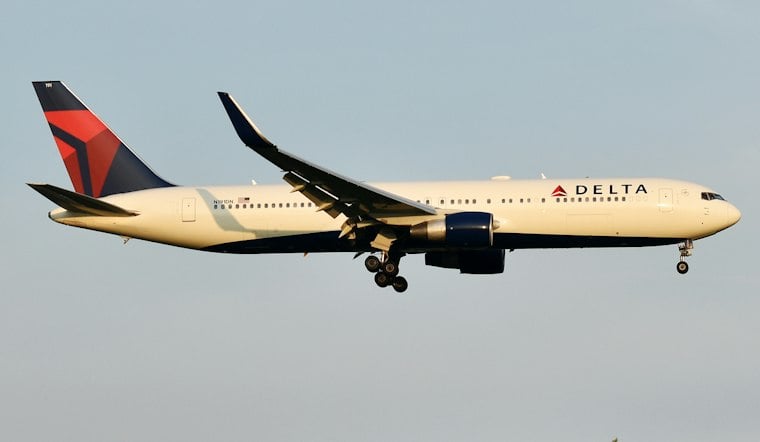
Four people were hospitalized after fumes filled the cabin of a Delta Air Lines aircraft that had departed from Maui, forcing the flight to divert to Honolulu around 11 p.m. Saturday night. Honolulu Emergency Medical Services treated three women, ages 27, 31, and 42, who suffered headaches and nausea after inhaling the fumes, while a Delta flight attendant also sought medical attention.
The three women were treated and transported by EMS in stable condition, according to Island News. The flight attendant was treated and transported separately by the federal fire department in stable condition. The outlet reported that fuel discharge was seen coming from the aircraft once it was on the ground, though no further details on that observation had been released at the time of publication.
The Delta flight crew followed standard procedures to divert to Honolulu once the fumes were detected onboard, the report noted. Delta has since apologized to customers for the experience and offered refunds on their airfare, and the airline said its technicians will examine the aircraft.
Why Crews Divert the Moment Fumes Appear
The Delta crew diverted to Honolulu once fumes were detected onboard, the report noted. FAA guidance addresses the use of emergency oxygen masks during a pressurization emergency, according to the Federal Aviation Administration.
The route between Kahului Airport on Maui and Daniel K. Inouye International Airport in Honolulu is served by nonstop flights. Honolulu's airport maintains specialized emergency coverage through State of Hawaii Aircraft Rescue and Fire Fighting units working alongside the Hawaii Federal Fire Department based at Joint Base Pearl Harbor-Hickam, according to the Honolulu Fire Department.
Passenger Masks Do Not Filter Fumes
Emergency passenger oxygen masks use chemical generators designed for high-altitude cabin depressurization, the FAA has explained.
That vulnerability traces back to how most commercial jets pressurize their cabins. Except for the Boeing 787, virtually all modern airliners use so-called bleed air systems that draw compressed outside air directly through the jet engines into the cabin without chemical filtration, according to the FAA. Faulty engine seals can allow toxic fumes to enter the cabin.
A Pattern Across Delta's 2026 Fleet
Saturday's diversion adds to a string of fume-related incidents involving Delta aircraft this year. On August 8, a Delta Boeing 757-200 carrying 205 people was evacuated via inflatable slides on an Atlanta taxiway after cockpit fumes prompted pilots to don emergency oxygen masks shortly after takeoff, as Hoodline previously reported. That flight landed safely without reported injuries before being pulled for inspection.
The broader trend extends well beyond Delta. An analysis of FAA Service Difficulty Reports found that reported cabin and cockpit fume incidents on U.S. commercial flights occurred nine times more frequently in 2024 than a decade earlier, according to Forbes.
Federal legislation reintroduced in August 2025 by Representative Maxwell Frost, known as the Safe Air on Airplanes Act, included provisions involving bleed-air filters and eventually ending bleed-air systems in new aircraft, according to Aviation Watchdog. No additional details on the cause of Saturday's incident or the specific aircraft model had been released at the time of publication.


