

























































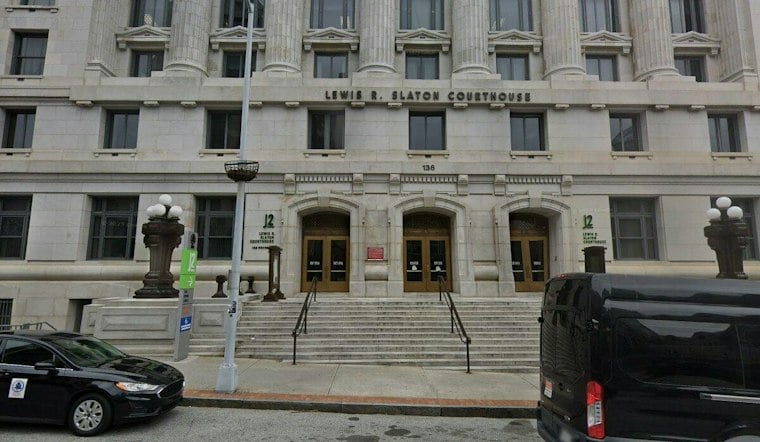
Georgia Attorney General Chris Carr has filed a lawsuit against SDG Impact Fund, the Cartersville-based nonprofit, and its CEO Anthony Suber, alleging the charity failed to deliver donor money to charitable causes and instead spent it on personal expenses and luxury items. The nonprofit had claimed to control as much as $10 billion in assets, yet the lawsuit alleges it distributed only 0.185% of its assets to charitable causes.
Carr, Georgia’s attorney general, is asking a Fulton County judge to appoint a receiver who would determine where donor money went, recover any remaining assets and ensure that charitable funds are used for their intended purposes going forward, according to WSB-TV. The lawsuit seeks to shut down the operation entirely and place SDG’s assets under court supervision, with the possibility that money could ultimately be returned to donors. Separately, an emergency cease-and-desist order issued by Georgia Secretary of State Brad Raffensperger has already barred both SDG Impact Fund and Suber personally from charitable work in the state, with each fined $100,000, according to the Daily Tribune.
A Multibillion-Dollar Operation With No Staff on Site
WSB-TV reporter Justin Gray, who has been tracking state investigations into SDG and Suber since July, found an office in Cartersville allegedly operating a multibillion-dollar charitable enterprise with no full-time staff on site. SDG Impact Fund managed donor-advised funds — a structure that allows donors to contribute money and later direct where those funds are distributed. Suber previously told WSB-TV reporter Justin Gray in an email that SDG earned roughly 5% of the assets it managed, and Suber claimed much of that money would ultimately go to him personally.
The cease-and-desist order, spanning years of alleged conduct, states that SDG was soliciting donations without being registered as a charitable organization, and that restricted and unrestricted donor funds were commingled in at least one account. Per the order, Suber and SDG routinely used donor funds for non-charitable purposes from around 2020 to the present.
Sports Tickets, School Tuition and a Louisiana Property
The complaint alleges donor money was used for Falcons and Hawks suite tickets, international vacations, car loans and mortgage payments, and tuition at Pace Academy. The Daily Tribune’s review of the order details specific figures: about $15,777 paid to a Cartersville car dealership in December 2020, and $42,525 in payments to the Atlanta Hawks between July 2021 and January 2022. Roughly $171,618 went to Atlanta college-preparatory schools between January 2022 and at least July 2025, where two of Suber’s children were enrolled, per the same order.
Other transactions detailed in the order include about $733,000 wired out of an SDG fund account to other accounts between October 2022 and April 2023 with a memo referencing an “SDG Impact Labs Investment,” and roughly $317,000 allegedly used to buy real estate in Orleans Parish, Louisiana, in June 2024. About $80,640 allegedly went toward credit-card payments on accounts under Suber’s name that same July. The lawsuit also alleges Suber operated under different business names and continued soliciting donors even amid ongoing investigations.
Donors Say Their Money Vanished
Bertram Meyer, a donor, said he gave SDG nearly $1.9 million intended to help build a church and monastery in California. “The money never made it where it was intended to go, and to this point I don’t even know where the money is,” Meyer said. He added, “There’s millions of dollars of charitable transactions that just weren’t transacted.”
The Secretary of State’s Office began receiving complaints from donors in March 2025 about unanswered communications, unfulfilled grant requests and unclear donor-advised-fund balances, according to the Daily Tribune’s account of the order. The following month, Suber allegedly told some donors that SDG would conclude operations during fiscal year 2025 and that he intended to launch a new fund entity — but the order alleges numerous transactions continued to be processed through SDG’s bank accounts even after that notice went out. SDG’s December 2022 tax filing, reviewed via ProPublica’s Nonprofit Explorer, confirmed the organization maintained a donor-advised fund or similar account through which contributors could direct distributions or investments.
What Comes Next
Whether a Fulton County judge grants Carr’s request to appoint a receiver, and what such a receiver might ultimately recover, remains to be seen. Nonprofit-oversight cases elsewhere have followed a similar arc: in Ohio, Attorney General Dave Yost sued a charity called Lamb’s House over alleged misuse of funds, seeking its dissolution and the appointment of a receiver to manage its remaining assets, according to WKBN. For now, Georgia’s case against SDG Impact Fund and Suber leaves donors like Meyer waiting to learn what happened to the money they gave.




