

























































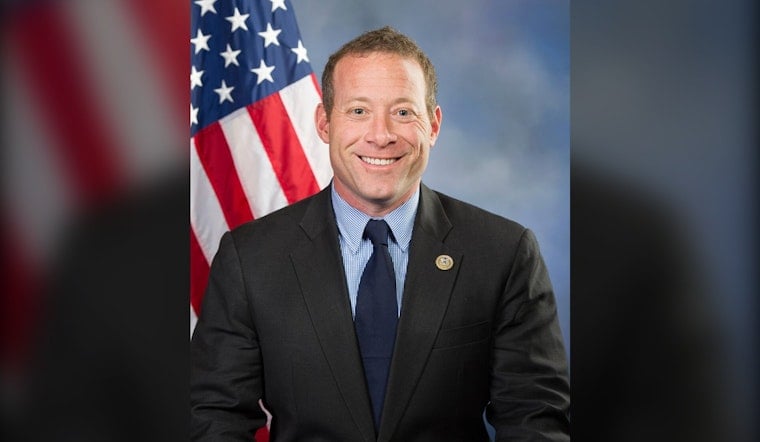
Rep. Josh Gottheimer stood inside George Washington Middle School in Ridgewood this week to pitch a two-pronged plan for New Jersey classrooms: lock away student cellphones during the school day, then use federal grants to build dedicated artificial intelligence labs to replace the distraction with instruction. It's a back-to-school agenda that tries to have it both ways with technology, tightening restrictions on personal devices while pushing schools to teach kids how AI actually works.
According to WRNJ Radio, Gottheimer unveiled the bipartisan proposal at the Ridgewood middle school, calling for limits on cellphone use in classrooms alongside expanded broadband access and new AI coursework. The centerpiece is the AI LABS Act, which Gottheimer announced alongside California Rep. Jay Obernolte. The bill would direct the U.S. Department of Education to create a federal grant program letting K-12 schools establish dedicated AI labs and train teachers, while also requiring the department to study how those lab resources get distributed and used, and to issue recommendations for future investment.
Obernolte brings a somewhat unusual credential to the effort: he holds a Master of Science in artificial intelligence from UCLA earned in 1997, making him the only member of Congress with an advanced graduate degree in the field, according to the Los Angeles Times. He teamed up with Gottheimer, who was named a founding co-chair of the House Commission on Artificial Intelligence and the Innovation Economy alongside Reps. Ted Lieu and Valerie Foushee in December.
Why Schools Need Both Guardrails and Instruction
Gottheimer said AI education should teach students how to use the technology, question it, and know when to trust it, per the WRNJ Radio report. He also cautioned that AI can be a powerful tool but cannot replace foundational education. That framing lands against a backdrop of survey data showing just how far ahead of the rules student and teacher AI use has already gotten: a 2025 RAND Corporation survey found 54% of middle and high school students used AI tools for schoolwork, while 53% of math, science and English teachers used AI for instructional tasks, according to the Stanford SCALE Initiative.
The training gap on the educator side looks even starker. A September 2 survey by IBM and Morning Consult found 76% of middle school teachers and 73% of high school teachers report weekly classroom AI use, yet only 20% of K-12 educators say they've received extensive AI training, with 42% citing the lack of professional development as the top barrier to teaching AI literacy, per IBM Newsroom. A separate 2026 Gallup poll found only 18% of U.S. public K-12 teachers reported receiving formal guidance from administrators on how AI tools should be used for coursework, according to Tech Policy Press.
There is a practical upside cited for teachers who do get comfortable with the tools. A 2025 Gallup and Walton Family Foundation survey found K-12 teachers who use AI at least weekly report saving an average of 5.9 hours per week on lesson planning, grading and administrative tasks, according to TNW, with educators reallocating that saved time into individualized student support and family communication.
Broadband and Connectivity Concerns
Gottheimer's initiative also aims to ensure students can access AI-related educational opportunities regardless of location or school connectivity, per the WRNJ Radio account. He said he is sending a letter to the Federal Communications Commission and the National Telecommunications and Information Administration urging both agencies to prioritize broadband deployment in rural and underserved school districts, arguing that AI literacy shouldn't depend on which town a student lives in.
Bell-to-Bell Phone Bans Already Underway
On the device-restriction side, Gottheimer supports the bipartisan UNPLUGGED Act, sponsored by Reps. Eugene Vindman and Jen Kiggans, which would support state and local policies restricting personal electronic devices in classrooms and establish an Education Department grant program to help schools purchase secure storage boxes and pouches. The bill includes exceptions for students with medical needs, disabilities, and English learners. Vindman and Kiggans introduced companion legislation last year, the Unplugged Schools Act and Mission Unplugged Act, to fund school cellphone storage nationally and mandate bell-to-bell phone bans in Department of Defense schools, according to Rep. Eugene Vindman's office.
New Jersey already has a statewide mandate moving in the same direction. Then-Gov. Phil Murphy signed bipartisan legislation on January 8 requiring every public school district in the state to adopt policies restricting cellphone and internet-enabled device use during the school day, effective for the 2026–2027 school year, following state task force recommendations on adolescent social media use and youth mental health, according to the New Jersey Education Association. Gottheimer called for limiting screen time and urged Gov. Mikie Sherrill and Education Commissioner Lily Laux to maintain support for the state's Phone-Free Schools Grant Program.
That program already has a track record in Gottheimer's backyard. The New Jersey Department of Education awarded funding to school districts through the Phone-Free Schools Grant Program, per Chalkbeat. Eleven school districts in New Jersey's 5th Congressional District, spread across Bergen, Passaic and Sussex counties, were among the state grant recipients that will implement bell-to-bell restrictions this school year.
Part of a Broader AI Push in Congress
Gottheimer's K-12 push arrives alongside other AI-focused legislative activity. He and Rep. Mike Lawler introduced the bipartisan Stop Rogue AI Act on September 3, as reported by FedScoop. Gottheimer also called on New Jersey to incorporate AI literacy, ethics and practical skills into K-12 curricula statewide.
The push also lands amid a broader national wave of school-level AI restrictions and cellphone crackdowns. National school technology policies remain under debate. Gottheimer's office frames the combination as a two-part answer to modern classroom technology: strip out the unsanctioned distractions, then replace them with structured, supervised AI instruction that treats the technology as a core skill rather than a workaround.





