

























































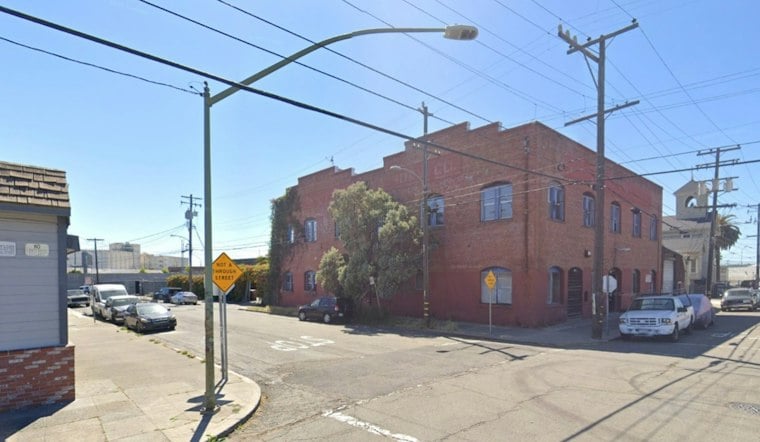
The Oakland recording complex where Green Day quietly built the demos that became “American Idiot” is back on the market, listed for $3.9 million at 829 27th Avenue near Interstate 880. Studio 880 spans 15,600 square feet across three parcels in the Jingletown arts district and includes several recording studios, nearly two dozen production offices, a full kitchen, lounges and rest areas.
The asking price works out to $250 per square foot, according to The Real Deal, which reports that Berkshire Hathaway Drysdale Properties is handling the sale. The brokerage said the sale opens the door for a new owner to preserve or reinvent an authentic piece of Oakland and East Bay rock history, per the outlet. Studio 880 is jointly owned by reggae band Stick Figure and independent label Ineffable Records, which purchased the property in 2016.
That $3.9 million figure isn't new. It's the exact same asking price Green Day set when the band first listed the complex a decade ago, according to SocketSite. Green Day had owned the property and operated it publicly as JingleTown Recording before the property was put up for sale in September 2016 and purchased by Stick Figure and Ineffable Records.
From Stunt Double to Studio Owner
Studio 880 wasn't originally built for rock stars. Founder John Lucasey, a former Hollywood stunt double who worked on films including “The Rock,” “The Fan” and “A Nightmare on Elm Street,” acquired the property in the late 1990s and converted the former factory complex into a music recording space, according to Launchpad Media. Lucasey named the facility Studio 880 simply because of its location right next to the interstate.
Under Lucasey, the studio built a reputation as much for its atmosphere as its gear. The compound featured an upstairs gym, a private lounge bar with hand-painted phosphorescent stars, a game room and even go-karts in the parking lot for visiting bands, Mixonline reported. Studio A's main live room measured 45 by 35 by 17 feet and featured an SSL 4056G+ mixing console with Ultimation and vintage Otari 24-track tape machines — big enough, per the outlet, to accommodate orchestra dates and video shoots alongside rock bands.
Where American Idiot Took Shape
Studio 880 hosted Green Day recording sessions during the making of “American Idiot,” the multiplatinum album that would go on to win the Grammy for Best Rock Album and inspire a Broadway musical set in a fictionalized version of Jingletown. Green Day later returned to Studio 880 to record its “¡Uno!”, “¡Dos!” and “¡Tré!” album trilogy in the late 2000s and early 2010s.
The client list stretched well beyond Green Day. Beyoncé, Iggy Pop and Smash Mouth all visited the studio, and it also hosted recording and mixing sessions for The Killers, The Black Keys, Drake, Norah Jones, Third Eye Blind and Fall Out Boy, according to Sound Advice Co., which called it one of Northern California's top commercial recording environments during the 2000s. Audio engineer Chris Dugan, who worked at the studio, later won Grammys for engineering Green Day's “21st Century Breakdown” and the Broadway cast recording of “American Idiot,” per Soundworks Collection.
A Neighborhood Built on Industry and Art
Studio 880 sits in Jingletown, a pocket neighborhood within East Oakland's Fruitvale district near the Alameda estuary. The name traces back to 19th-century lore — either Portuguese industrial workers jingling earned coins in their pockets, or early dairy farmers ringing bells to call cattle along the estuary, according to The Oaklandside.
Since the 1980s, the area has shifted from a heavy industrial district of cotton mills and canneries into a dense arts enclave known for converted warehouse lofts and mosaic street murals, according to Oakland Art Murmur. Hoodline has previously reported on the neighborhood's music ties.
Zoning Could Shape the Studio's Next Chapter
The current owners have said they'd prefer the studio remain a creative space after the sale, but marketing materials from brokers also highlight redevelopment, co-working and live-work conversion possibilities, according to The Real Deal. Any buyer eyeing a residential conversion, however, will have to contend with the property's zoning. Listing data reviewed by LoopNet shows the 0.77-acre campus carries CIX-2 zoning.
The property also includes more than 35 on-site parking spaces across its three parcels, according to the listing. Whether the next owner keeps recording gear humming in Studio A or reimagines the compound entirely, the sale marks another turn for a parcel that has anchored Jingletown's identity since Lucasey first converted the factory floor into a soundstage nearly three decades ago.




