

























































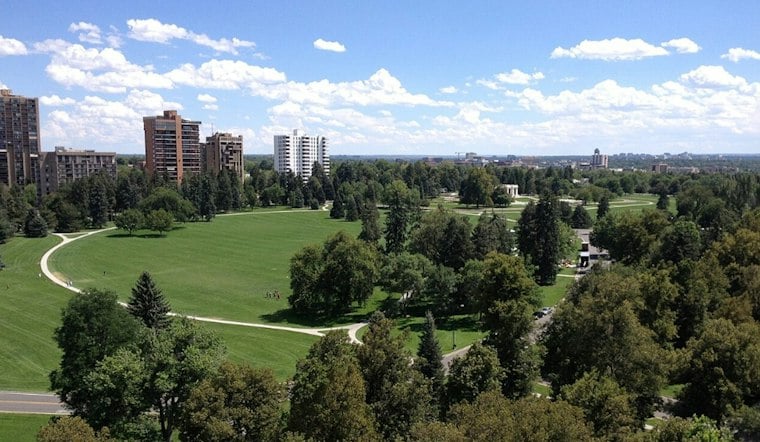
A Denver artists’ collective plans to hold a secession ceremony Saturday at Cheesman Park, where organizers say they will declare an 80-acre territory called Gurtlandia. The gathering is scheduled for noon at the park pavilion, according to Westword.
The proposal comes from the Trash Heap Collective, a Denver group of artists and activists, and would place a 20-year-old known as Gurt in the role of leader. Organizers have described the project as an effort to create a place where people are housed, fed and free from surveillance, Westword reported. The city has not treated the proposal as an accepted change to Denver’s political boundaries; a mayoral spokesperson told the outlet that Mayor Mike Johnston would defend the union.
A ceremony, not an established country
The planned program includes a Declaration of Gurt-Dependence and playful competitions, including a tug-of-gurt and what organizers call the gurt-lympics. Organizers have also discussed permanent housing, a new currency and changes to the pavilion, but those ideas remain proposals described by the group rather than documented changes to the park.
Denver’s park-use rules provide an important civic baseline. The Denver Department of Parks and Recreation says compliance with park regulations does not eliminate other legal requirements, including permits, licenses or authorizations from city departments. In practical terms, holding a ceremony would not by itself authorize permanent construction or change the legal status of Cheesman Park.
Why Cheesman Park matters as a setting
The proposed declaration would take place on land with its own history of changing public uses. The Denver Public Library Special Collections and Archives records that Mount Prospect Cemetery opened on the 160-acre site in 1858 before the area was transformed into parkland. That history does not establish a direct connection to Gurtlandia, but it places the planned performance within a civic space whose function has changed over time.
Micronations use the language of government
Gurtlandia fits a broader micronation pattern in which groups adopt the forms and vocabulary of states without necessarily gaining formal recognition. A chapter from Cambridge University Press describes declarations, rituals and legal-style instruments as ways micronations challenge conventional ideas about statehood and international legal personality. That framework helps explain the planned ceremony as a performance of sovereignty; it does not establish that Gurtlandia would become a recognized nation.
The proposed event also differs from better-known protest secessions. The official Conch Republic website says Key West’s April 23, 1982, declaration responded to a U.S. Border Patrol blockade and was intended as a protest rather than a revolution against the United States. That comparison shows that secession language can serve political or artistic purposes, but it does not provide a legal pathway for occupying another government’s public land.
Other park-based micronation projects have also been temporary. The Micronations Wiki describes the People’s State of Valitia as a short-lived anarchist micronation located within a park. It is a limited comparison, not evidence that Gurtlandia will follow the same course.
What remains unknown
The ceremony’s existence and organizers’ ambitions are documented by Westword, but the available evidence does not establish that Denver has recognized Gurtlandia, approved permanent housing, authorized a pavilion conversion or accepted any change to the park’s boundaries. For now, the event is best understood as a public performance and political-art project taking place in a Denver park, with its claims of nationhood still untested.





