

























































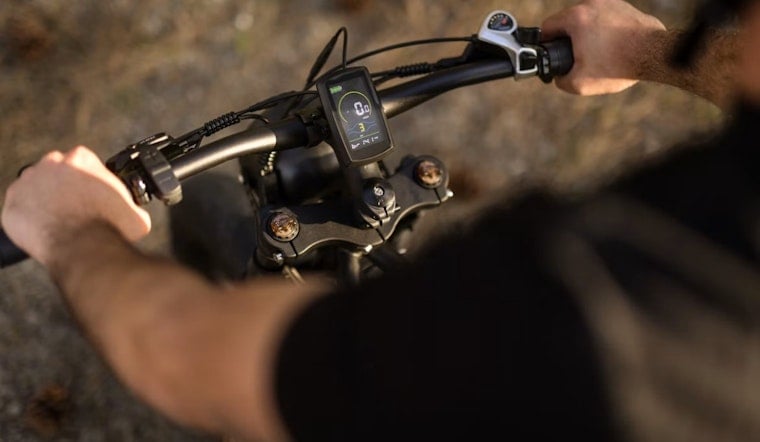
Hampton Charter Township has banned e-bikes, electric scooters and a long list of other motorized devices from Pondside Park and every other township park, with violators now facing misdemeanor charges that carry up to 90 days in county jail and fines as high as $500. The Hampton Board of Trustees adopted the ordinance citing health and safety concerns for park visitors, following complaints that had been building for months over reckless riding on the community's newest walking path.
According to the mlive.com report by Joey Oliver, the new ordinance bans any vehicle propelled by anything other than muscular power, sweeping in electric bicycles, electric scooters, electric skateboards, hoverboards, mopeds, motorcycles, quads and even side-by-sides. Township officials introduced the measure, known as Ordinance 72, at the July 6 Hampton Board of Trustees meeting after residents complained that e-bikes and scooters were traveling at unsafe speeds and weaving around pedestrians on the new walking path at Pondside Park, according to Hampton Township News & Updates. Pondside Park sits at the corner of Jones Road and Ridge Road, and the ban now applies there and at all other township parks.
What's Still Allowed on the Path
The ordinance is not a blanket crackdown on wheels of every kind. Regular bicycles, skateboards, tricycles and rollerblades remain permitted, and the rules exempt people with disabilities who use mobility devices approved under the Americans with Disabilities Act. Wheelchairs, electric wheelchairs and similar assistive devices are still allowed in the parks. Township officials say the regulations aim to promote the health, safety and welfare of people walking and enjoying township parks while preserving safe, enjoyable and accessible outdoor spaces for all residents.
Hampton Charter Township is a Mid-Michigan community in Bay County, home to roughly 9,622 residents spread across about 27.5 square miles with nine miles of Saginaw Bay shoreline, according to Papers Delivered. That mix of waterfront parkland and a growing network of walking paths has put the township at the center of a debate playing out in small towns across the state: how to keep multi-use trails welcoming for walkers while faster, motorized devices multiply.
A Legal Green Light and a Statewide Patchwork
Michigan law gives townships like Hampton clear authority to act. Under MCL 257.662a, local authorities retain express statutory power to restrict or entirely prohibit electric bicycles on non-motorized paths and municipal trails within their jurisdiction, according to Motorized Bicycle Laws in Michigan. The devices themselves are defined under a separate statute, MCL 257.13e, which since 2017 has classified legal e-bikes as having operable pedals and a motor of 750 watts or less, split into Class 1 and Class 2 models capped at 20 mph and Class 3 pedal-assist bikes that can reach 28 mph, per Velosurance.
That local authority has created a patchwork of rules that can look very different depending on whose trail you're on. The Michigan Department of Natural Resources updated its own policy in August 2024 to allow Class 1 e-bikes on all state park trails open to traditional bicycles, requiring only a free permit for Class 2 riders. Hampton Township, by contrast, is moving toward a complete ban on its paved walking paths, opting for the stricter approach state law allows it to take.
Part of a Broader Michigan Trend
Hampton isn't alone in tightening the rules. The township's restriction reflects a growing trend across Michigan, where communities like Berkley voted unanimously to ban e-bikes, e-scooters and electric skateboards from all city sidewalks and public parks, as Hoodline previously reported. Statewide, bicycle-involved crashes in Michigan rose 20 percent year-over-year in 2024 to 1,773 incidents, resulting in 29 bicyclist fatalities, a climb that has fed growing scrutiny of motorized two-wheelers on shared paths.
The safety concerns extend to hospital emergency rooms. Corewell Health's William Beaumont University Hospital in Royal Oak treated 22 e-bike injury cases between January and mid-June 2026, 16 of which involved children, underscoring why pedestrian safety on park paths has become an urgent issue for local officials. At the state legislative level, Michigan House Bill 6166, introduced in July 2026, would require youth under 18 without a driver's license to obtain a special restricted license starting at age 15 before operating Class 2 or Class 3 e-bikes on public roadways.
Gaps in State Law, Questions for Enforcement
Part of what's driving local action is what state law doesn't cover. Michigan sets no statewide minimum operator age or helmet requirement for Class 1 and Class 2 e-bikes, though it restricts Class 3 e-bikes to riders 14 and older and requires helmets for Class 3 riders under 18. That leaves a gap between low-speed, pedal-assist bikes often used by seniors or commuters and higher-speed throttle devices favored by younger riders, a distinction that fuels much of the public safety friction behind bans like Hampton's.
Whether Ordinance 72 changes behavior on the ground remains to be seen. Policing a walking path at a township park presents practical challenges that differ sharply from patrolling a roadway, and enforcement details for Hampton's new rule have not been laid out beyond the misdemeanor penalties themselves. For now, township officials are betting that the threat of jail time and fines will be enough to keep Pondside Park's path clear for the walkers, wheelchair users and traditional cyclists the ordinance is designed to protect.





