

























































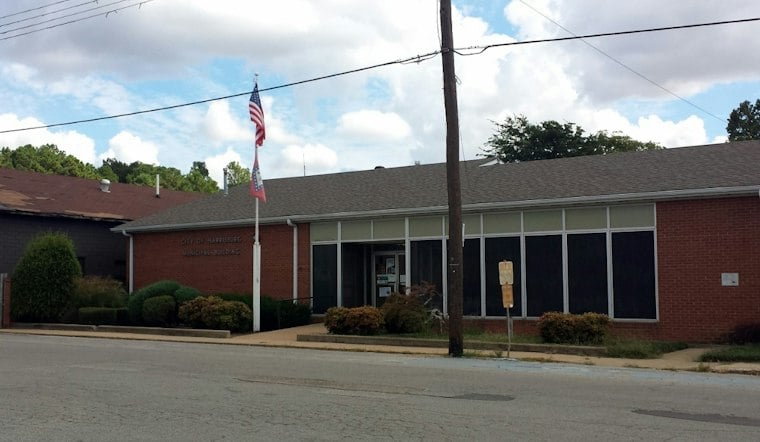
Harrisburg Mayor Justin Kimble says every known automated license plate reader camera in his small Poinsett County city, including those made by Flock Safety, will soon be covered in black trash bags and taken offline. Kimble, who is also a lieutenant in the Harrisburg Police Department, said he made the call after concluding that the privacy risks of the technology outweigh its crime-fighting benefits.
“I have made the decision to have all known automated license plate reader cameras belonging to the City of Harrisburg covered with black trash bags and taken offline,” Kimble said in a statement, as reported by kait8.com. He said the cameras will stay covered, offline, or be removed entirely until safeguards protecting privacy and constitutional rights are in place, according to the same report. Harrisburg, a city of roughly 2,200 people located north of Memphis in Poinsett County, is among a growing list of Arkansas communities pulling back from the surveillance systems.
Kimble said he spent weeks researching license plate surveillance technology and speaking with lawmakers before reaching his decision, and that what he learned left him shocked, according to Jonesboro Right Now. He specifically questioned whether camera data could be used to build criminal cases against people without a legitimate search warrant, the outlet reported. Even so, he acknowledged that Flock systems can have legitimate law enforcement uses, including helping locate stolen vehicles and missing people.
Real Cases, Real Concerns
Those dual realities have played out just up the road in Memphis, where police have used the technology to track an accused child rapist to Jackson, Tennessee, and to trace an alleged auto-parts theft ring from Memphis into Georgia, according to WREG. But the cameras have also drawn the ire of privacy advocates, and vandals damaged cameras at the Eastgate Shopping Center in East Memphis, the outlet noted. Nationally, Flock says its cameras helped authorities locate more than 10,000 missing people last year and supported roughly a million criminal investigations, per ABC News. One Texas police department told the BBC that it went from recovering an average of three stolen cars a year to 45 after installing Flock cameras.
Retained license plate reader databases, however, continue to raise privacy-rights concerns that have fueled a broader retreat from the technology. More than 50 U.S. cities and counties have canceled or deactivated ALPR cameras so far this year, according to ABC News, and Flock cameras have reportedly been vandalized in at least 36 states. The BBC also reports that more than 200 communities have canceled or declined to renew Flock contracts since 2021, according to the advocacy group Secure Justice.
Arkansas Communities Split On Flock
Harrisburg joins at least six other Arkansas cities — Centerton, Greers Ferry, Searcy, Mayflower, Farmington and Pea Ridge — that have ended Flock agreements early or let them expire since late July, according to the Arkansas Advocate. Cabot temporarily unplugged its cameras as well, the outlet reported, while Conway has kept its 20 Flock readers running despite opposition that has led to several cameras being destroyed or vandalized there. Centerton's City Council voted unanimously on August 11 to terminate its Flock contract after debating data access and ownership, and Greers Ferry suspended its service and began removing cameras the following day, according to KVOM. The Camden Police Department has since become the latest to end its agreement, saying its cameras will be covered and unused while awaiting removal, per the same report.
Not every Arkansas department is backing away. The Jonesboro Police Department currently maintains 55 Flock cameras at an annual cost of $192,500, Jonesboro Right Now reported, even after four of its cameras were destroyed by gunfire and police subsequently identified persons of interest in that case. State lawmakers have said it would not surprise them if Flock cameras became a subject of debate or legislation when the Arkansas legislature convenes in January, according to the Arkansas Advocate.
A National Reckoning Over Surveillance
The pushback extends well beyond Arkansas. In Indiana, five Indianapolis police officers faced fraud and official misconduct charges, with allegations involving Flock-camera tracking of women and one ex-wife’s car.
State governments have also entered the fray, with Texas Gov. Greg Abbott blocking police departments from spending state money on Flock cameras. ABC News reported that Florida’s state transportation office had revoked local law enforcement’s ability to put readers on state highways. The Guardian has reported that cities nationwide are taking widely different approaches, with some shutting down cameras and ripping them off lightpoles while others sign new contracts with stronger data-sharing language. Camera information has also been used by federal immigration authorities.
Flock itself has announced new guardrails it plans to roll out by the end of 2026, including a shorter default data-retention window cut from 30 days to seven and mandatory audits, according to the BBC. The company says it will also require case codes for all law enforcement searches by year's end, with emergency searches flagged for administrator review, per a statement on Flock Safety's own blog. The company maintains that customers own their camera data and control who can access or receive it. For now, in Harrisburg, that debate plays out under black trash bags — a stopgap Kimble says will remain until he is satisfied the safeguards are real.





