

























































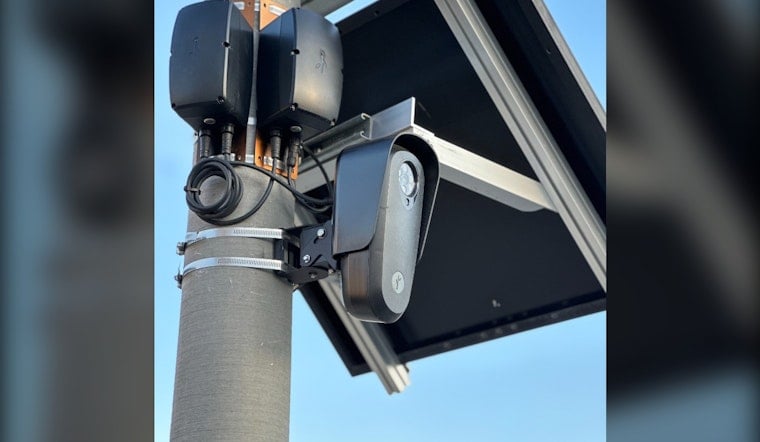
A 41-year-old Highland man is being held on $30,000 bail after San Bernardino County sheriff's deputies say the very technology he's accused of destroying helped track him down. Deputies arrested the man on Wednesday on suspicion of felony vandalism after finding multiple automated license plate reader cameras vandalized and significantly damaged around Highland on August 21.
According to the San Bernardino Sun, investigators used automated license plate reader technology to identify both the vehicle and the man allegedly responsible for cutting down and damaging the cameras throughout the city. Deputies also obtained video from several locations showing a person and a vehicle at the scenes, then served a search warrant at the man's home, where investigators say they found evidence linking him to the vandalism. He was arrested on suspicion of damaging Flock cameras throughout Highland, according to sheriff's officials.
A Pattern of Vandalism Across the County
The Highland incident is not an isolated one for the San Bernardino County Sheriff's Department, which operates 271 Flock Safety cameras across 14 patrol jurisdictions countywide, per the department's own accounting cited by the Sun. The agency has recorded other instances of camera vandalism in recent months, including multiple cameras vandalized in the Morongo Basin station area back in March, another camera damaged after being struck by paintballs in the Central Station area in April, and multiple cameras removed and destroyed in the Morongo Basin station area in May. Some of the Morongo Basin cameras are believed to have been hit by pneumatic projectiles, while a separate camera was reportedly cut down in Adelanto.
The trend isn't confined to San Bernardino County. Just days earlier, Riverside County sheriff's deputies arrested an 18-year-old in Temecula teen busted cutting camera after he allegedly cut down a Flock camera and loaded it into a vehicle, with a bystander's tip on the getaway car's license plate leading police to him. Days before that, on August 24, Riverside County deputies arrested a 31-year-old man in Palm Desert accused of attacking a Flock Safety contractor who was replacing a previously vandalized camera, slashing the worker's tires and threatening him with a knife.
Why the Charges Could Reach Felony Level
Under California Penal Code Section 594, property damage valued at $400 or more can elevate vandalism from a misdemeanor to a wobbler offense that prosecutors can charge as a felony, carrying a sentence of one to three years for felony vandalism and substantial fines, according to the Shouse Law Group. That threshold matters here because the value of each damaged unit would be relevant to the charge. Cameras torn down or shot with paintballs may require assessment of the resulting property damage.
San Bernardino County's investment in public safety is substantial. The county also adopted a budget for fiscal year 2025-26 that included funding for body-worn cameras.
Online Calls to Tear Down the Cameras
Sheriff's officials say social media users have encouraged communities to vandalize or tear down Flock and other automated license plate reader cameras, a call that appears to be resonating well beyond San Bernardino County. Privacy advocacy organization Secure Justice reported that more than 200 U.S. cities or law enforcement agencies terminated their license plate reader contracts in August alone, the highest single-month cancellation total recorded since 2021, according to CalMatters. Florida ordered Flock and other automated license plate readers removed from state roads within 30 days, per Military.com — a sharp contrast with California agencies like San Bernardino County that continue expanding their networks.
Much of the backlash traces back to how the data these cameras collect gets used, and by whom. Sheriff's officials in the underlying case noted that law enforcement agencies have shared Flock data with federal immigration officials, and that some officers have used Flock data to stalk people, including past romantic partners. Those concerns aren't hypothetical elsewhere in the country: a Massachusetts officer was suspended after using Flock cameras to track a woman who held a restraining order against him, and a Georgia deputy was arrested by state investigators over unauthorized database access, according to Hoodline's earlier reporting.
State Oversight Efforts Continue
California's Senate Bill 34 created privacy and policy requirements for public agencies operating automated license plate readers. The state Attorney General's Office has contacted 18 law enforcement agencies since June 2024 over potential or known SB 34 violations, and it has filed a lawsuit against the city of El Cajon to halt unauthorized ALPR data sharing, the outlet reported. According to the California Department of Justice's October 9, 2025 RIPA Board Meeting Minutes, Senate Bill 34 prohibits sharing data collected via automated license plate readers with private entities or out-of-state federal agencies. The California Department of Justice's May 22, 2025 2026 Policies Draft Report Section notes that an agency can access ALPR images collected by other agencies through sharing agreements even when it does not operate cameras itself.
The tension is likely to keep playing out on two fronts at once — vandals attacking the hardware in the field, and regulators and privacy advocates challenging how the data behind it gets used. For now, San Bernardino County's Sheriff's Department is treating the Highland case as evidence that its camera network can also work in reverse, using the same plate-reading technology that draws public suspicion to identify the person accused of trying to dismantle it.





