

























































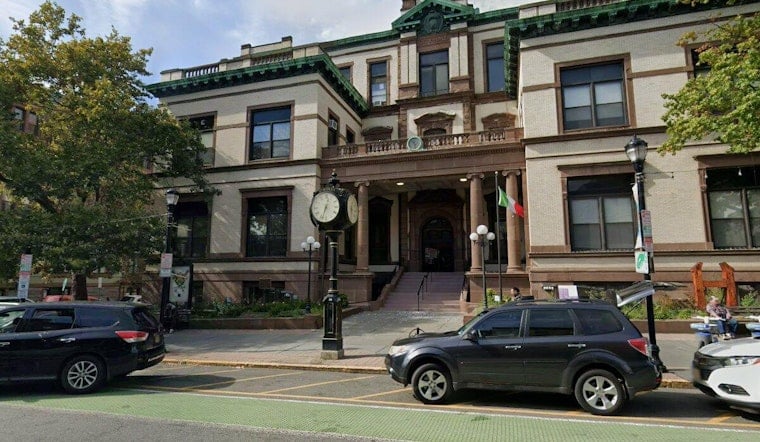
Twenty squat, wheeled robots began crawling along Hoboken's First Ward sidewalks this week, ferrying burritos and grocery bags at speeds that top out around 6 mph. The city's new pilot program, split evenly between two vendors, Coco Robotics and Avride, marks Hoboken's formal entry into the sidewalk delivery robot business that has already taken hold across the Hudson River and down the block in Jersey City.
The rollout, which began Thursday, follows unanimous final approval from the Hoboken City Council on August 12, according to NJ.com. The council had revised the ordinance at first reading in July before the measure took effect immediately rather than waiting the usual 20 days. Mayor Emily Jabbour said the pilot is designed to support local businesses and test local deliveries while prioritizing safety, accessibility, sustainability and accountability, per the same outlet's reporting.
Tight Limits on Where the Bots Can Roam
The pilot restricts the robots, formally known as personal delivery devices, to a limited zone within the First Ward, where they travel on sidewalks and bike lanes at an average pace of roughly 2 mph. Hoboken's operating rules explicitly bar the machines from entering public parks and require operators to park idle units away from dense pedestrian zones and store them off-street overnight, according to Hudson County View. The devices rely on geofencing technology that enforces speed limits and restricted zones, and they're designed to yield to pedestrians and navigate around obstacles, per NJ.com's report.
Residents can request a robot delivery through DoorDash, Uber Eats, Grubhub or Wonder, the outlet notes. Avride is running 10 of the units and Coco Robotics the other 10, splitting the fleet evenly under the city's 20-robot cap.
Fees, Data Sharing and Privacy Guardrails
Operators must obtain a city permit, carry liability insurance, and pay both permit fees and monthly operating fees, though Hoboken officials trimmed those operating costs before the ordinance's final passage, the report states. The city expects to collect roughly $6,000 in municipal revenue over the 12-month pilot, according to the City of Hoboken, an amount meant to offset the administrative cost of supervising the commercial operators.
Privacy concerns were built into the agreement from the start. Robot cameras are restricted strictly to navigation and safety uses, and the system software automatically blurs human faces and vehicle license plates, per the city's announcement. Operators must also report incidents to the city and share delivery data with municipal officials, who plan to use the 12-month trial to gather figures on deliveries, miles traveled, emissions avoided and community feedback.
A Slow Robot Rollout, Building on Sidewalk Mapping
The commercial launch didn't come out of nowhere. Ahead of approving the food delivery bots, Hoboken deployed “Daxbot” robotic scanners in July to evaluate 26.7 miles of municipal sidewalks, curb ramps and crosswalks for Americans with Disabilities Act compliance and Vision Zero planning, according to the city. That mapping effort gave officials a baseline understanding of pedestrian walkway conditions before commercial units hit the same routes.
The pilot also lands within a broader regulatory arc. Hoboken instituted Chapter 168-48 of its municipal code in June 2024, requiring human e-bike and e-scooter delivery workers to register with the city, pass a safety quiz, pay $5, and wear high-visibility yellow reflective vests. Robots are now entering a delivery landscape the city had already spent two years trying to bring under control.
Safety Track Records Elsewhere Cast a Shadow
Not every jurisdiction's experience with these devices has been smooth. Serve Robotics, which operates roughly 2,000 robots across 20 cities and reports a 99.8% delivery completion rate, saw its robots crash into Chicago bus shelters in March, shattering glass panels, though NJ.com's reporting notes no injuries were reported in those incidents. A Coco robot was separately destroyed in January after getting stuck on Miami train tracks.
Closer to home, the stakes have been higher. Jersey City has run a similar pilot since February 2025, and a delivery robot there collided with a cyclist in a bike lane in October 2025. That cyclist suffered a concussion and broken clavicle. A 32-year-old Jersey City actuary, Conor Shannon, later hired legal counsel and moved to sue Uber Eats and Avride over the crash, according to Newsweek.
What Comes Next as School Starts
Hoboken's public school year begins September 8, meaning the robots will almost immediately have to navigate heavier pedestrian traffic in a city already known for its dense sidewalks. Whether the fleet expands beyond the First Ward will depend on what the city learns during the 12-month trial, and any expansion would require separate city approval before more units hit the streets.
The pilot arrives as similar programs multiply across the region. Coco Robotics, the vendor behind half of Hoboken's fleet, raised $80 million in a June 2025 Series B round backed by OpenAI CEO Sam Altman and his brother Max Altman, pushing its total funding above $120 million, according to the Los Angeles Times. The company also struck a technical partnership with OpenAI in March 2025 to integrate AI models for real-time obstacle navigation, feeding urban navigation data back to the AI firm. Hoboken's own program follows Hoodline's coverage of Coco's D.C. rollout and a related look at Avride's Mid-Atlantic partnership with Uber Eats, as cities up and down the East Coast write new rules for robots that, for now, still move slower than most people walk.





