

























































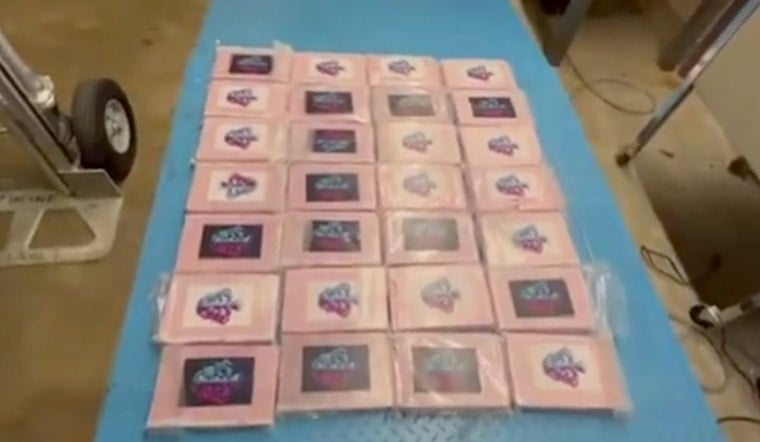
The Drug Enforcement Administration's Houston Field Division has seized 63 pounds of tusi, the drug better known on the street as pink cocaine, in a haul valued at nearly $500,000. Houston police, the FBI's Houston field office and the Harris County Precinct 3 Constable's Office all assisted with the operation.
The seizure, reported by the Houston Chronicle, adds Houston to a growing list of U.S. cities where the pink powder has turned up in law enforcement's hands. Despite its name, tusi is not cocaine at all in any fixed sense — it's a synthetic mixture that goes by the pink cocaine label, and its ingredients shift from batch to batch. Pink cocaine itself is typically described as a powdered mixture of substances dyed with pink food coloring, one that may carry a sweet smell and typically produces mind-altering, hallucinogenic effects.
No Fixed Recipe, No Way to Know Without a Lab
What makes tusi especially tricky for investigators is that there's no single formula behind it. DEA testing has found different combinations of drugs in different tusi samples, and the agency has said that a sample's actual contents remain unknown until it's actually tested in a laboratory. Samples analyzed elsewhere have included ketamine, MDMA, methamphetamine, cocaine and xylazine, though tusi does not necessarily contain cocaine despite the street name.
That variability isn't unique to Houston. According to InSight Crime, the Los Angeles Police Department has said there's no exact recipe for the drug — it depends on who's cooking it — with batches sometimes containing MDMA, ketamine, methamphetamine, caffeine and, at times, cocaine. The outlet also reported that dealers have cut the mixture with substances including caffeine, MDMA, ketamine and other synthetic drugs, a pattern the DEA has described as part of pink cocaine's emergence as a new drug marketed under that branding.
A Small but Watched Corner of the Drug Market
Despite the alarming headlines the drug tends to generate, confirmed tusi seizures nationally remain limited. InSight Crime's reporting notes that the DEA has seized a total of 960 pink powders since 2020 — a relatively small figure compared to the volume of fentanyl-pill seizures the agency handles. Of those 960 exhibits, just four contained the hallucinogen 2C-B that originally gave tusi its name, while the remaining 956 were classified as other substances, according to the same outlet's review of DEA data. The 2024 National Drug Threat Assessment, per the Drug Enforcement Administration, describes tusi as having evolved from that 2C-B slang term into a branding platform exploited by traffickers to sell an ever-changing lineup of mixtures.
InSight Crime's analysis concludes that given how few confirmed tusi seizures have occurred nationwide, the scale of the market appears to remain small even as the drug draws outsized attention. Still, the substance has shown up in serious cases elsewhere. A Miami-Dade County study cited by InSight Crime identified eight overdose deaths between 2020 and 2024 involving pink cocaine, with ketamine present in every sample tested and MDMA found in most of them. In Austin, police reported that pink cocaine seized locally contained cocaine, heroin and MDMA — yet another combination distinct from what's turned up in Houston or Miami.
The drug's reach has also drawn federal attention beyond Texas. A 2024 Drug Enforcement Administration case detailed a long-term undercover investigation that led to the arrest of a New Jersey man connected to sales of eight guns, cocaine and pink cocaine. Researchers tracking the drug's spread, in a 2025 review published on PubMed Central, have noted that tusi has emerged across nightlife scenes not just in the U.S. but in Latin America, Europe and Australia as well — underscoring that the substance seized in Houston is part of a pattern authorities are still working to fully understand.


