

























































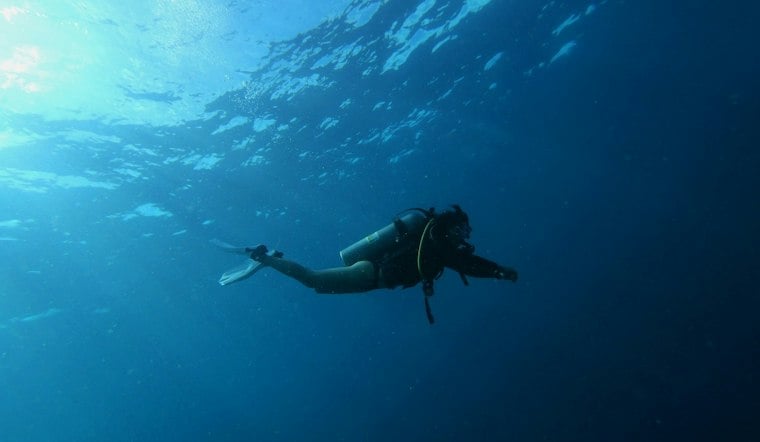
Mark Ackley once faced the real possibility of surgery and a wheelchair after a serious back injury, on top of a Stage 3 Non-Hodgkin's lymphoma diagnosis in 2023. Less than two years later, the Houston Marine veteran set himself a goal: scuba dive while standing, with 60 pounds of gear strapped to his back, within 90 days. He hit that mark with the help of a Navy veteran and Houston fitness coach who understood exactly what rebuilding a broken body from the ground up actually takes.
A Marine's Long Road Back to the Water
Ackley, a former athlete and lifelong outdoorsman who once ran marathons and cycled competitively, spent a year recovering from chemotherapy before he could even think about returning to physical activity, according to Click2Houston. His back injury left him using a walker and staring down surgery. Somewhere in that stretch, he sought out Fenix Shepard, a U.S. Navy veteran running her own gym in Houston, for help simply regaining his mobility.
Shepard built Ackley's comeback slowly and deliberately, focusing on movements designed to gradually rebuild his strength and mobility rather than pushing him toward heavy lifting right away. Per the same report, she typically starts clients dealing with back, shoulder or hip issues on resistance bands before ever introducing weights, treating the bands as an accessible entry point for people who aren't ready for more. That measured approach lines up with how physical therapists generally handle recovery from severe spinal injuries or chemotherapy, which tends to prioritize low-impact core stabilization and resistance-band work before advancing toward complex physical feats like scuba diving, as outlined by Click2Houston.
Shepard's Own Body Was Rebuilt From Scratch Too
Shepard didn't arrive at this coaching philosophy from a textbook. A car accident left her with a traumatic brain injury, shoulder injuries and sciatic nerve pain, and she used a walker for months while undergoing pain injections just to function. At her heaviest point afterward, she reached 195 pounds and wore size 18 clothing, standing just 5 feet tall, before undergoing a 70-pound transformation that reshaped both her body and her approach to helping others.
“I've been there,” Shepard told the station, a line that captures why her clients trust her guidance. She has said her idea of transformation involves more than weight loss, and her own path bears that out. Shepard enlisted in the Navy after the September 11 terrorist attacks and served as a gas turbine mechanic aboard the guided-missile cruiser USS Vella Gulf and the guided-missile destroyer USS Preble. During that service she survived military sexual trauma, which triggered PTSD, physical pain, and years of substance dependency and legal instability before she sought multi-modal treatment through the Department of Veterans Affairs, according to an account she gave on a podcast.
Trauma Recovery Beyond the Gym Floor
That history now shapes how Shepard coaches. Beyond the physical training she demonstrated on air — biceps curls, resistance-band squats, controlled core movements and triceps kickbacks — she also incorporates Havening techniques, neuro-linguistic programming, hypnotherapy, and support from her certified PTSD service dog, Marley, according to details she shared on the Helping the Brave podcast. In May, she published a 198-page memoir titled Loved Unconditionally: A Spiritual Memoir of Trauma, Addiction Recovery, and Finding God Beyond Religion, chronicling her departure from home at age 14, her LGBTQ+ identity, and nine years of sobriety.
Ackley's cancer diagnosis fits into a broader legal and medical framework that many veterans navigate. Under the 2022 PACT Act, the Department of Veterans Affairs classifies Non-Hodgkin's lymphoma as a presumptive service-connected disability for personnel exposed to hazardous burn pits or toxic herbicides like Agent Orange, according to the U.S. Department of Veterans Affairs. That presumptive status streamlines access to VA medical treatment and disability compensation without requiring veterans to independently prove causation.
A Regional Need That Keeps Growing
The stakes extend well beyond one gym in Houston. Texas is home to more than 1.5 million military veterans, one of the two largest veteran populations in the nation, and is projected to become the largest by 2030, per U.S. Census Bureau and VA demographic projections. Harris County alone holds the largest county-level veteran population in the state, with more than 150,000 veteran residents, roughly 8% to 12% of them women, according to the Harris County Veterans Services Department.
Federal data shows roughly 41% of post-9/11 veterans live with a service-connected disability, with spinal injuries and traumatic brain injury among the most common conditions requiring physical rehabilitation, according to VA figures. The VA runs nationwide Adaptive Sports and Therapeutic Rehabilitation programs offering grants, specialized equipment, and community mentorship to help injured service members regain physical independence — a mission that mirrors what Shepard now does one client at a time.
“You're Not Done Yet”
Ackley eventually returned to scuba diving, hitting his 90-day goal of diving while standing with 60 pounds on his back. His advice to others facing similar setbacks is direct: set a goal, find someone who understands, and keep going. “You're not done yet,” he said. Both he and Shepard now share a message that getting stronger can build confidence and help people return to the activities they love, a theme that echoes other Texas veteran comeback stories, including a San Antonio Marine's 152-mile wheelchair record. Shepard, who moved to Texas recently and started her own company, continues training clients like Ackley with the same slow, calculated approach that once helped rebuild her own body.





