

























































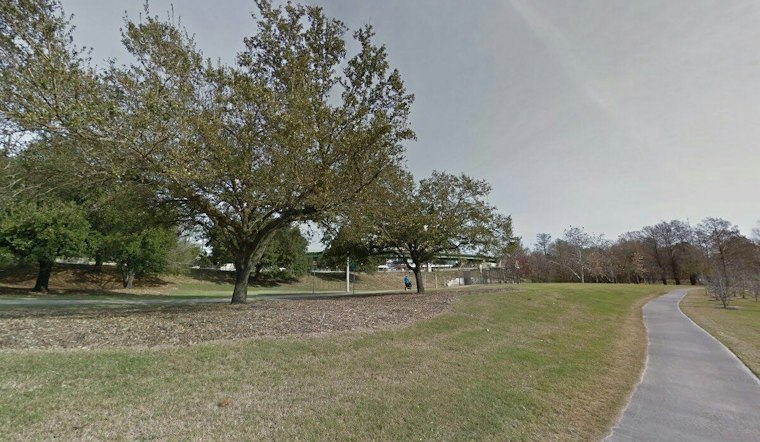
More than 400 families once called Brownwood home, a waterfront subdivision on the edge of Baytown that stood from the 1930s until the 1980s and carried a nickname that said it all: the River Oaks of Baytown. By the time Hurricane Alicia tore through in 1983, the ground beneath those homes had sunk almost 10 feet, and the storm delivered the final blow that turned an upscale enclave into a bulldozed memory.
The Harris-Galveston Subsidence District, known as HGSD, has identified Brownwood as a victim of severe subsidence, according to Click2Houston. Heavy groundwater pumping caused the ground beneath Brownwood to subside, per the outlet's reporting, and that subsidence occurs whenever too much water is pumped out of the ground, causing soil beneath the surface to compact and the land above it to sink in elevation. HGSD General Manager Mike Turco has been the agency's public voice on the neighborhood's fate.
A Wake-Up Call in 1961
Brownwood's vulnerability to flooding became clear well before Alicia arrived. Hurricane Carla struck the area in 1961, and Turco described it as a wake-up call about the neighborhood's underlying problem, according to the same Click2Houston report. Residents responded at the time by bringing in field dirt and pumps to fight back rising water, and even routine high tides eventually left parts of Brownwood under water.
By the early 1980s, the damage from decades of subsidence had made Brownwood especially exposed. When Hurricane Alicia struck in 1983, it arrived as a Category 3 storm packing winds exceeding 125 miles per hour and flooded the subdivision with more than 10 feet of water, tearing apart homes across the neighborhood, the station's report notes.
From Bulldozed Homes to a Bird Sanctuary
FEMA required Brownwood residents to move out and declared the neighborhood unlivable, and the homes were bulldozed soon after, per the same account. The City of Baytown bought the land, and homeowners were bought out and forced to leave behind the waterfront community many had called home for decades. Notably, following the 1983 hurricane, a number of Brownwood homeowners actively opposed the FEMA buyouts, mounting legal challenges and protests against forced relocation before Baytown ultimately acquired the property, according to Houston History Magazine.
Brownwood was created by Humble Oil & Refining Company executives in 1937 as an exclusive waterfront enclave along Burnet, Crystal, and Scott Bays, the same publication notes. What remains at the site today is a far cry from that vision: concrete slabs, pipes, bathroom tile, and even an underground pool casing are all that mark where houses once stood, according to Click2Houston's reporting. Historic photos referenced in that coverage show the scale of the flooding and subsidence damage the neighborhood endured.
Baytown opened the Baytown Nature Center on the former subdivision site in 1994. The transformation was funded in part by the French Limited Task Group, a consortium of corporations required under a federal court Superfund settlement to pay for wetland restoration as compensation for industrial chemical pollution along the San Jacinto River, according to Edge Effects. The 450-acre center now functions as an officially designated wildlife sanctuary supporting 317 recorded species of resident and neotropical migratory birds along the Houston Ship Channel, the same source reports.
Why the Land Could Never Bounce Back
The mechanism behind Brownwood's collapse traces back to the physical properties of the ground itself. Groundwater extraction depressurizes and permanently compacts fine-grained clay layers, making land subsidence irreversible even after groundwater levels recover, according to research cited by the Houston Chronicle. That means once Brownwood's soil compacted, no amount of recovered water pressure could ever restore the land's original elevation.
Brownwood's story is not the beginning of Texas subsidence, though. The Houston-Galveston region's first recorded land subsidence occurred in 1918 near Baytown, after early groundwater pumping and industrial operations triggered surface soil cracking, per the Harris Galveston Subsidence District. In 1975, the Texas Legislature responded by creating the Harris-Galveston Subsidence District itself, establishing the first special-purpose regulatory agency in the country with authority to restrict groundwater withdrawals to prevent land sinking, according to the West Harris County Regional Water Authority. Under the district's initial 1976 regulatory plan, major industrial operators along the Houston Ship Channel were required to switch from groundwater to surface water supplied by the Lake Livingston reservoir on the Trinity River, a mandate that stabilized coastal subsidence rates in Baytown, per the U.S. Geological Survey.
Subsidence Now Threatens Inland Suburbs
While that regulatory shift stabilized the coastal Baytown waterfront, it did not end subsidence in the region. Heavy groundwater pumping has since caused active subsidence to shift inland toward fast-growing northern and western suburbs in Harris and Fort Bend counties, according to the U.S. Geological Survey. HGSD is watching closely the greater Houston area's highest subsidence rates as a result, per Click2Houston's reporting.
Areas near Fulshear are subsiding at about 3 centimeters per year, and are projected to sink about 1 foot per decade or more, according to Turco. That compares with roughly 2 centimeters per year across other subsiding areas of the greater Houston region generally, per the same source. HGSD says it aims to prevent similar events from happening in the future.
One Kingwood homeowner, Bob Rehak, said approximately $100,000 had been spent on leveling his foundation two or three times and on structural repairs, according to Click2Houston. Foundation cracking and misaligned doors often serve as early warning signs of the same subsoil clay compaction that doomed Brownwood decades ago.





