

























































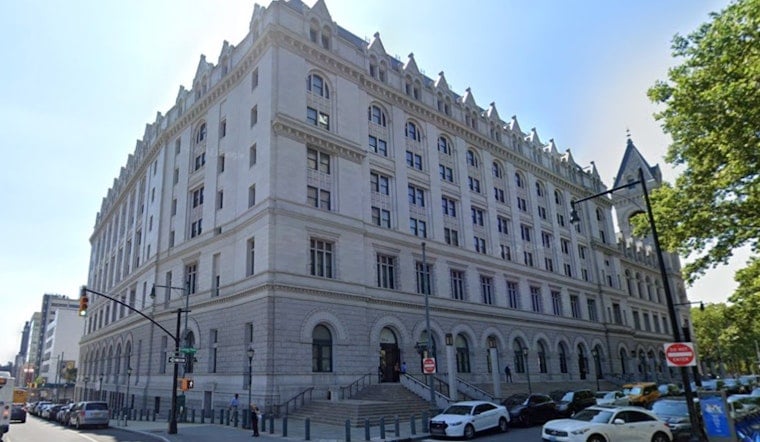
Jury selection began Tuesday in Brooklyn federal court in the long-running U.S. criminal case against Huawei Technologies, the Chinese telecom giant accused of running a racketeering scheme built on bank fraud, wire fraud and the theft of American trade secrets. Prosecutors say the company used a Hong Kong shell company called Skycom to sell equipment to Iran in violation of U.S. sanctions, and that Huawei-linked surveillance gear helped Iran spy on protesters.
The case, filed under U.S. District Judge Ann Donnelly, has been narrowed just days before opening arguments. As reported by the Associated Press, federal prosecutors told Donnelly in a September 4 filing that they dropped two export-control counts under the International Emergency Economic Powers Act and pulled a trade-secret theft predicate involving a company widely identified as Motorola, according to Fierce Network. Huawei is headquartered in China and is described in the indictment as the world's biggest supplier of gear for wireless telecom networks.
Huawei's lawyers had sought to have the broader criminal case dismissed entirely, arguing the U.S. allegations were too vague, that some claims were impermissibly extraterritorial, and that the case did not involve domestic wire and bank fraud. Those arguments failed last year: per JURIST, Judge Donnelly issued a 52-page decision in July 2025 denying Huawei's motion to dismiss 13 of the 16 criminal counts, finding sufficient allegations that Skycom operated as Huawei's Iranian subsidiary and routed more than $100 million through U.S. banks. The indictment also alleges Huawei and some subsidiaries did business in North Korea despite U.S. sanctions.
A Stolen Robot Arm and a Decade of Espionage Claims
Among the trade-secret theft allegations still standing is a 2013 episode in which a Huawei engineer allegedly photographed and stole a robotic arm from T-Mobile's lab in Bellevue, Washington — a testing robot nicknamed Tappy. That dispute produced a 2017 civil verdict awarding T-Mobile $4.8 million, the same incident Engadget's reporting on the original indictment cited as a concrete example underpinning the broader racketeering enterprise charges.
The criminal case was originally unsealed in 2018 under the Trump administration's China Initiative, a Justice Department effort targeting Chinese corporate espionage that the Biden administration formally terminated in February 2022 over civil rights and academic concerns, per Telecompaper's account of the case's history. The United States announced criminal charges against Huawei in 2019, and prosecutors have since expanded the allegations against the company.
Meng Wanzhou's Separate Path Out of the Case
The case is intertwined with the saga of Huawei's chief financial officer, Meng Wanzhou, the daughter of Huawei's founder. Meng was arrested in Canada in 2018 on a U.S. extradition request after U.S. prosecutors charged her with fraud for misleading HSBC Bank about Huawei's business dealings in Iran. She was released in a 2021 prisoner swap that also freed two Canadians held by China, and the United States subsequently said it would dismiss the fraud charges against her and dropped its extradition request.
Meng signed a statement of facts in September 2021 admitting she had misled HSBC about Skycom, but all U.S. criminal fraud charges against her personally were formally dismissed in December 2022 after she completed a deferred prosecution agreement, according to reporting cited in the case's timeline. That resolution means Meng is no longer a defendant in the Brooklyn trial, which now centers solely on Huawei as a corporate entity facing wire fraud, bank fraud and trade-secret theft charges.
Sanctions, Chip Bans and a Company Still Growing
Donald Trump's first administration raised national security concerns about Huawei and lobbied Western allies against including Huawei products in next-generation high-speed wireless networks, and Canada and Britain both went on to blacklist the company. U.S. sanctions have since blocked Huawei's access to most U.S. processor chips and other technology, and Huawei Technologies remains banned from selling equipment to U.S. carriers, treated by U.S. authorities as a security risk even as it continues making phones and other consumer electronics.
The federal government's effort to purge Huawei gear from American networks has continued on a separate regulatory track from the criminal case. The FCC reported by June 2026 that 42% of funded projects — 53 out of 126 — under the Secure and Trusted Communications Networks Act had permanently removed and replaced Huawei and ZTE equipment from domestic telecom networks, according to Light Reading. That so-called Rip and Replace program has proven costly: Congress passed defense legislation in December 2024 authorizing the FCC to borrow up to $3.08 billion from the U.S. Treasury to cover a $3 billion shortfall in the program, with repayment tied to 2026 spectrum auctions, per Industrial Cyber.
Washington has also moved to choke off Huawei's newer ambitions in artificial intelligence chips. The Commerce Department's Bureau of Industry and Security issued guidance in May 2025 under General Prohibition 10 restricting the use and servicing of Huawei Ascend chips, according to a client alert from Crowell & Moring. Yet even under those restrictions, Huawei has ramped up its development of computer chips and other advanced technologies and expanded into chipmaking, with industry reports in April 2026 projecting the company's domestic AI chip revenue would reach roughly $12 billion in 2026, up 60% from $7.5 billion the year before, driven by surging domestic demand for Ascend processors amid restrictions on Nvidia imports.
Similar federal supply-chain risk authorities, established under 10 U.S.C. § 3252 and the Federal Acquisition Supply Chain Security Act, have historically been used to exclude foreign entities like Huawei from U.S. defense procurement — the same legal framework Hoodline reported on last month in a separate case involving a blocked federal blacklist. Chinese officials have pushed back against the broader campaign, saying the U.S. government has engaged in economic bullying and has improperly used national security as a pretext for oppressing Chinese companies.
Huawei's continued struggle to hold onto market share under sanctions, even as it posts strong domestic chip growth, underscores how the Brooklyn trial fits into a much larger and long-running standoff. Huawei signage remained a fixture at Chinese tech showcases such as the 2018 PT Expo in Beijing even as the U.S. campaign against the company intensified in the years that followed. With jury selection now underway, the case returns to the center of an argument that has spanned nearly a decade and two U.S. presidential administrations over how far Washington can go to police a foreign telecom giant it considers a security threat.





