

























































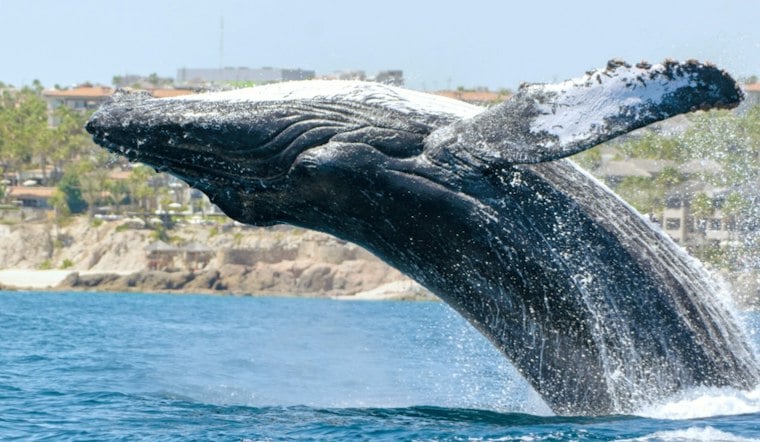
Humpback whales put on a show for beachgoers off the Sonoma Coast this week, feeding and spouting close to shore near Wrights Beach north of Bodega Bay while the North Bay baked under some of its warmest temperatures of the year. Photographs captured the scene on Tuesday as visitors who'd fled inland heat took to the water and the sand for a break from the sun.
The whale activity coincided with a heat advisory that, according to The Press Democrat, went into effect around 2:30 p.m. Tuesday and is set to remain until 10 p.m. Thursday, after originally being scheduled to begin at 10 a.m. Wednesday. The National Weather Service Bay Area office had issued the advisory for the region including the Sonoma coastal range, with coastal temperatures expected to climb into the mid-70s to low-90s while inland spots reached as high as 105 degrees, as reported by CBS News. That split between a sweltering interior and a comparatively mild coastline is likely part of why crowds gravitated toward the beaches this week.
Wrights Beach and Salmon Creek State Beach, which are locations in the 18-mile stretch of Sonoma Coast State Park, sit along Highway 1, according to California Beaches. Both spots are park locations, and this week whales were feeding just offshore at Wrights Beach.
Why the Whales Keep Coming So Close to Shore
The Greater Farallones National Marine Sanctuary serves as a critical feeding ground for North Pacific humpback whales from spring through late fall, per the sanctuary's own account at Greater Farallones National Marine Sanctuary. Most of the humpbacks foraging along this stretch of coast belong to two federally protected groups under the Endangered Species Act — the endangered Central America population and the threatened Mexico population — as tracked by NOAA Fisheries.
A 2024 ecosystem condition report from NOAA marine sanctuary scientists found that warmer ocean temperatures have been reducing offshore krill populations, pushing humpbacks into nearshore waters to lunge-feed on anchovies instead, according to reporting from SFGATE. Long-term research from the Cascadia Research Collective backs that pattern, describing California Current humpbacks as flexible foragers that switch between krill during strong upwelling years and coastal schooling fish during warmer sea-surface cycles.
Rules for Watching From the Water and the Bluffs
Anyone hoping to get close to the action should know that federal rules under the Marine Mammal Protection Act address harassment of humpback whales, according to guidance published by NOAA Fisheries. Those rules exist to prevent harassment of the animals, even when they're putting on a visible show just off a crowded beach.
For those who'd rather stay dry, Sonoma County's coastal bluffs offer views of the coast. Bodega Head is also part of the Sonoma Coast landscape.
The whales' habit of feeding closer to shore also has consequences for the fishing industry, where entanglement risk remains a concern when whales gather near fishing gear.





