

























































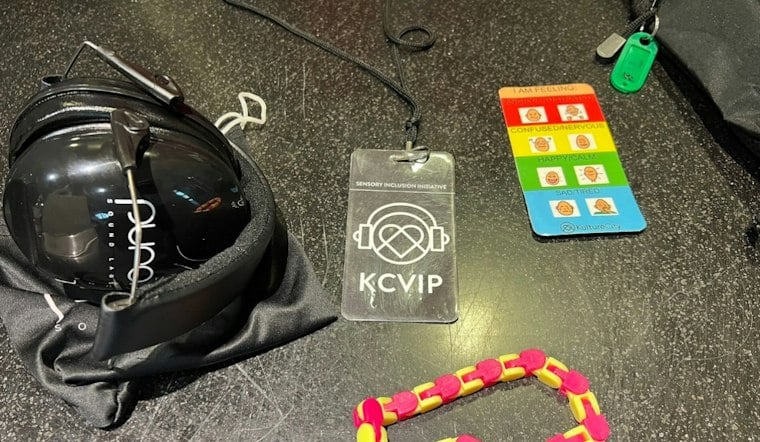
Huntington Beach became California's first city to earn sensory-inclusive certification from KultureCity, a milestone the city celebrated on the sand on September 17 alongside disability advocates, state lawmakers and tourism officials. The designation caps a push that trained 1,538 visitor-facing employees and public safety personnel across hotels, restaurants, retailers, attractions and city departments.
The certification came from KultureCity, while fourteen citywide partners were certified by KultureCity and separately verified by accessible-travel platform Wheel the World, according to the Los Angeles Times. KultureCity is a nonprofit focused on sensory accessibility and acceptance. Wheel the World's role centered on physical verification, providing information about accessible hotels, showers, beds and pool lifts for the city's hospitality partners.
Advocates Share Emotional Reactions
Visit Huntington Beach President and CEO John Urdi described watching accessibility advocate Kristy Durso, a longtime disability advocate who uses a wheelchair, experience adaptive surfing with Rocky McKinnon during the celebration. The Times report noted Urdi said “the smile on her face was massive.” Urdi also credited local partners across hotels, restaurants, retailers, attractions and public safety teams.
Reese Ketler, an accessibility advocate who was paralyzed after a spinal cord injury during a hockey game, documented his Huntington Beach stay for hundreds of people in wheelchairs and recommended the city to other wheelchair users, per the same account. Meg Raby credited Ashley Theel, Huntington Beach's director of community and library services, with completing the required training quickly. Visit Huntington Beach identified Sophia Valdivia, its director of tourism development, and Mary Damiano, its tourism development coordinator, as key advocates behind the effort.
Physical Upgrades Line the Shoreline
The sensory certification builds on years of physical accessibility work along Huntington Beach's coastline. The city first installed roll-out Mobi-Mats at the 6th Street parking lot, just north of the Pier, in May 2021 to give wheelchairs and strollers rigid, non-slip passage across the sand, according to the City of Huntington Beach, which replaced the original mat in 2025 with more durable materials. Today's accessibility effort also includes beach wheelchairs and accessible fire pits alongside the mats.
The timing lined up with the conclusion of the Future Proof Festival, described as the world's largest wealth management convention, at Huntington Beach on the same day as the celebration. Mayor Casey McKeon said the certification allows events to be more welcoming and inclusive to people from around the world. State Sen. Tony Strickland presented a proclamation to McKeon during the celebration, and Assemblyman Tri Ta also offered comments and a commendation for the city.
A Growing Market and a National Trend
The push toward verified accessibility reflects real financial stakes. Research released in December 2024 by the Open Doors Organization found that 74% of travelers with disabilities reported physical barriers at lodging facilities, with heavy doors, inconvenient room locations and inaccessible shower benches among the most common complaints. Separately, sensory-inclusive programs address sensory needs and invisible disabilities, including autism, PTSD, dementia and stroke-related disabilities.
Huntington Beach's move follows a broader pattern of municipalities and destinations pursuing sensory or accessibility certifications. Milwaukee passed a citywide resolution in April, requiring KultureCity staff training across all city operations and public facilities in a program Hoodline covered in its piece on Milwaukee's sensory-inclusive rollout.
City officials framed the certification as an economic benefit as well as an accessibility one, saying it supports funding for public safety, roads, infrastructure and city cleanliness while making local events more welcoming.



