

























































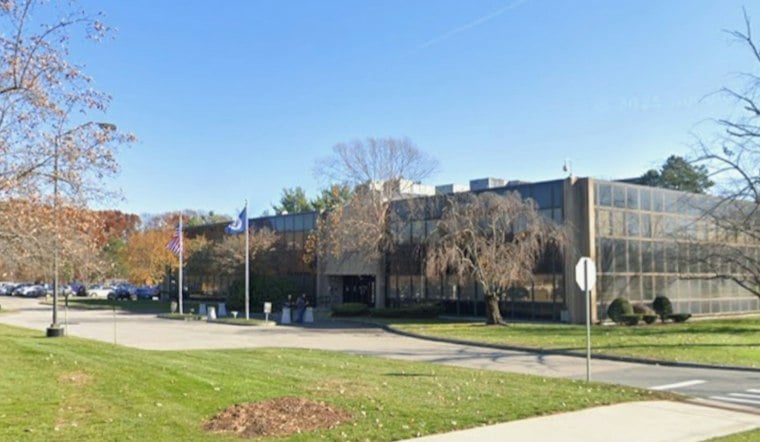
Federal immigration authorities are considering adding four-legged robots to their equipment, with plans to purchase up to four Spot units from Massachusetts-based Boston Dynamics for as much as $2 million. The proposed purchase has also become a focus of weekly demonstrations outside ICE's processing center in Burlington.
According to NBC10 Boston, a Department of Homeland Security procurement plan would allocate up to $2 million for the robot technology, accessories and related equipment. Similar robots are used by law enforcement agencies in the United States, including the Massachusetts State Police, which owns one Spot unit for inspections, situational awareness and hazard assessment. State police have also used a robotic dog alongside a flying drone during a standoff on I-495, the station reported.
ICE has described the technology as an additional tool for potentially dangerous situations rather than a replacement for human officers. Federal officials have said the robots would not be used as weapons, while ICE says decisions involving the technology would be reviewed for compliance with applicable law-enforcement policies and standards. Spot can climb stairs and open doors, and ICE could acquire multiple units rather than a single machine, according to NBC10 Boston.
Protesters Call the Robots an Escalation
NBC10 Boston reported that Jason Duane, a robotics worker who attends the Burlington demonstrations nearly every week, viewed the proposed purchase as an escalation. Duane said the technology could increase the distance between decision-makers and people affected by ICE operations.
Another protester, identified by NBC10 Boston only as Michael, said he would feel more threatened and angry if he encountered a robot during an ICE operation instead of a human officer. Jonathan Paz, a former Waltham city councilor and pro-immigrant activist, told the station that malfunction, hacking and potential misuse raised concerns, particularly given the history of surveillance and data-collection technologies.
Experts Call for Clear Limits
Todd McGhee, a law-enforcement and security expert, said agencies should set clear limits and safeguards before deploying the technology. He also said they should monitor how the robots are used in the field and keep their deployment narrow and focused rather than allowing their use to expand without guardrails.
Boston Dynamics says its robots are intended to reduce risks to humans and help first responders assess dangerous situations before officers enter them. The company prohibits attempts to weaponize its robots, a policy dating to October 2022, when Boston Dynamics and five other major robotics manufacturers pledged, as reported by Axios, not to weaponize their general-purpose mobile robots or assist customers in doing so.
What Policies Would Govern the Technology?
The company's weaponization pledge is one stated limit, but Boston Dynamics' Spot Privacy Notice also describes what the robot may record: service logs can contain raw sensor data, images and acoustic data. Image logging can be turned off through Spot's Admin Console, according to the notice. The available materials do not specify ICE-specific rules for remote operation, retention of those records or public disclosure of deployments. DHS says its Office for Civil Rights and Civil Liberties may conduct an impact assessment when required by statute, requested by department leadership or staff, or initiated by the department's civil-rights officer. ICE's Boston Field Office is located at 1000 District Avenue in Burlington and covers Massachusetts, Connecticut, Maine, New Hampshire, Rhode Island and Vermont, according to the agency's field-office listing.
A Federal Filing Behind the Purchase
The planned purchase traces back to DHS acquisition information that detailed an estimated $1 million to $2 million budget for the Spot robots and accessories, according to 404 Media. Commercial Spot units carry a base price of roughly $75,000 each, meaning the allocation could fund a fleet of several machines with accessories for public-safety uses, per Gadget Review.
The robot dog filing surfaced after ICE awarded a separate $16.7 million no-bid contract to Kentucky-based Compliant Technologies LLC for 6,000 G.L.O.V.E. electric shock devices designed to deliver skin-contact shocks during arrests and detainee transports, according to CBS News. The two procurements have been described as related developments in the agency's tactical capabilities.
Congressional Pushback and Past Precedent
In August, a group of 16 Democratic U.S. Senators led by Catherine Cortez Masto submitted a letter demanding that federal immigration authorities halt new enforcement equipment purchases, citing concerns over use-of-force policies and oversight, as reported by 9News. The source material does not specify the source or amount of funding behind ICE's expanding technology budget.
Robot dogs deployed by law enforcement have sparked backlash before. In April 2021, the New York City Police Department canceled its $94,000 lease contract for a Boston Dynamics Spot robot known as Digidog four months early following public outcry over police over-militarization and surveillance in low-income neighborhoods. Federal agencies have nonetheless continued adopting the machines: the U.S. Secret Service deployed Spot robots outfitted with thermal cameras and Do Not Pet warning labels to patrol Mar-a-Lago in November 2024, and DHS has tested quadrupedal robots in El Paso.
Even inside Boston Dynamics, the ethics of police sales have proven contentious. In May, the company canceled a planned sale of Spot robots to a law enforcement equipment distributor after internal employee protests over concerns the units might be modified for crowd control or protest suppression, according to Voennoye Delo. For now, ICE maintains the robot dogs are meant to protect officers, not replace them, but demonstrators outside the Burlington facility remain wary of what the technology could ultimately enable.




