

























































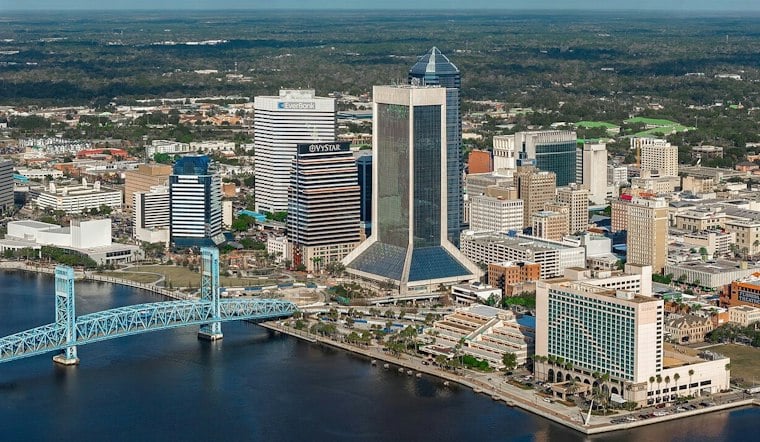
Jacksonville's workforce grew by 5.6% between 2023 and 2024, a surge that just earned the city the No. 1 ranking nationally for recent workforce growth in a new financial analysis of America's 50 biggest metropolitan areas. The city landed at No. 7 overall among the nation's biggest boomtowns, even as its labor pool expansion outpaced every other major metro in the country.
A National Marketplace Puts Jacksonville on Top
The ranking comes from LendingTree, an online financial marketplace, which analyzed the nation's 50 biggest metropolitan areas across three categories: people and housing, work and earnings, and business and economy, according to Action News Jax. LendingTree compared changes in labor-force population from 2023 to 2024 and evaluated shifts in unemployment rates and median earnings over the same period. Jacksonville placed No. 4 in the people and housing category and No. 12 in work and earnings, per the outlet's report.
Eight of the 10 highest-ranked metros nationwide were located in the South, the report notes, reflecting a broader pattern of Sunbelt cities pulling ahead of the pack. Jacksonville Mayor Donna Deegan framed the ranking as validation of the city's direction, saying, “People are voting with their feet and moving to Jacksonville in droves because our city is a great place to live, raise a family, and start a business.”
Recognition Piles Up for Jacksonville's Economy
The LendingTree ranking arrives alongside other recent accolades for Jacksonville's civic and economic performance. WalletHub recognized Jacksonville as the best-run city in Florida earlier in 2026, and separately named it the third-best large U.S. city to start a business, according to the same Action News Jax report. Deegan called the recognition proof of “Jacksonville's booming economy, talented workforce, and quality of life.”
Those accolades track with other independent rankings this year. WalletHub separately ranked Jacksonville 18th among 148 municipalities nationwide in a broader look at city management, citing an eighth-place national score for per-capita budget efficiency, according to What's Up Jacksonville. That analysis measured a 36-metric public services quality score against each city's per-capita budget.
Regional Numbers Show Where the Growth Is Coming From
Official regional labor data backs up the broader trend. The six-county Jacksonville labor force expanded to 881,444 workers in June, with 800,300 nonagricultural jobs and a 4.9% unemployment rate, according to labor market updates from CareerSource Northeast Florida. Year-over-year, the regional labor force grew by 1,929 workers while nonfarm payroll employment added 2,600 jobs, the same release shows.
Jacksonville's metro area also posted a 3.5% increase in real gross domestic product between 2023 and 2024, a figure that complements its labor force gains, according to the Jacksonville Daily Record. The city's workforce pool sits at roughly 896,903 people with a median age of 38.2 years, according to city data, with 13.3% employed in finance and insurance and 13.2% in supply chain logistics — concentrations in commercial banking, corporate finance, and port logistics that help explain the labor pool's growth.
Investments Aim to Keep the Pipeline Growing
City and state leaders have been backing that workforce growth with fresh training investments. Florida Governor Ron DeSantis announced a $23.5 million state defense and workforce grant package this month that includes $7 million for Florida State College at Jacksonville to build a welding, logistics, and defense manufacturing training center at Cecil Commerce Center, Hoodline previously reported. The training hub is planned for the former Naval Air Station Cecil Field site, supporting regional aerospace and shipbuilding employers.
Not every recent data point points in the same upward direction. Month-to-month state employment reports from mid-2026 show a still-elevated regional unemployment rate, with job growth concentrated in health services and professional services while financial and trade sectors undergo rebalancing, according to CareerSource Northeast Florida's release. Rapid population and workforce gains have also strained local housing supply, prompting city initiatives around workforce housing and infrastructure as officials work to keep pace with the growth LendingTree's ranking now puts in the national spotlight.


