

























































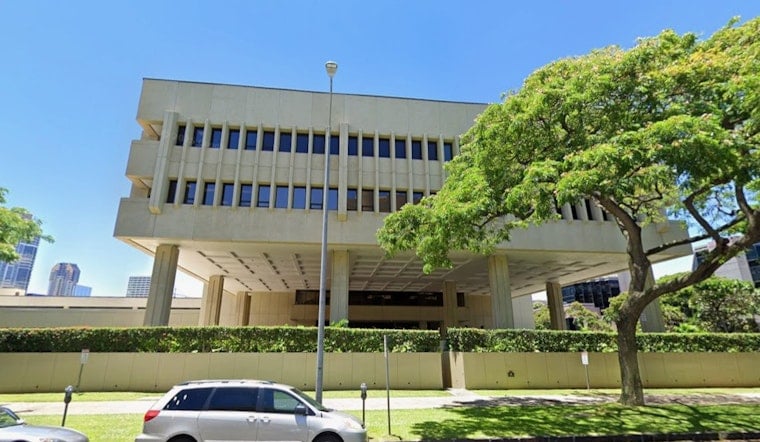
A Honolulu jury has convicted Jeremyal Leedy of assault and firearm charges stemming from a 2024 shooting on Kaaha Street in Kaimuki that left a man critically injured, while acquitting him of the most serious charges he faced, including first- and second-degree murder. The 40-year-old was found guilty of second-degree assault, ownership or possession of a firearm prohibited to a felon, and carrying a firearm in the commission of a separate felony.
The shooting happened on April 2, 2024, in the 2700 block of Kaaha Street, erupting after a fight with Leedy's ex-girlfriend outside her home, according to KITV 4 Island News. The victim, who was the boyfriend of Leedy's ex-girlfriend's mother at the time, sustained critical injuries from the attack and a gunshot wound. Leedy was arrested the following day in Waimanalo on suspicion of second-degree attempted murder, and he later left the scene in a red BMW, per the outlet's reporting.
According to a previous interview cited in the station's report, Leedy said the victim came out swinging with a bat, and that he pleaded with the victim to stop hitting him. He said he picked up a gun at the scene after hearing the victim ask a friend to get a gun, and that he shot the victim in the stomach in self-defense. During the confrontation, Leedy also hit the victim in the face and head with the victim's own bat, and he shot at a neighbor who was running away, missing that person, the report states.
What the Jury Decided After a Two-Year Wait
The trial took place in First Circuit Court in Honolulu in late August, more than two years after Leedy's initial arrest and indictment, according to a Facebook video report. Jurors ultimately convicted Leedy on three charges tied to the shooting: second-degree assault, ownership or possession of a firearm prohibited to a felon, and carrying a firearm in the commission of a separate felony. At the same time, they acquitted him of first-degree murder, second-degree murder, assault of a person 60 or older, and two additional counts of carrying a firearm in the commission of a separate felony.
An Oahu grand jury had originally indicted Leedy in April 2024 on eight felony charges, including first-degree attempted murder and firearms offenses, according to KHON2. At the time of the shooting, Leedy was actively serving probation for a prior conviction, the Honolulu Prosecutor's Office said, which made any firearm possession on his part illegal regardless of the circumstances. Court records also show that Leedy pleaded guilty to harassment by stalking on August 25.
A Criminal Record Stretching Back to 2007
Leedy's record includes a 2007 case out of Hilo, where Hawaii Police Department detectives charged a then-23-year-old Jeremyal B. Leedy with second-degree robbery following a shoplifting and robbery incident at a Macy's department store. That prior felony conviction is part of why prosecutors were able to pursue the felon-in-possession firearm charge nearly two decades later.
Hawaii law defines both firearms and baseball bats used to strike someone as dangerous instruments capable of causing substantial bodily injury under state assault statutes, a classification that can elevate assault charges from misdemeanors to felonies. Second-degree assault in Hawaii is a Class C felony carrying a maximum sentence of five years in prison and fines up to $10,000, while felon-in-possession of a firearm is punishable by up to 10 years in prison and fines up to $25,000 under state law.
Mandatory Minimums Loom Over December Sentencing
Leedy's sentencing has been scheduled for December 16. Under Hawaii Revised Statutes § 706-660.1, a conviction for carrying or using a firearm in the commission of a separate felony subjects a defendant to mandatory minimum prison terms, meaning the judge will have limited discretion on at least one of Leedy's three convictions. It remains an open question whether the court will order his sentences to run concurrently or consecutively; under Hawaii Revised Statutes § 706-668.5, multiple prison terms imposed at the same time run concurrently unless the sentencing judge specifically orders otherwise.
The case lands amid broader unease over gun violence on Oahu. Civil Beat reported that while overall violent crime in Honolulu fell 24% between 2019 and 2024, homicides in Honolulu County climbed to 37 cases in 2024, the highest annual total since 2020. The outcome of Leedy's trial, in which jurors accepted elements of a self-defense claim while still holding him accountable for illegal firearm possession, underscores how those two competing forces, self-defense and unlawful gun access, can collide in a single Honolulu courtroom.





