

























































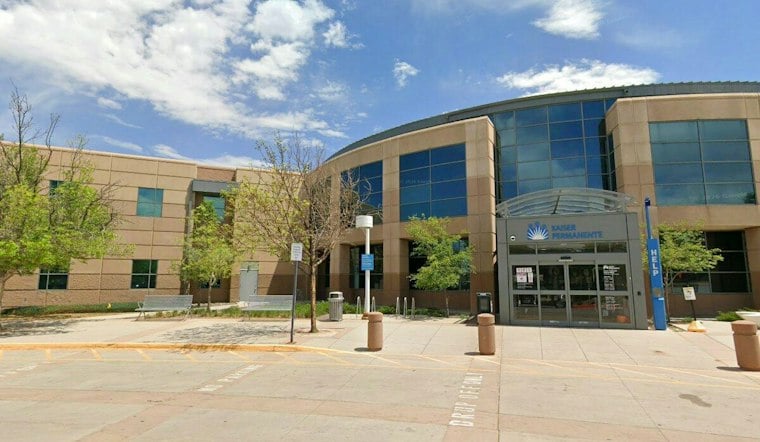
A union representing Kaiser Permanente Colorado employees has filed suit to stop the health system from shipping a batch of nursing jobs to Georgia before the dispute can go through arbitration. The lawsuit centers on plans to consolidate hospital-admission authorization work at a care coordination center out of state by late December, a move the union says would violate its contract and could cost roughly a dozen registered nurses their jobs in Colorado.
Union Says Contract Bars the Move
United Food and Commercial Workers Local 7 filed the case in U.S. District Court in Denver, seeking a court order preventing Kaiser Permanente Colorado from transferring the jobs out of state before arbitration, according to The Denver Post. The lawsuit argues that the union-Kaiser contract does not allow work performed by Local 7 members to be shifted to other units, and that Kaiser should not be allowed to move forward with the transfer because arbitrators are typically reluctant to force parties to undo actions that have already been completed.
The union represents about 1,600 Kaiser employees across 30 facilities in Colorado, per the same Denver Post report — though Kaiser Permanente, in its own public statement, has put that figure at roughly 1,700 employees who largely work in ambulatory and outpatient settings. The jobs at the heart of the dispute involve registered nurses handling daily utilization and quality reviews, discharge planning and care coordination for hospitalized members, according to a job listing posted by Kaiser Permanente Careers for the Atlanta-based role.
Kaiser Calls the Lawsuit Unnecessary
Kaiser Permanente has pushed back hard, calling the legal action premature. The health system said in a statement that the union has chosen to pursue an unnecessary legal case rather than utilizing our well-established structure and processes, and added flatly that the lawsuit is without merit, according to a statement posted by Kaiser Permanente. Kaiser representatives did not immediately respond to a request for comment from the Denver Post on the newly filed suit.
In that same statement, Kaiser said it employs more than 1,200 physicians and around 6,000 nurses, care team members and staff across Colorado. The company also pointed to retention numbers it says undercut the union's framing of the dispute: its overall Colorado employee departure rate was 6.7% last year, less than half the national health-care average of 14%, and the departure rate among UFCW-represented employees in Colorado was even lower, at 5%.
A Familiar Fight, With a Ticking Clock
Matt Shechter, the bargaining unit's general counsel, said Kaiser and Local 7 already have a backlog of disagreements awaiting arbitration, according to the Denver Post's reporting. He said the arbitration process could take a number of years to resolve, and warned that the jobs in question could simply be gone by the time the parties reach a resolution — the core urgency behind the union's push for a court order now rather than waiting for arbitration to run its course.
Some of the affected employees have received other job offers within Kaiser Permanente, though the broader group still faces potential layoffs, per the Denver Post account. The union came close to striking against Kaiser in 2021, and a separate union, Service Employees International Union Local 105, did strike against Kaiser Permanente in 2023 — a period Kaiser has described as part of a nationwide strain on health systems trying to catch up on three years of pandemic-delayed care.
Built on Years of Unresolved Staffing Disputes
This is not the first time Local 7 and Kaiser have squared off in federal court over staffing. Local 7 filed an initial complaint against Kaiser in October 2021, amended it in January 2022, and Kaiser answered with a counterclaim in October 2022, according to KOAA. That earlier case centered on a collective-bargaining provision requiring Kaiser to provide sufficient staffing to address quality standards of patient care and provider workload, and a federal trial was scheduled to begin in January 2025 and was expected to last about eight days.
A Colorado federal judge ultimately ruled in May 2025, after a six-day bench trial, that the understaffing dispute must be resolved through arbitration rather than in court, according to Law360. A separate survey conducted from March through July 2023 of Kaiser Permanente workers across more than 20 unions found more than 90% of respondents reported understaffing in their departments, with 95% saying the staffing crisis was hurting patient care and access. The survey drew 8,607 responses, according to UFCW Local 7, which is itself part of the Alliance of Health Care Unions, a coalition representing more than 52,000 Kaiser Permanente employees nationwide, including Local 7 members in Colorado and Wyoming.
With the Georgia consolidation deadline looming in late December, the newly filed Denver case puts a hard timeline on a fight that has otherwise dragged through arbitration and federal court for years. Whether a judge grants the union's request before that deadline arrives remains to be seen.





