

























































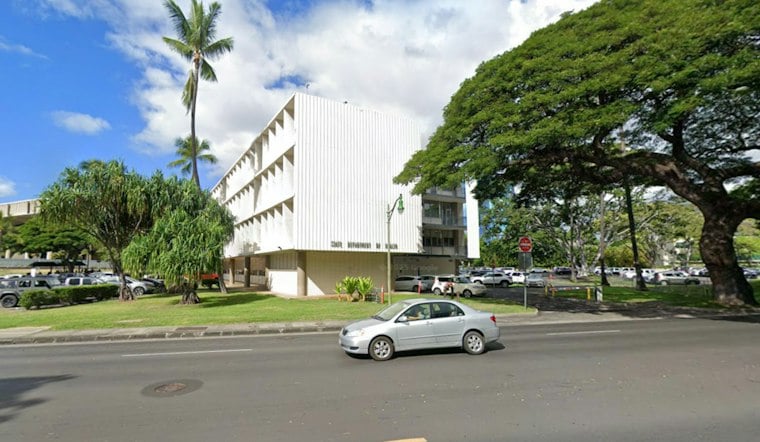
The Hawaiʻi Department of Health has temporarily relocated patients and staff from Kalaupapa, the remote Molokaʻi settlement once used to isolate people with Hansen's disease, after the peninsula's primary drinking water pump failed and drained its storage tanks. The evacuation sent patients to the department's Care Home on Oʻahu while crews work through what's expected to be roughly a two-week repair.
According to a news release from the Hawaiʻi State Department of Health, the pump serving Kalaupapa's water system began malfunctioning on Sept. 3, and the resulting shortage prompted the immediate move. As reported by Maui Now, the failure exhausted storage tanks before repairs could be completed, leaving officials little choice but to relocate the settlement's most vulnerable residents rather than risk them going without reliable water.
A Water System Built Across Rugged, Isolated Terrain
Kalaupapa's water has never come easily. Per documentation from the Library of Congress Historic American Engineering Record, the settlement's supply historically relied on a pipeline capturing spring runoff from the distant Waikolu Valley, a system expanded in the late 1930s to carry potable water across miles of rugged terrain to reach the peninsula. That geography has long created maintenance vulnerabilities for the tiny community, and this month's pump failure is the latest example of just how fragile that infrastructure remains.
The settlement's peculiar governance compounds the challenge. Kalawao County operates under Hawaiʻi Revised Statutes Section 326, which places it under the direct administrative control of the state health department rather than an elected municipal government, according to testimony from the Hawaiʻi State Department of Health. That arrangement makes Kalawao the second-smallest county by population in the United States, and it means DOH is responsible not just for medical care but for basic municipal services like the water system now under repair.
A Shrinking Population With a Deep History
Managing that infrastructure requires coordination across a tangle of agencies. Official DOH documentation notes the peninsula is governed through multi-agency agreements, including a 1984 cooperative arrangement between the health department and the National Park Service, plus a 1991 land lease of 1,290 acres from the Department of Hawaiian Home Lands. Congress established the 10,779-acre Kalaupapa National Historical Park in 1980 to preserve the settlement and its natural resources, with park boundaries matching those of Kalawao County itself, according to the National Park Service.
That history runs deep. More than 8,000 people diagnosed with Hansen's disease were forcibly exiled to the peninsula between 1866 and 1969 under kingdom and state quarantine laws, per the National Park Service, until compulsory isolation was repealed following the development of antibiotic treatments. Today just a handful of patient-residents remain. Hawaiʻi State Legislature records from early 2026 note only seven individuals remained on the official Kalaupapa Registry receiving state health services, with just four residing full-time at the settlement, all age 83 or older.
That dwindling population is already reshaping plans for the peninsula's future. Hawaiʻi officials and Maui County leaders began formal discussions in February to prepare for dissolving Kalawao County and transferring municipal jurisdiction to Maui County once the last patient resident has passed, according to Hawaii Public Radio. The current evacuation is a reminder of how thin the margins are for keeping the settlement running in the meantime.
Tourism Access Still Recovering From Its Own Disruptions
The community has faced other recent disruptions to its fragile routines. Public tours of Kalaupapa only resumed in September 2025 after a five-year closure triggered by pandemic restrictions, with demand so high that all initial tour slots sold out in 75 minutes, Honolulu Civil Beat reported. Hoodline covered that reopening in tiny 'saints' tours returning to the peninsula.
Federal regulations require commercial tours within Kalaupapa National Historical Park to be owned by patient-residents, and that requirement created fresh uncertainty after the May death of 92-year-old former patient Meli Watanuki, who had owned the settlement's only permitted tour company, according to Honolulu Civil Beat. Visitor access to the settlement remains strictly controlled to protect its vulnerable elder residents, a policy that predates this month's water emergency but underscores how carefully outside contact with Kalaupapa's community is managed.
For now, the focus remains on restoring water service so patients and staff can return. The relocation marks another chapter in the long, difficult story of a community whose remaining residents have called the isolated peninsula home for decades, even as state officials look ahead to the eventual end of Kalawao County's unusual governing arrangement.




