

























































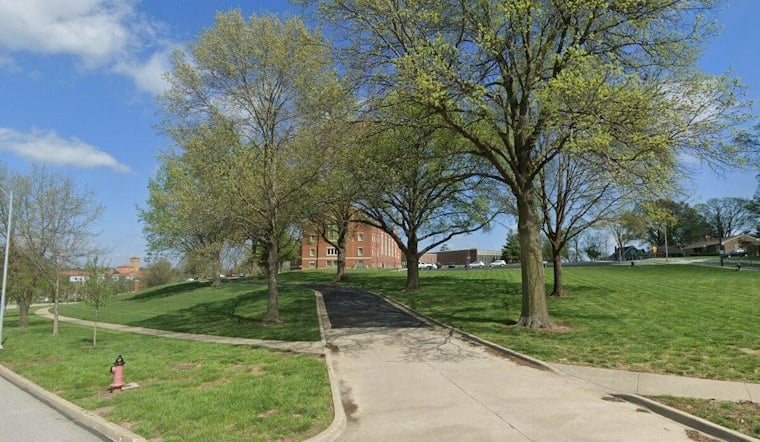
Kansas City Council members are voting on a resolution to pursue $40 million in federal grant funds aimed at addressing flooding concerns and crash risks at the intersection of East 63rd Street, The Paseo, and Meyer Boulevard. The resolution is a procedural step in a coordinated effort by multiple city departments to address the junction.
The resolution seeks federal grant funding through the U.S. Department of Transportation's Promoting Resilient Operations for Transformative, Efficient, and Cost-saving Transportation program, known as PROTECT. The grant would support efforts to address flooding and stormwater concerns near the intersection.
The city is pursuing federal grant funding for efforts near the intersection. The effort has involved coordination among city departments.
A Boulevard Safety Problem Bigger Than One Intersection
The crash risk at 63rd and Paseo isn't an isolated case. City parks records from February 2026 show that 19 of Kansas City's 25 highest-injury intersections involve a designated Parkway or Boulevard, according to the Kansas City Board of Parks and Recreation Commissioners.
Local advocates flagged the danger years before the council resolution took shape. A December 2023 walk audit by pedestrian advocacy group BikeWalkKC identified Meyer Boulevard as a high-hazard corridor, pointing to a lack of safe pedestrian crossings and recurring street flooding near local convents that create severe risks for transit riders and residents. The same audit noted that the East 63rd Street and Paseo intersection anchors a major institutional corridor, serving the Nazarene Theological Seminary, Ewing Marion Kauffman School, Research Medical Center, and Southeast High School, meaning any prolonged disruption would ripple through a stretch of the city already dense with schools and medical facilities.
The Paseo itself carries its own layer of local history. Kansas City voters in November 2019 overwhelmingly approved, 65 percent to 35 percent, a ballot measure restoring the historic Paseo name to the 9.98-mile boulevard after City Council had voted earlier that year to rename it for Dr. Martin Luther King Jr., according to Northeast News.
If approved, the resolution could support green stormwater infrastructure and roadway improvements aimed at addressing flooding and traffic-safety concerns. Exactly how USDOT will time its evaluation of the grant application, and how the city will manage traffic and construction disruptions along a corridor serving so many schools and medical facilities, remain open questions as the process moves forward.


