

























































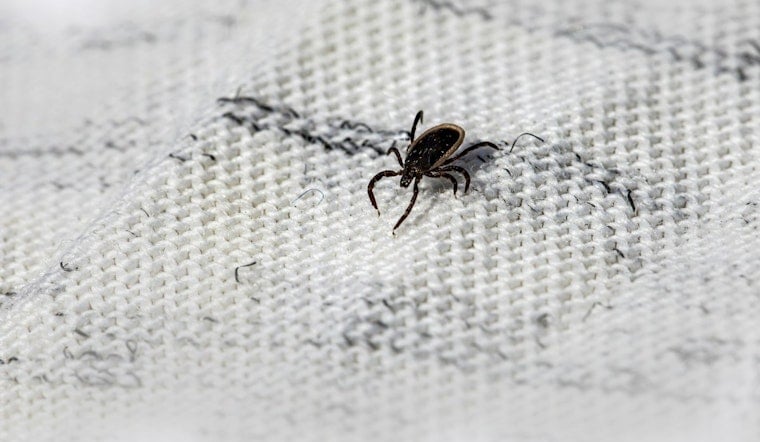
Ticks are thriving across the Kansas City metro this year, and Missouri now sits near the top of a national list nobody wants to lead: the state ranks second in the country for the share of blood donors carrying antibodies tied to a tick-triggered red meat allergy. Tick activity remains a concern, and CDC data show tick-bite visit rates were highest for this time of year since 2017 in all regions except the South Central United States.
A CDC report found that 26% of Missouri blood donor samples carried alpha-gal antibodies, placing the state behind only Arkansas, which topped the list at 31.2%, according to Axios. The nationwide study, detailed by the Center for Infectious Disease Research and Policy, analyzed roughly 3,000 blood donor samples collected across 10 states between late 2024 and early 2025. Alpha-gal syndrome is an allergy to red meat, and it's triggered by bites from the lone star tick, which can also spread ehrlichiosis, per Axios reporting from Abbey Higginbotham and Carly Mallenbaum.
Kansas wasn't among the 10 states tested for alpha-gal antibodies in that particular CDC report, Axios noted, even though it sits within the broader Midwest region seeing elevated tick activity. CDC data show tick-bite visit rates were highest for this time of year since 2017 in all regions except the South Central United States.
What's Driving the Surge Locally
Tickborne illnesses have been reported across Jackson, Johnson, Clay and Wyandotte counties, per Axios. Deer play a central role in spreading ticks through the region, and in Kansas, tick exposure is associated with woodland edge habitats, pasture borders, and riparian corridors where white-tailed deer and small mammal populations overlap, according to World Atlas. Those fragmented habitat edges give lone star ticks plenty of places to wait for a host to brush past.
The 2026 tick season isn't done yet, either. Axios reports the season will see another peak this fall. Deer also become more active during mating season, but that movement is not established here as the direct cause of the fall peak — meaning the risk of bites won't simply fade once summer ends.
Missouri's New Law Aims to Track the Allergy
Missouri Governor Mike Kehoe signed House Bill 2372 into law in July, authorizing the Missouri Department of Health and Senior Services to track and report alpha-gal syndrome cases statewide, according to Missourinet. State health records already show more than 34,000 tickborne illness cases reported since 2021, the outlet notes. Missouri law will require laboratories to report confirmed alpha-gal syndrome cases to the state, per Axios.
Missouri's new law adds alpha-gal syndrome to the state's reportable diseases, and the state's health department estimates that between 7,300 and 34,400 Missourians have been affected by the condition since 2021. Nationally, the CDC estimates that up to 450,000 people were living with alpha-gal syndrome, describing it as a rapidly emerging public health concern concentrated in the Midwest and South.
Antibodies Don't Always Mean an Active Allergy
CDC researchers have cautioned against reading too much into antibody numbers alone. While 24% of adults in five top tick-heavy states test positive for alpha-gal antibodies, only a small fraction go on to develop clinical alpha-gal syndrome, prompting guidance against testing people who show no symptoms, per the CIDRAP report. Nationwide, active alpha-gal syndrome is estimated to affect roughly 0.14% of the population — a reminder that antibody exposure and a full-blown meat allergy are two very different things.
Ehrlichiosis is commonly reported in Missouri, carrying a case fatality rate of approximately 2% and posing the greatest risk to adults 40 and older, according to the Missouri Department of Health and Senior Services. Across the state line, the Kansas Department of Health and Environment identifies the lone star tick as the state's most abundant tick vector and notes hospitalizations in specific cases, per the Kansas Department of Health and Environment.
A Rare but Serious Viral Threat
Lone star ticks in this part of the country have also been linked to something rarer and more severe: Bourbon virus. Bourbon virus has been linked to a fatal case in Kansas, according to the CDC. Bourbon virus remains rare.
The sources associate Lyme disease with blacklegged deer ticks, a separate species — Hoodline previously reported on that research while covering Bourbon virus discoveries in Tennessee ticks. Lyme disease is uncommon in Kansas, and blacklegged deer ticks have their own bite pattern and habitat preferences.
How to Protect Yourself This Fall
Health officials recommend wearing long sleeves and long pants, using insect repellent, and checking people and pets for ticks after time outdoors. Anyone spending time in areas with dense tick populations should take the same precautions: cover up, apply repellent, and do a thorough tick check on themselves, their kids and their pets before heading back inside. With another tick peak expected this fall as deer become more active during mating season, health officials say those habits matter just as much now as they did at the height of summer.





