

























































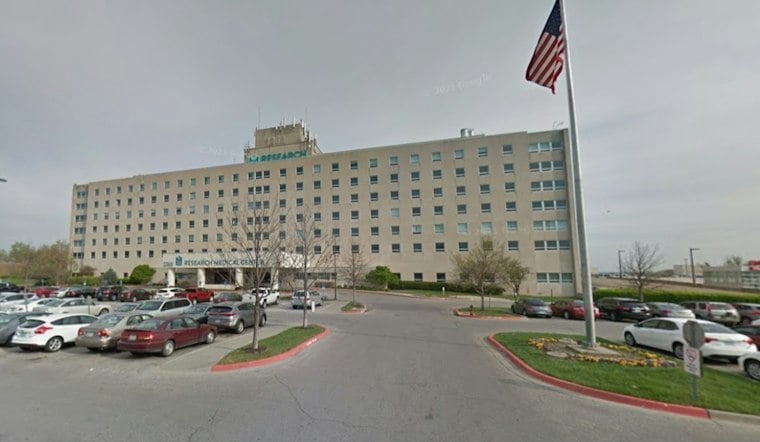
Three patients who came within a hair's breadth of dying from catastrophic heart and lung failure walked back into Research Medical Center this week for a reunion with the doctors and nurses who treated them. Each of them had spent days hooked to a machine that did the work their own hearts or lungs no longer could.
A Machine of Last Resort
The three former patients were reunited with the physicians and care teams who treated them at the Kansas City hospital, according to KSHB 41. All three had survived life-threatening heart and lung emergencies that required ECMO, or extracorporeal membrane oxygenation, an advanced form of life support used when a patient's heart or lungs can no longer function adequately and conventional life support isn't enough, the station reports. Research Medical Center runs one of a limited number of ECMO programs in the Kansas City region, per the same account.
The hospital's ECMO team has stayed busy. The center completed 31 ECMO cases in 2025 and had already logged 32 cases in 2026 as of the week before publication, KSHB 41 reported. That volume tracks with a broader shift in critical care: median adult ECMO runs per hospital center nearly quadrupled nationwide, climbing from four to 15 between 2009 and 2022, according to registry data from the Extracorporeal Life Support Organization.
Three Different Paths to the Same Machine
The three cases highlighted by the station span the main reasons ECMO gets deployed in adults. One patient spent five days on ECMO after severe respiratory failure linked to vaping, the report notes. Another required eight days of ECMO support following major heart surgery, while a third spent 13 days on the machine after emergency surgery for a torn aorta.
Fred Yates was one of those patients. He suffered a stroke while at work in December 2024, the station reported, and experienced curled fingers and numbness in his left arm. Doctors diagnosed him with several small strokes, congestive heart failure, multiple blockages, and a defective heart valve, and found his heart function rate had fallen to just 15 percent, according to the same account. Yates underwent eight and a half hours of chest surgery, per the report.
Another survivor, John Hawkins, told the station he first noticed chest weakness during a gym workout. Hawkins changed his diet afterward and shared his recovery story, attributing it to his faith. “How the lord walked me through this,” he said, according to KSHB 41's report, while also cautioning that exercise alone may not prevent other health damage.
The Odds They Beat
The Extracorporeal Life Support Organization registry report identifies 29.5 percent as the lowest survival figure for adult extracorporeal cardiopulmonary resuscitation (ECPR). ECMO itself is generally reserved for patients whose conventional mortality risk already exceeds 80 percent.
International multicenter studies have examined patients requiring venoarterial ECMO after emergency repair of acute type A aortic dissections, according to research in the European Journal of Cardio-Thoracic Surgery. A case report on vaping-associated acute respiratory distress syndrome discusses EVALI, according to research indexed by PMC.
A Hospital Built for the Sickest Patients
Research Medical Center is a 590-bed acute-care hospital operating a Level I Trauma Center and a certified Comprehensive Stroke Center, per the American Hospital Directory.
HCA Midwest Health operates Research Medical Center.





