

























































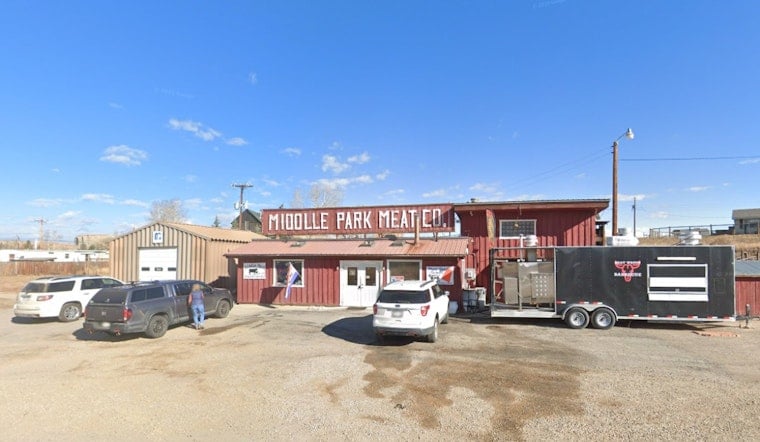
A Kremmling meat market that a judge ordered closed in February has kept its doors open through repeated health inspection failures, a state-ordered closure, and now a formal license revocation from Grand County commissioners. Owner John “JD” Schein has rung up sales to customers during his suspension and says he plans to fight back with a defamation lawsuit against the county and state health agencies.
Grand County commissioners voted on August 11 to formally revoke the retail food establishment license for Middle Park Meat Market Cafe, LLC, effective at noon that day, according to Grand County. The action came after the Colorado shop failed its fourth inspection out of five in the previous calendar year and Schein failed to pay the restaurant's state license, according to CBS Colorado. Under Colorado law, retail food establishments that fail four out of five inspections within 12 months face statutory suspensions, cease-and-desist orders, and civil penalties of up to $1,000 per violation.
The station's report lays out a timeline stretching back well over a year. Middle Park Meat Co. failed its first routine inspection on July 1, 2025, and county health inspectors ordered it closed the same day, only for the shop to reopen the very next day, per the same account. Schein posted a sign, as required by the health department, stating the facility was not health-department inspected — then kept selling anyway.
A Cascade of Closure Orders Ignored
A judge ordered Schein to close Middle Park Meat Co. in February, and the Colorado Department of Public Health and Environment ordered a third closure in April, according to CBS Colorado. Still, the Kremmling Police Department sent photos to health officials showing the shop doing business for four consecutive days, the outlet reported. Middle Park Meat Co. is reportedly the only establishment in the region where Grand County deputies provide backup for health inspectors.
Inspectors documented a long list of problems at the shop, according to the article: broken coolers and food repeatedly stored above required temperatures, insufficient handwashing, improper hot and cold holding, missing date marking, inadequate surface sanitizing, and cross-contamination risks. Inspectors also found unpasteurized milk, raw eggs, and other items from unapproved sellers, along with a failure to separate living areas from food preparation and storage spaces, the report states.
Grand County Public Health, which manages retail food safety compliance across both Grand and Jackson counties, normally conducts unannounced inspections and handles more than 300 restaurant inspections annually between the two counties, per Grand County. Shira Cohen with the health department said many of the violations were simple to fix, like labeling spray bottles and dating food, and that the agency generally tries to educate and coach violators back into compliance rather than punish them, according to CBS Colorado.
Cyclospora Concerns Add Urgency
Cohen cited the ongoing cyclospora outbreak in explaining the health department's urgency, the outlet reported, and characterized the repeated violations as an intentional disregard for the rule of law. The Colorado Department of Public Health and Environment recorded 270 total cyclosporiasis cases and six hospitalizations statewide through August 31, with 69% of completed cases tied to international travel. Nationally, the Centers for Disease Control and Prevention tracked more than 1,645 confirmed domestic cyclosporiasis cases and 141 hospitalizations across 31 states between May 1 and July 14.
The parasite is notably hardy: according to the Colorado Department of Agriculture, Cyclospora withstands freezing and temperatures up to 157 degrees Fahrenheit, requiring cooking temperatures of at least 158 degrees to destroy it — a detail that underscores why officials treat food handling violations as more than paperwork issues.
Abbie Baker, another county official cited in the report, said she doubted Schein would correct the food safety issues and recommended immediate physical closure along with permanent revocation of the retail food license. Baker said the operator does not intend to remedy known food safety issues, according to the same account. Schein, for his part, claimed health inspectors did not conduct inspections when he gave them access, and the report notes he failed to attend many scheduled inspections, failed to meet with health inspectors, and failed to return phone calls and text messages from health department staff.
Owner Vows Defamation Suit, Calls It Local Tyranny
Schein has framed the entire ordeal as government overreach. “All they had to do was leave me (and my customers) alone,” he said, according to CBS Colorado. He has accused Grand County government of publicly defaming the business before any final judgment and said he would resist what he described as local tyranny, the outlet reported. Schein plans to seek damages in a defamation lawsuit against county and state health agencies and maintains a fighting posture in the ongoing legal dispute.
A Grand County commissioner said the county had bent over backwards to try to bring the business into compliance, according to the report. Commissioners ultimately authorized a cease-and-desist order unanimously. Grand County officials are now weighing further legal options against Schein, and a Grand County court hearing is scheduled for September 14.
A Business With Decades of Local Roots
The shop's troubles stand in contrast to its long history in Kremmling. Middle Park Meat Co. was established in 1958 by Joe McElroy, and Harlan and Jane Land bought the business in 1975, retiring after 35 years at the helm, according to Best of Grand. Schein is the shop's third owner since the Lands retired, having obtained Middle Park Meat Co. in October 2024 and passing a pre-operational inspection that same month.
The business built a loyal following over the decades, repeatedly landing as a top finalist in Grand County's annual “Best of Grand” community voting for local produce and meat markets in 2021, 2023, 2024, and 2025. It operates on a 0.86-acre parcel with highway frontage at 1107 Colorado Highway 9, including an adjacent 32-by-24-foot outbuilding used for food retail operations, per Best of Grand. How that community goodwill squares with more than a year of failed inspections and defiance of court orders remains an open question as the case heads toward its September 14 hearing.





