

























































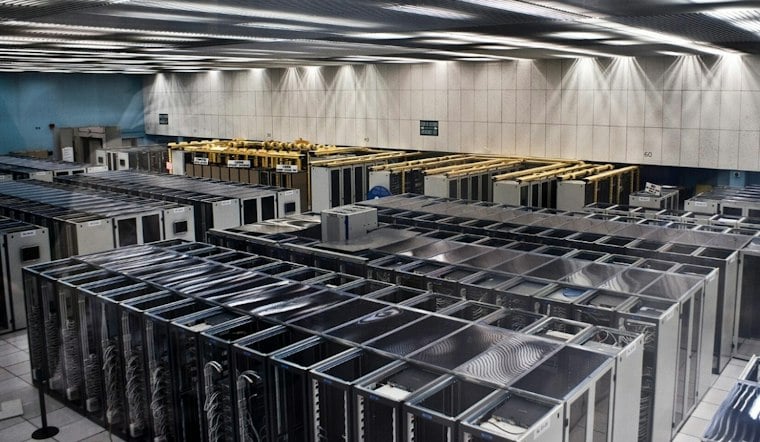
Los Angeles County's planning department has hit pause on new hyperscale data centers in unincorporated areas, enacting a temporary ban that officials say will hold until a permanent ordinance is written, vetted, and brought before the Board of Supervisors. The moratorium, signed by Los Angeles County Department of Regional Planning Director Amy Bodek, took effect on September 17, 2026, covering all unincorporated county zones. It adds to a regional fight over AI-driven server farms that has reshaped land-use politics across the San Gabriel Valley.
The freeze is designed as a bridge measure. Los Angeles County is now moving forward with a full ordinance meant to permanently ban AI hyperscale data centers in unincorporated communities, according to the Los Angeles Daily News. That effort is led by Supervisor Hilda Solis, chair of the Board of Supervisors and representative of the county's First District, who has said technology growth should not come at the expense of public health, environmental protections, or residents' quality of life. Her motion is scheduled to be heard at a Community Services Cluster agenda review virtual meeting on September 23, with the full Board of Supervisors expected to take it up on October 6 following public comment and any amendments.
How the County Got Here
The Board of Supervisors voted in April to direct county health, planning, public works, and sustainability departments to formally study data centers' potential strain on public utilities and possible health effects, according to a statement from Los Angeles County Board of Supervisors. Since then, San Gabriel Valley cities including Monterey Park, Irwindale, and Commerce have moved to halt unregulated hyperscale development within their own borders.
Data centers have become a genuine flashpoint across the San Gabriel Valley over the past year. Monterey Park voters approved a ballot measure banning data centers outright with 86% support on June 2, making it the first city in the nation to permanently prohibit large-scale AI data centers. The grassroots opposition that fueled that vote originally coalesced against a proposed 247,000-square-foot facility on Saturn Street, an application that HMC StratCap ultimately withdrew, according to Pasadena Now.
Neighboring Cities Take Their Own Action
Irwindale's city council unanimously approved its own data-center ban through ordinance on September 9, with that prohibition set to take effect 30 days after adoption. Alhambra voters will decide a permanent ban of their own on November 3, while West Covina has approved a resolution opposing large-scale data centers and battery energy storage facilities. Commerce enacted its own 45-day moratorium in August after discovering its municipal code contained no zoning definitions for server farm infrastructure at all, a gap Hoodline previously reported had prompted officials to freeze approvals over grid and water concerns. Baldwin Park's city council took a more preemptive approach, directing staff during its February 4 meeting to evaluate moratoriums and zoning updates before any commercial applications were even submitted, according to The Mid Valley News.
The pushback has not stayed confined to the county's inland suburbs. In El Segundo, a developer proposed demolishing a 143-room Hyatt Place hotel to build a five-story, 230,780-square-foot facility with its own on-site electrical substation, a project Hoodline detailed in its coverage of the South Bay proposal.
Water, Power, and Noise Concerns Drive the Debate
County officials have laid out specific resource concerns behind the moratorium. Public Works Director Mark Pestrella said water costs would rise and noted that a single hyperscale data center can use up to 5 million gallons of water per day, with local water agencies potentially needing to buy more imported water from the Colorado River or Northern California, water that costs more than supplies stored locally from runoff, rainwater, or recycling. Los Angeles County currently has about 74 operating data centers, and the county's unincorporated areas are home to roughly 1 million of the county's 10 million residents.
Solis has also pointed to Pacific Gas & Electric findings indicating that data-center demand could eventually consume electricity equivalent to what 8 million homes use, warning that the surge could force electrical utilities to rely on diesel or other fossil-fuel peaker plants. County Public Health Director Barbara Ferrer said hyperscale data centers in other parts of the country produce a constant humming noise that can create sensitivity and health impacts in some residents. Diesel backup generators used at these facilities also produce smog components including PM2.5 fine particulates, which can enter the lungs and cause disease or acute breathing episodes.
What the Permanent Ban Would and Wouldn't Cover
The proposed county ban applies specifically to unincorporated areas and targets hyperscale centers that link hundreds of computers to power artificial intelligence programs, which is what Solis has said she wants to prohibit. The permanent ordinance would not ban smaller sole-source data centers, and beneficial-use facilities such as enterprise, accessory, and sole-source data centers would remain distinct categories under the plan. A Redondo Beach data center that stores and processes information for county government operations illustrates the kind of facility officials say is not the target of the crackdown. Residents' core worry, as county officials have framed it, is that mega data centers will consume water for cooling, drain power, increase utility rates, and harm the environment.
Labor Groups Push Back Against a Ban
Organized labor has been the most vocal counterweight to the moratorium push. IBEW Local 11, which represents 12,000 union electricians and 350 contractors, has warned that banning data centers would cut out hundreds of jobs per site, according to the union's Joe Sullivan. George Bocanegra has separately argued that data centers provide valuable opportunities for high-paying jobs. The Western States Regional Council of Carpenters, representing 12,000 members in Los Angeles County, has raised similar concerns about lost construction work.
A Statewide Legislative Backdrop
The county's moratorium lands amid a broader wave of state-level action in Sacramento. State Senator Sasha Renée Pérez, whose Senate District 25 covers several San Gabriel Valley communities at the center of the data center fight, introduced Senate Bill 978 in February, proposing to ban diesel backup generators at data centers, create a separate electricity rate class for facilities exceeding 75 megawatts, and require developers to cover transmission infrastructure upgrade costs upfront, according to LegiScan. State lawmakers have also considered additional data-center legislation, per CalMatters. Separately, California Governor Gavin Newsom issued an executive order directing ramped-up implementation of recently enacted AI oversight laws, which also directs the California Government Operations Agency to convene a group of experts to consider requiring advanced AI companies to build a kill switch intended to prevent AI bots from going rogue.
California remains one of the top national markets for data center expansion even as local opposition mounts, with more than 200 active data centers statewide according to the California Energy Commission, a figure Hoodline has cited in its coverage of similar freezes taking shape in Northern California. State regulators began incorporating projected data center growth directly into official statewide electricity demand forecasts back in 2024, underscoring how the industry's rapid expansion is now baked into planning assumptions even as cities and counties scramble to catch up with zoning rules written before AI-scale computing existed.





