

























































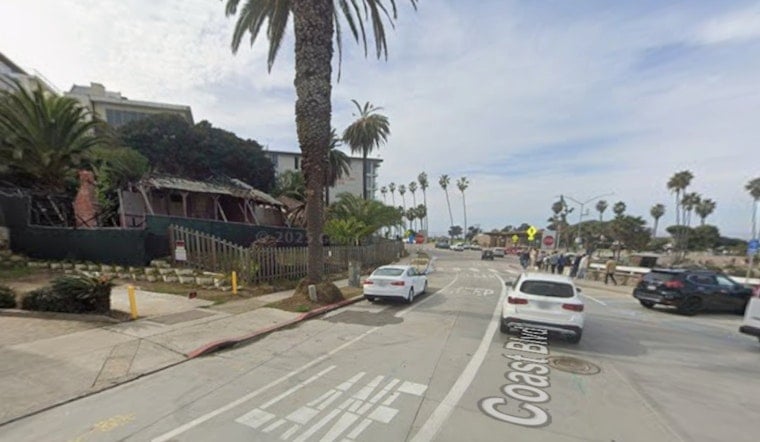
Two wood-framed cottages built in 1894 at La Jolla Cove are once again at the center of a fight over their survival, after the City of San Diego moved forward with a plan to demolish the fire-damaged Red Rest cottage while disassembling and storing its neighbor, Red Roost, for possible future restoration. The plan has drawn a formal appeal from the La Jolla Historical Society and a lopsided vote of opposition from the local planning committee that oversees the area.
The cottages sit at 1187 and 1179 Coast Blvd in La Jolla and are believed to be the oldest surviving wood-framed structures in La Jolla Village, according to the seed reporting from Times of San Diego. Red Rest was built for George Julian Leovy and Red Roost for John Eugene Fishburn, and both have been individually listed on the National Register of Historic Places since 1976, after the City of San Diego designated them a local historic landmark, HRB #101, in 1975. The properties are owned by Cove Properties, which consolidated ownership of both cottages in 2002 and is managed by La Jolla Cove Motel and Hotel Apartments LLC, whose managers are listed as Leonardo Simpser and Gregorio Galicot.
Under the city's current permitting proposal, Red Roost would be reroofed and secured, with no occupancy or interior work planned for either building, while Red Rest would be demolished and removed. City of San Diego officials determined that Red Rest suffered near-total loss of historic material in an October 2020 fire and had effectively been lost as a historic asset, while finding that Red Roost retained much of its historic material and could be secured for future restoration.
A Fire, an Arrest, and an Undetermined Cause
The October 26, 2020 fire severely damaged Red Rest and singed Red Roost. San Diego police arrested an arson suspect that same evening, though fire investigators later officially ruled the cause of the blaze undetermined, according to the Save Our Heritage Organisation. The fire destroyed much of Red Rest's original historic fabric, cementing the cottages' status on the group's Most Endangered List, where they have appeared for more than 25 consecutive years — the longest-running entry on the countywide watch list.
Diane Kane, who spoke to the San Diego Community Planners Committee, disputes the city's finding on Red Rest. She has said the fire changed the cottage's physical condition but not its historic significance, and she has described the cottages as having been largely neglected for decades. Kane has sought support to save both structures rather than allow one to be demolished.
Fifty Years of an Unenforced Ordinance
The dispute is inseparable from a longer history of code enforcement. The City of San Diego issued its first Notice of Violation against the cottages' owners in 2002 for failing to maintain the roofs, under a demolition-by-neglect ordinance requiring owners of designated historical resources to maintain unoccupied buildings and prevent decay, per the Save Our Heritage Organisation's account of the case. That city ordinance, which requires historically designated properties to be kept in a readily occupied state, went effectively unenforced for 50 years, according to the seed reporting. A City of San Diego report dated Sep 17, 2009, said the city's historical-resources regulations did not include a fine for the illegal demolition of historical resources. According to a City of San Diego report dated Oct 10, 2025, the city was considering stronger and clearer enforcement, penalties and fines for demolition by neglect and unpermitted alterations of historic resources.
The cottages' ownership history includes a period under Jack Heimburge, who owned them until his death in 1998 and had planned to use the cottages for storage tied to a new construction project. The California Coastal Commission denied Heimburge's demolition permit during that period. Laura Ducharme Conboy has said the owner knew the cottages' protected status at the time of purchase and had an obligation to protect and maintain them.
A Scaled-Back Plan After a Condo Proposal Collapsed
The current demolition-and-storage plan follows the collapse of a far larger redevelopment scheme. Architects Alcorn & Benton designed a 2022 proposal to move the historic cottages closer to the property line to accommodate a new four-story, eight-unit condominium building with underground parking, according to Save Our Heritage Organisation records. The applicant withdrew that condominium proposal on April 29, 2025, and the project was later formally modified into the scaled-back version now under review.
City of San Diego spokesman Peter Kelly explained in a July 2026 statement reported by Times of San Diego that the current, smaller project received a CEQA environmental exemption because Red Roost will be methodically disassembled, cataloged, and stored on-site for future restoration rather than demolished outright. Eduardo Podolsky, who represents the ownership group, has said the owners respect the community perspective and concern for the site. The scaled-back project was found categorically exempt from further environmental review, a determination preservation advocates argue skipped meaningful evaluation of stabilization, rehabilitation, or reconstruction using salvaged materials, and failed to analyze impacts on the cottage ensemble and the surrounding historic district setting.
A National Register District Anchored at the Cove
The cottages now sit inside a much larger recognized historic landscape. The U.S. National Park Service listed the La Jolla Park Coastal Historic District on the National Register of Historic Places in May 2024, defining an 8-acre zone spanning 2.5 miles of coastline anchored by Ellen Browning Scripps Park and encompassing 35 contributing resources across 10 buildings, eight sites, and 17 structures, per Save Our Heritage Organisation. Federal authorities found Red Rest to be a contributing resource within that district in 2024, even after the fire.
A California State Portal draft amendment for the Wilsonia Historic District said several cabins had been lost through alterations, demolition or neglect, illustrating that deterioration has affected historic properties elsewhere in the state.
The Library of Congress's Historic American Buildings Survey documented the 1894 cottages' rare single-wall structural system, in which the building's weight is borne almost entirely by its exterior tongue-and-groove redwood siding — a construction style architectural records describe as a prototype for early California beach bungalows that influenced architects including Irving Gill, Bernard Maybeck, and Frank Lloyd Wright.
Committee Votes 22-2 to Back an Appeal
The La Jolla Historical Society appealed the city's approach in June, and the group has said it is not opposed to redevelopment at the site, only to the process by which Red Rest's fate has been decided. In an August 28, 2026 letter to San Diego City Council President Joe LaCava and the City Council, San Diego Community Planning Committee Chair Victoria LaBruzzo urged the council to grant the preservation appeal, warning that approving demolition after years of neglect would set a dangerous precedent for historic landmarks citywide, as reported by Times of San Diego.
The committee she chairs voted 22-2 to support the Historical Society's appeal, framing the decision as a citywide precedent rather than a purely local La Jolla matter. The committee urged the council to grant the appeal and require a full historic and environmental review before any demolition proceeds.
In a separate case, a City of San Diego document dated Jun 5, 2021, described a proposal to demolish the California Theatre, identified as Historical Resources Board Site No. 291.
Hoodline previously reported that the adjacent, landmarked cottages remained vacant and tied up in a separate permit process while the neighboring La Jolla Cove hotel pursued its own 18-month oceanfront overhaul. The City Council's eventual ruling on the appeal will determine what remains of Red Rest and Red Roost.





