

























































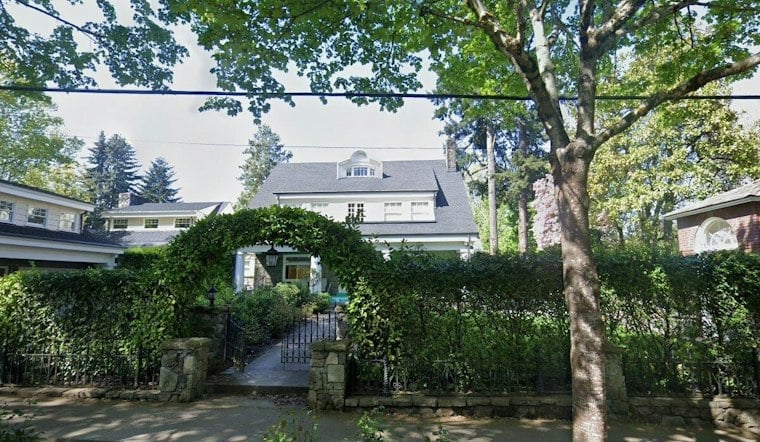
A century-old stone-and-shingle bungalow that a developer once planned to bulldoze for a lot subdivision has sold in Lake Oswego for $1.47 million, closing the books on a decade-long rescue and restoration effort. The Emma Austin House at 49 Briarwood Road, built in 1910, sits on a 1.04-acre forested double lot and had been threatened with demolition before a nonprofit preservation group intervened.
According to OregonLive, the 3,074-square-foot, two-story home closed on June 26, 2026, after being listed earlier that year for $1,650,000 before the asking price was lowered to $1,595,000 in April. The buyer, who works in the homebuilding industry and understands construction and craftsmanship, submitted a cash offer for a quick close, per the same report. Listing broker Steve Nassar of Premiere Property Group, who shared the listing with colleague Robert Fine, said the marketing leaned into the property's story, character and restoration rather than treating it like just another Lake Oswego luxury listing.
The house's survival was never a given. In 2016, the Lake Oswego Preservation Society reached out to John McCulloch of McCulloch Construction after a developer who had acquired the property gave the group a window to find a buyer willing to restore it rather than tear it down, per OregonLive. As reported by Pamplin Media Group, McCulloch purchased the home in 2015 for roughly $600,000 within a two-day deadline the developer had set before moving forward with demolition and subdividing the double lot.
An Architect's Legacy, Restored Board by Board
The bungalow was designed by French-born architect Joseph Jacobberger, a prominent Portland architect whose portfolio includes major campus buildings at Marylhurst College in Lake Oswego and the University of Portland, according to Archives West. Architectural historian William J. Hawkins III wrote in Classic Houses of Portland, Oregon: 1850–1950 that the design was heavily influenced by California architects Greene and Greene, citing its rustic river rock, low-slung gables and Japanese-inspired exposed wood beams, per Pamplin Media Group's reporting on Portland Monthly's coverage. Hawkins separately described Emma Austin's vacation home as one of the finest bungalow-style houses of its era, per OregonLive.
McCulloch's restoration work preserved the home's original windows, lighting fixtures and hardware while shoring up the foundation and completing seismic strengthening improvements, OregonLive reports. A new garage and stone retaining walls were built to match the home's original stonework, and energy-efficient systems were installed throughout. For that work, McCulloch received the Morgan Award from the Lake Oswego Preservation Society.
Inside the Finished Home
The finished house includes three bedrooms, three bathrooms with marble finishes and tile floors, and hardwood floors across much of its space, per OregonLive. A newly remodeled primary suite, an office and a basement wine cellar with custom built-in cabinets round out the interior, while original arched doors and a stone-and-brick fireplace preserve the home's early character. White Glove Staging & Home Improvements installed the furnishings shown during the sale.
Outside, the grounds feature a gazebo, fountain, waterfall, mature rose gardens and a redwood tree, all set against the home's river rock and wood shingle exterior. Before its 2026 sale, the property had also been listed in June 2025 for $1.798 million under a different brokerage, according to Portland Monthly.
From Sucker Lake to Six-Figure Lots
The area around the home has changed dramatically since Emma Austin completed her high-end summer retreat there in 1910. Portland Monthly notes that the surrounding land was being converted at the time from Oregon Iron & Steel Company industrial acreage into vacation cottage lots marketed under the slogan “Live Where You Play,” as the region shifted away from the pig iron production that had defined it since the 1860s, per OregonLive. The lake itself was known then as Sucker Lake, and Austin's home reportedly influenced other urbanites to build vacation properties nearby, helping set the area on a path toward becoming one of Oregon's most expensive enclaves.
That trajectory continues today. Lake Oswego single-family home prices reached a median sale price between $1.0 million and $1.08 million in 2025 and 2026, according to Redfin, making it the highest-priced residential enclave in Clackamas County. That premium helps explain why developers continue targeting older, larger lots like the Emma Austin property's double parcel for potential subdivision.
A Legal Gap That Still Leaves Historic Homes Exposed
Despite its architectural pedigree, the Emma Austin House was never placed on Lake Oswego's official Landmark Designation List, according to the Lake Oswego Preservation Society, leaving it without municipal code protection against demolition. Local preservation ordinances in the city only restrict demolition for properties explicitly named on the city's landmark inventory, meaning even architecturally significant homes mentioned in regional history books can legally be purchased and torn down.
That gap has forced private intervention to fill the void. Since its founding in 2016, the McCulloch Foundation has purchased and restored 20 endangered historic homes across Oregon, including the 1911 Markham House in Portland's Laurelhurst neighborhood, per Pamplin Media Group. Meanwhile, Oregon's statewide middle-housing law, House Bill 2001, permits cottage clusters and infill development on larger single-family lots, a policy that the Living in Oregon real estate blog says has increased financial incentives for developers to acquire and subdivide older multi-acre properties in cities like Lake Oswego.
Separately, a 2016 Oregon Supreme Court ruling in Lake Oswego Preservation Society v. City of Lake Oswego established that only the original owner at the time of a landmark designation can remove those protections under the state's owner-consent law, according to Justia. That decision has helped safeguard thousands of already-designated Oregon landmarks from being delisted by later buyers, even as homes like the Emma Austin House remain vulnerable simply because they were never added to the list in the first place.





