

























































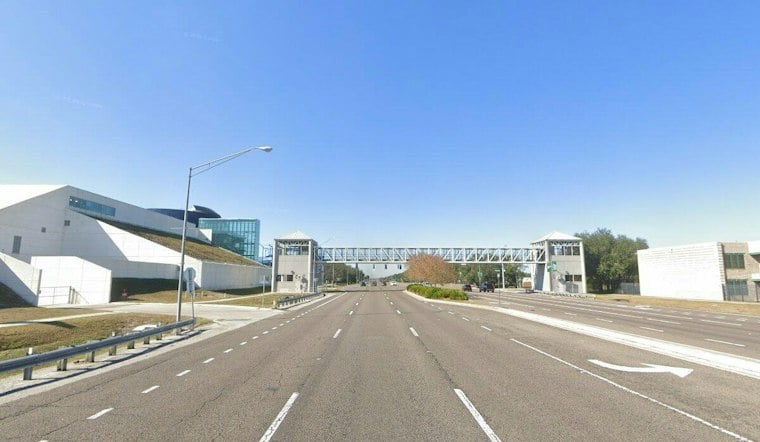
A planetarium unlike any other in the world is coming back to life in Lakeland. Florida Southern College has completed a multi-million-dollar restoration of its Frank Lloyd Wright-designed planetarium, reopening a space that sat dark for 22 years after its projector broke down in 2004.
The facility, formally known as the Miller Planetarium after donors John Raymond Miller III and Eleanor Honeyman Miller, was rededicated in 2001 before that projector malfunction forced its long hiatus, according to 6AM City. Built between 1954 and 1958 and hosting its first show in 1960, the planetarium is, according to FOX 13 Tampa Bay, the only one ever constructed from a design by Wright, who lived from the mid-1860s to the late 1950s.
Public shows resume Saturday, running four days a week at 3:30 p.m. with six rotating monthly programs lasting 20 to 32 minutes, per PR Newswire. The debut program, God, Science, and Our Search for Meaning, is narrated by author Dan Brown and explores the intersection of faith and science. FOX 13 Tampa Bay reports admission runs $20 per person, or $15 per person for families or groups of four or more, and that planetarium tickets are sold separately from the college's standard architectural tours.
Eight-Track Technology Gives Way to Modern Full-Dome Projection
The renovation added modern video, audio and acoustic technology to a space that had formerly relied on eight-track technology, which became obsolete over the decades it sat unused, per the same FOX 13 Tampa Bay report. State grant funding enabled the college to purchase the new high-tech equipment, while private donations funded the structural restoration itself. Florida Southern College leaders said the updated space brings Wright's vision into the modern era while preserving the integrity of his original work.
College president Jeremy Martin said people may now ask whether others have seen the planetarium, and told FOX 13 Tampa Bay that the restoration and new equipment may exceed Wright's wildest dreams. The planetarium will host regularly scheduled public shows alongside educational programs for K-12 students in Polk County public schools and for local community groups.
Restoring Wright's Textile Blocks, Cherokee Red Floors and Circular Seating
Housed inside the 1958 Polk County Science Building, the planetarium retains Wright's original circular theater-in-the-round seating and restored Cherokee Red concrete floors, according to 6AM City's report.
The four-year structural restoration resolved severe water and thermal damage by replacing the dome roof, restoring exterior stucco, replacing cracked textile blocks and adding wall insulation to the building for the first time, according to LkldNow. Architect Jeff Baker led the restoration using Wright's simplified 1950s construction drawings. Key funding for the project included a National Park Service federal grant matched by local philanthropist Gregory Fancelli, grandson of Publix Super Markets founder George Jenkins, according to Florida Southern College.
A Campus Built Around Wright's Longest Commission
The planetarium is part of Frank Lloyd Wright's work at Florida Southern College, according to the college's own account. Wright's campus work began in 1938. Thirteen Wright-designed structures were built on the Lakeland campus.
In March 2012, the National Park Service designated the campus's 100-acre Child of the Sun district a U.S. National Historic Landmark, recognizing its 13 completed Wright structures as the world's largest single-site collection of his work, as reported by WUSF. Wright coined the term Child of the Sun to describe buildings he believed grew organically from Florida soil. Florida Southern College was founded in 1883, and its campus is on a site that was once a citrus grove by Lake Hollingsworth.
Planetarium Joins a Growing Slate of Architectural Tourism
The college's Frank Lloyd Wright Visitor Center runs daily guided walking tours of the campus. The newly reopened planetarium adds a separate, standalone ticketed experience to that lineup rather than folding into the existing tour packages.
The reopening follows multi-million-dollar preservation efforts that brought the planetarium back into public use after more than two decades of silence.




